

Protection and security in digital document management have become a priority for organizations that produce, receive, store, and access large volumes of information. The transformation of business processes has meant that documents are no longer found only in folders, boxes, or physical archives, but also on servers, computers, document management systems, cloud platforms, and various digital repositories.
This change offers significant advantages for organizations, such as faster access, reduced physical storage requirements, task automation, and greater information availability. However, it also creates new challenges related to unauthorized access, information loss, document tampering, cyberattacks, technological failures, and the disclosure of confidential data.
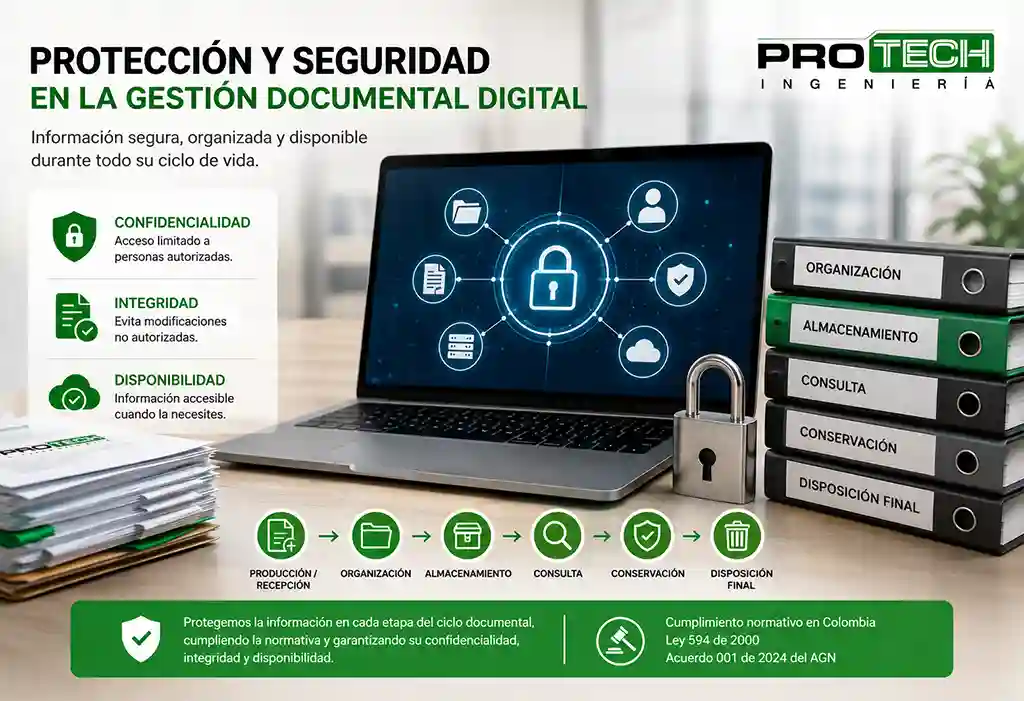
For this reason, document protection does not simply involve installing cybersecurity tools. It is necessary to establish a comprehensive strategy that covers the entire document lifecycle, from the creation or receipt of a document to its organization, storage, consultation, and automation. This applies to physical documents as well as electronic and digitized records.
In Colombia, document management is governed by archival principles and regulations that organizations must take into consideration. Law 594 of 2000, known as the General Archives Law, establishes general principles and rules for archival functions and covers documents regardless of their physical medium.
Why Is Document Protection and Security Important?
Documents contain essential information for an organization's operations. Contracts, employment records, invoices, files, reports, blueprints, accounting records, legal documents, and personal data can be indispensable for making decisions, demonstrating compliance with obligations, or responding to customers, suppliers, and regulatory authorities.
When this information does not have adequate protection and security measures in place, the organization is exposed to various risks. A document may be accidentally deleted, modified without authorization, misplaced, physically damaged, or accessed by someone who should not have permission to view it.
For this reason, a document security strategy should aim to protect three fundamental characteristics of information: confidentiality, integrity, and availability. Confidentiality restricts access to authorized individuals; integrity seeks to prevent improper modifications; and availability ensures that information can be accessed whenever it is needed.
Risks to Physical and Digital Documents
Document security must address different types of threats. In physical archives, for example, documents may be affected by humidity, fires, floods, deterioration, improper handling, loss, or access by unauthorized individuals.
In digital environments, other risks arise that require specific controls. These include:
- Information loss: This may occur due to technical failures, accidental deletion, device damage, or the lack of backup copies.
- Unauthorized access: This occurs when individuals without permission can access confidential documents or information.
- Document tampering: A file may be modified without authorization or without an appropriate record of the change.
- Physical deterioration: In traditional archives, environmental conditions can affect document preservation.
- Loss of traceability: When adequate controls are not in place, it becomes difficult to determine who accessed, modified, transferred, or deleted specific information.
Information Classification and Identification
One of the first steps toward strengthening protection and security is to understand what information the organization possesses and determine its level of sensitivity.
Document classification makes it possible to establish categories and define controls based on the importance or confidentiality level of each type of information. To do this correctly, the organization must identify document series and subseries, establish access criteria, and determine which documents require additional controls.
This process is also connected to services such as the document inventory, records organization, and document description, because an organization can hardly protect information properly if it has not been identified and brought under control.
Access Control and Permission Management
Access to documents should be determined according to each user's responsibilities. Not all employees need to access every file within an organization.
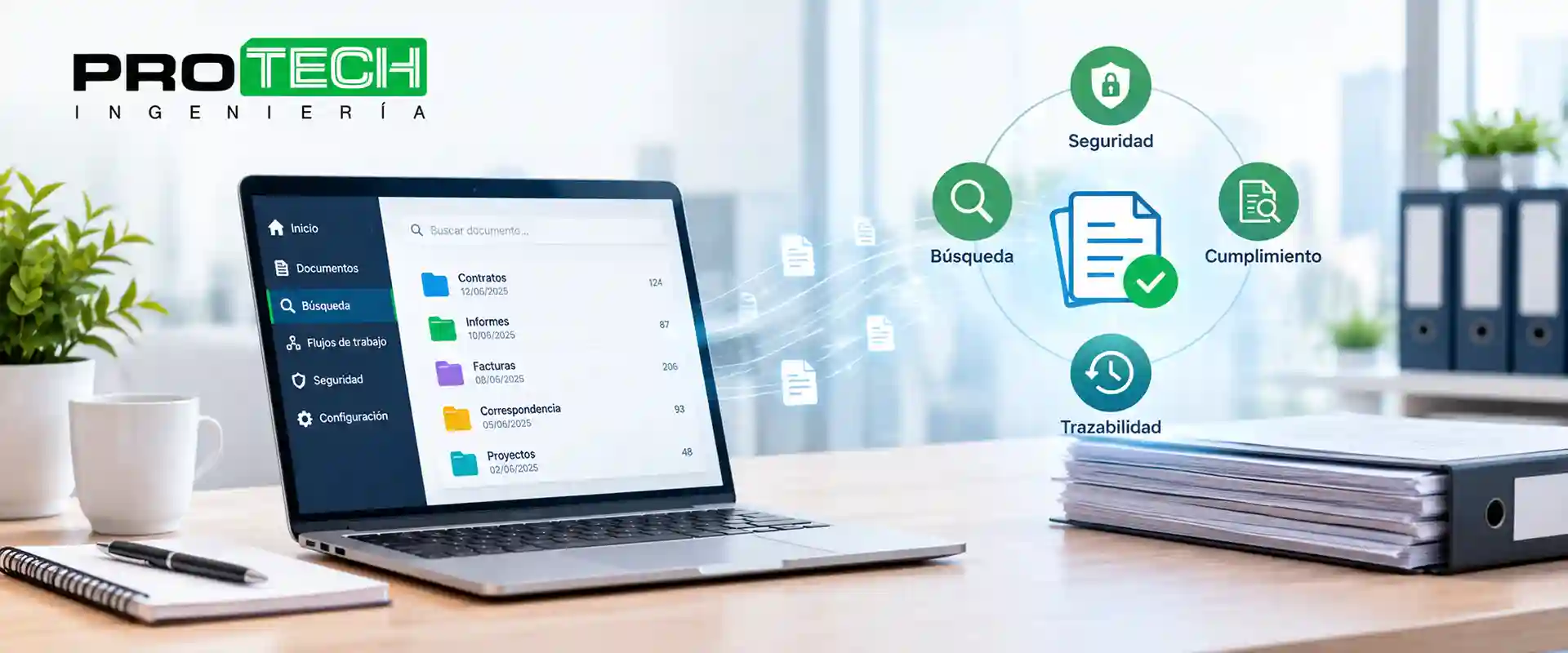
Document management systems can establish user profiles and permissions to determine who can view, modify, download, share, or manage specific documents. They can also incorporate authentication mechanisms and activity logs.
The document consultation module can play an important role in this process by making it possible to control and organize information retrieval. Similarly, the document loan module can help manage the checkout and return of physical files, providing traceability regarding who has a particular document.
Secure Document Digitization
Document digitization is one of the fundamental services within a document transformation strategy. However, converting physical documents into digital files involves much more than simply scanning them.
The process must include document preparation, image capture, document control, information recognition when applicable, indexing, classification, storage, and consultation mechanisms.
Security must be integrated from the outset. Digitized files must be stored in controlled repositories, have backup mechanisms in place, and be associated with metadata that allows each document to be properly identified.
Indexing, Classification, and Data Extraction
After a document has been digitized, it is essential to make it easier to identify and retrieve. To achieve this, indexing and document organization services are used to assign data that makes it possible to locate information quickly.
Proper indexing can include fields such as identification number, date, document type, name, department, file number, or any other information relevant to the organization.
Document classification complements this process by placing each document within the corresponding archival structure.
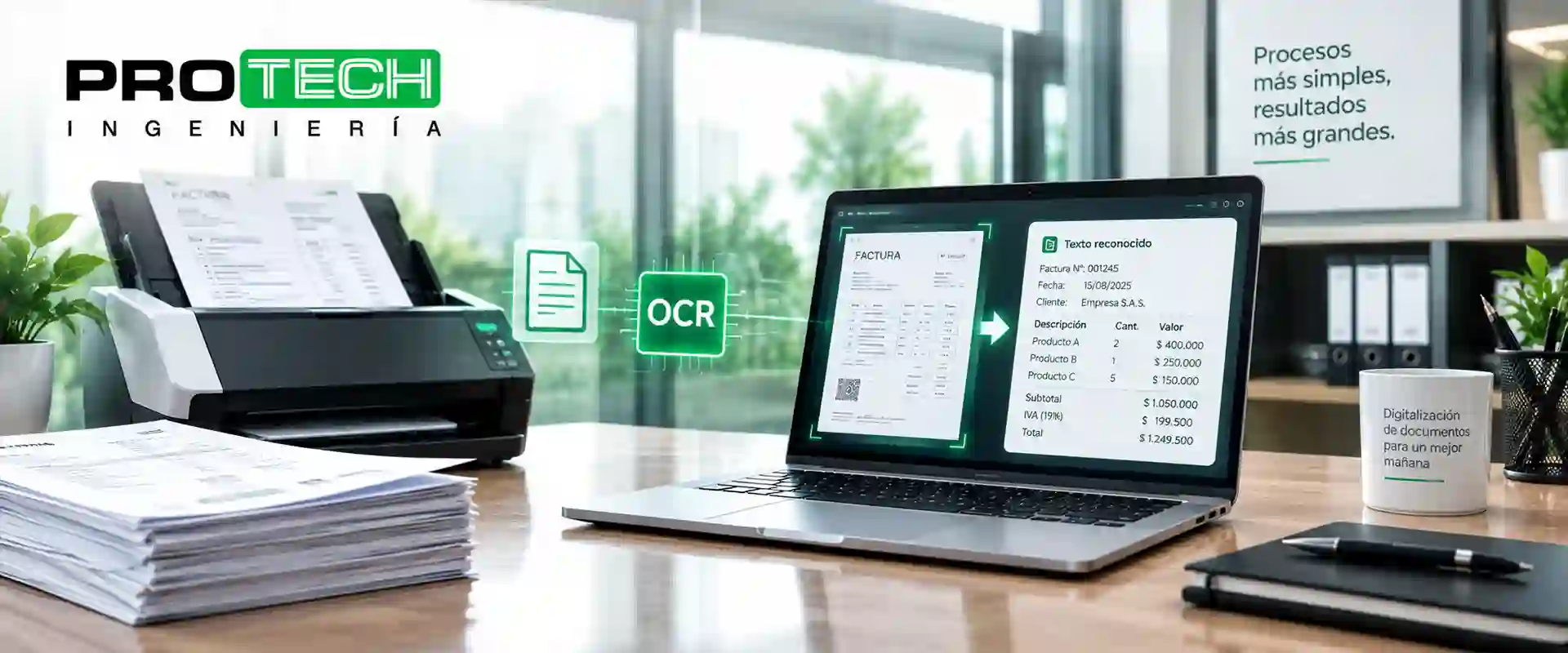
Technologies such as OCR, data extraction and artificial intelligence can also be used to identify information contained in documents and reduce manual tasks. These tools can improve productivity, but they must be implemented with controls that ensure the quality of the extracted data and protect the information being processed.
Document Custody and Storage
Security also depends on where documents are stored and preserved. For physical archives, document custody requires appropriate facilities, access controls, suitable environmental conditions, preventive measures, and emergency response protocols.
In digital environments, storage can be provided through in-house servers, data centers, specialized platforms, or cloud services. In all cases, it is necessary to assess aspects such as availability, backup, recovery, permissions, and protection against unauthorized access.
Cloud storage can make documents accessible from different locations, but organizations must understand the security measures implemented by the provider and establish clear responsibilities for managing the information.
Data protection for stored information must be complemented by backup copies. These make it possible to recover information after incidents such as technical failures, accidental deletion, or cyberattacks.
Encryption and Information Protection
Encryption is another important tool for strengthening the protection and security of digital documents. Its purpose is to transform information so that it cannot be easily understood by individuals who do not have the appropriate authorization.
Protection can be applied both to stored data and to information transmitted between systems. In this way, organizations can reduce the risk of exposure during information storage or exchange.
Document Automation and Security
Document process automation makes it possible to reduce repetitive tasks and improve document control. Processes such as receiving, classification, distribution, approval, notification, and storage can be integrated into digital workflows.
This makes it possible to establish rules ensuring that certain actions can only be performed by authorized users. In addition, systems can generate alerts, record activities, and maintain operation histories.
Document Consultation, Retrieval, and Traceability
Protecting a document does not mean preventing access to it. On the contrary, secure document management must allow authorized individuals to find information quickly and under controlled conditions.
Document search and retrieval services make it possible to locate files using different criteria. When these mechanisms are combined with access permissions, organizations can facilitate document consultation without compromising confidentiality.
Traceability is also essential. Recording who views, modifies, downloads, or manages a document makes it possible to detect unusual behavior and facilitates audits.
Document management systems can incorporate version histories, activity logs, and controls over changes made, thereby strengthening information integrity.
Digital Preservation and Final Disposition
Document security must be maintained throughout the entire information lifecycle. Protecting a document during its first few years of storage is not enough; it is also necessary to ensure that it can be preserved and accessed for the required period.
Digital preservation aims to keep electronic documents accessible over the long term, taking into account aspects such as file formats, metadata, storage, technological migration, and obsolescence risks.
Auditing, Monitoring, and Risk Management
Security measures must be reviewed periodically. A policy that worked a few years ago may no longer be sufficient in the face of new threats, technological changes, or modifications to internal processes.
Audits make it possible to verify whether established controls are actually working. These reviews may include access permissions, access logs, backup copies, digitization procedures, storage conditions, policy compliance, and incident management.
This approach can be integrated with analysis and reporting services, allowing those responsible for document management to monitor indicators related to consultations, loans, digitization, classification, storage, and other processes.
Data Protection and Regulatory Compliance
Document management must also take into account the protection of personal data contained in documents. Employment records, forms, contracts, medical records, customer records, and other documents may include information that requires special handling measures.
In Colombia, organizations must review the applicable obligations regarding personal data protection and align them with their document management processes.
This involves establishing who can access specific information, the purposes for which it may be used, how long it must be retained, and what controls must be in place to prevent its improper disclosure.
For this reason, document protection and security must be integrated with document management, information security, and data protection policies, ensuring that each department does not operate independently.
Emerging Technologies for Document Security
Technological advancements are creating new opportunities to strengthen document management. Artificial intelligence, for example, can be used to identify patterns, classify information, detect unusual behavior, and automate certain activities.
Technologies such as blockchain can also be used in scenarios where greater traceability and evidence of specific document-related operations are required. However, their implementation should address a specific need and be evaluated against other technological alternatives.
Artificial intelligence can also support data extraction, automated classification, and advanced search. In these cases, it is important to establish controls over the results generated and prevent sensitive information from being processed without the appropriate protection measures.
Protect Your Documents. Organize Your Information. Transform the Way Your Organization Manages Its Records.
At Protech Ingeniería, we help organizations strengthen the protection and security of their information through comprehensive document management solutions. Our approach connects physical and digital processes to achieve more organized, secure, and efficient document management.
Start today!
Request a consultation with Protech Ingeniería and discover the solutions we can implement to strengthen the protection and security of your information.