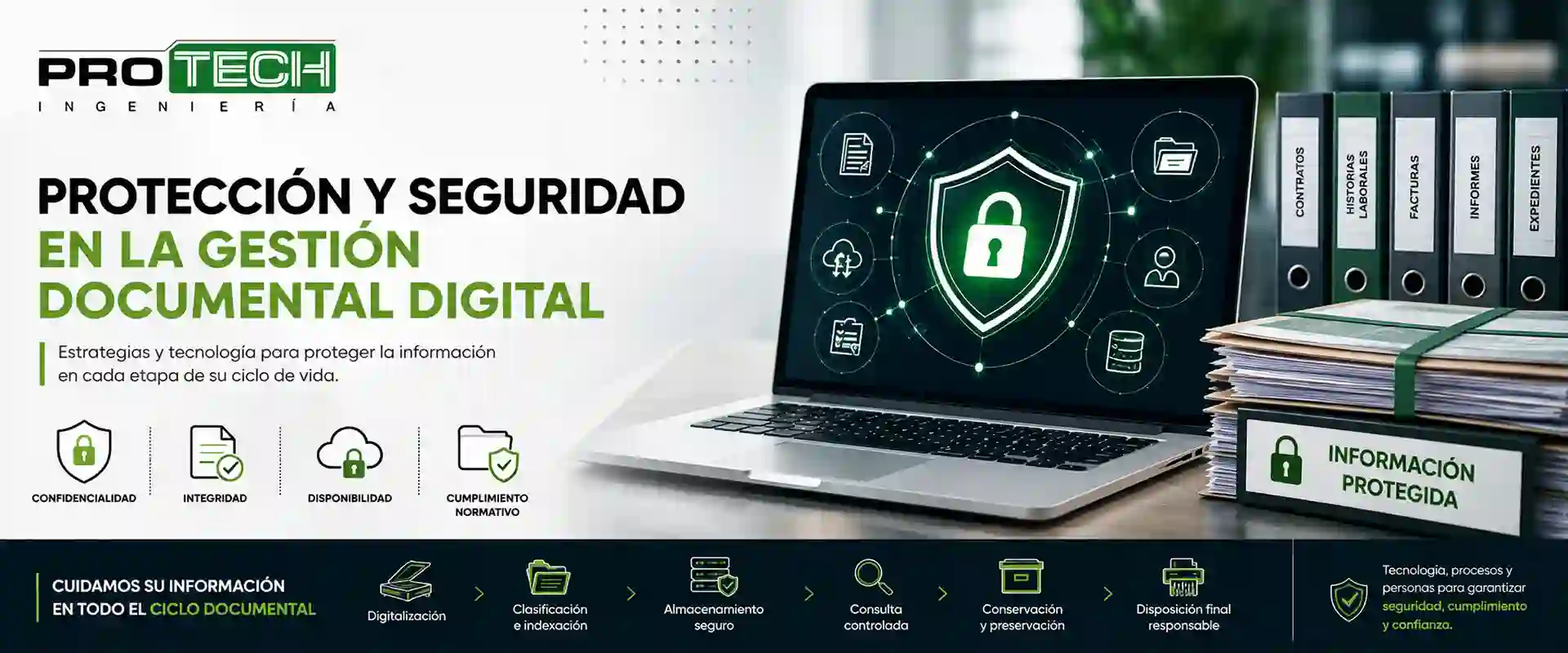


Currently, information has become one of the most valuable assets for organizations. In an increasingly digital environment, where companies generate and store large volumes of documents, applying data protection and document management principles becomes essential to ensure the security and confidentiality and availability of information. Digital transformation has improved administrative efficiency, but it has also created new challenges related to data privacy, access control, and protection against technological threats.
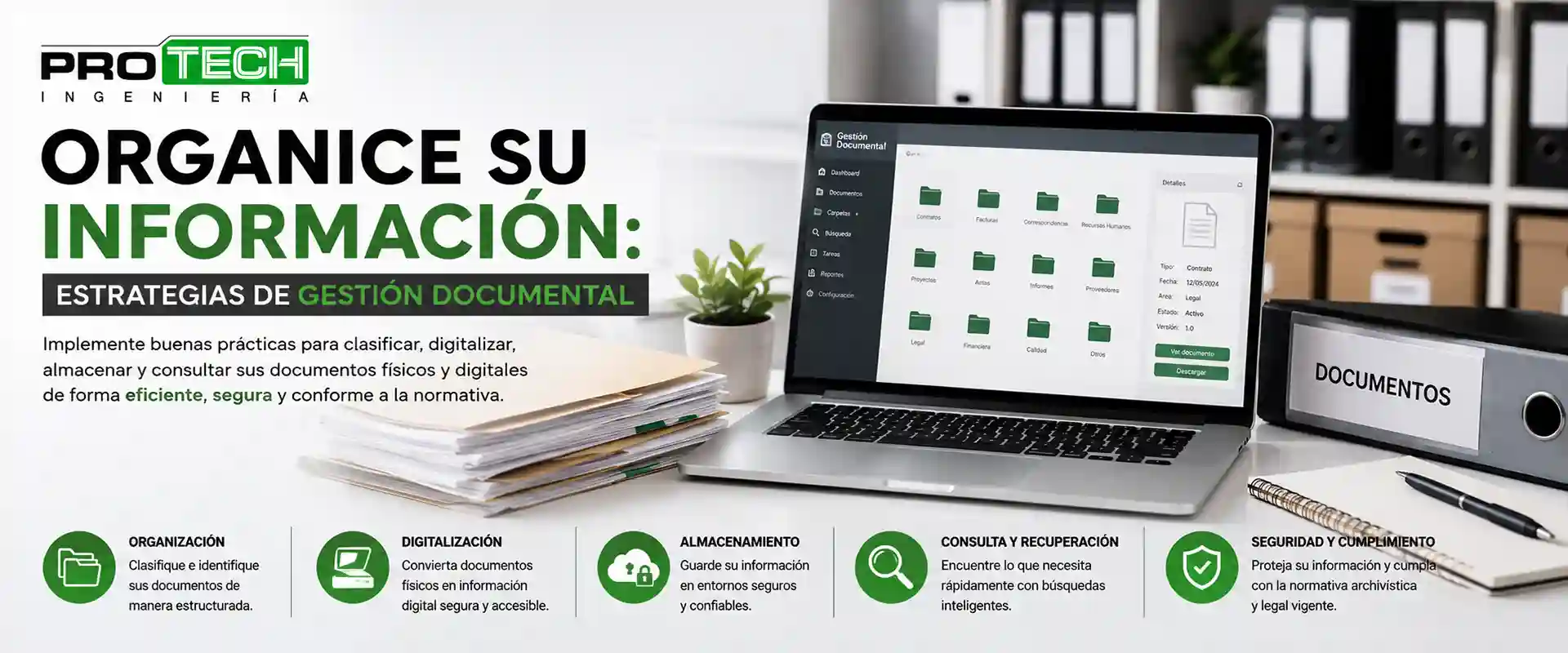
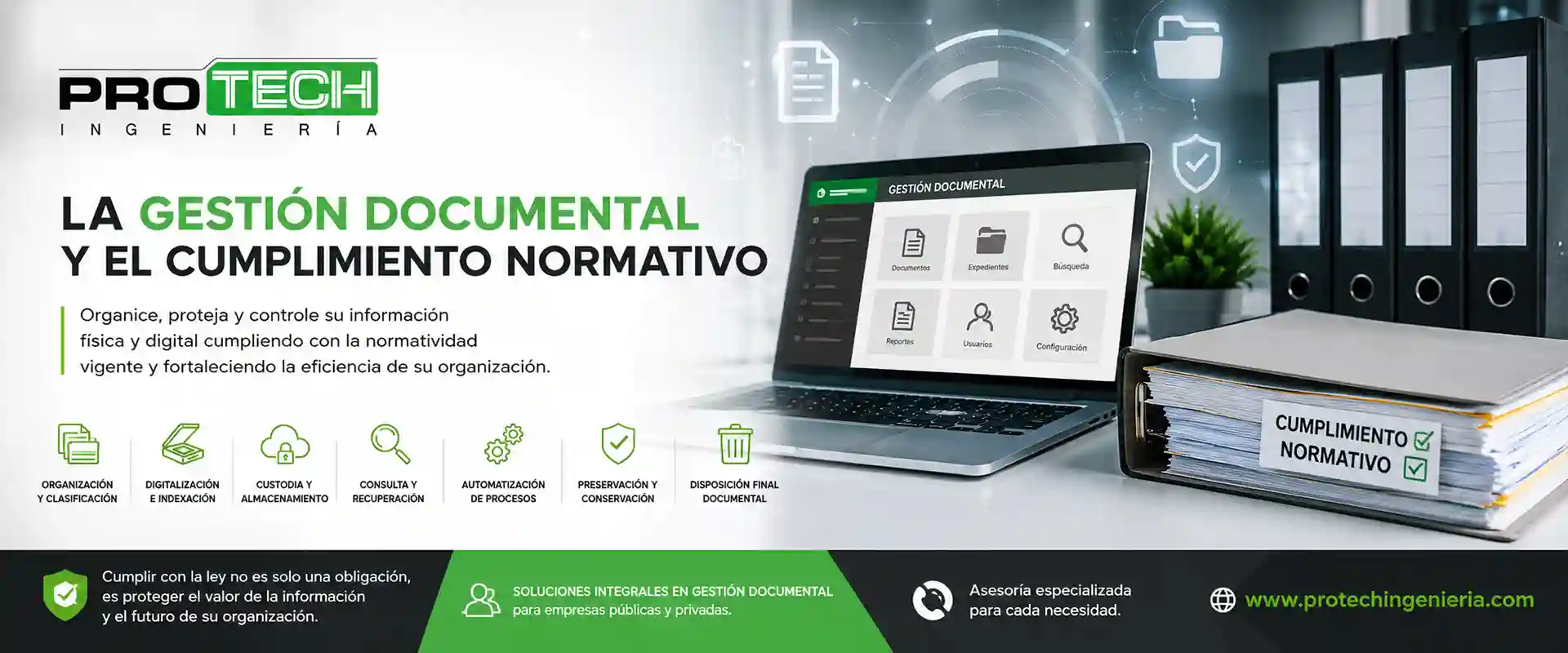
The relationship between data protection and document management is not limited solely to safeguarding digital information. It also involves implementing methodologies, policies, and technologies that enable the proper administration of both physical and electronic documents throughout their lifecycle. This includes processes such as document digitization, archival classification, indexing, records custody, secure storage, document process automation, and records consultation.
According to guidelines established by the General Archive of the Nation of Colombia, proper records management ensures the authenticity, integrity, and availability of institutional documents. These practices strengthen transparency, facilitate access to information, and support compliance with data protection regulations.
The Importance of Data Protection and Document Management in Organizations
The exponential growth of digital information has turned data protection and document management into a strategic component within both public and private organizations. Companies must handle documents containing confidential information, personal data, financial records, and legal documentation, which requires the adoption of appropriate control mechanisms to mitigate risks.
Data protection and document management make it possible to establish clear procedures for handling information from its creation to its retention or final disposal. This comprehensive approach ensures that documents are available when needed, while also safeguarding individuals’ privacy and institutional security.
Data protection regulations have also driven the adoption of these practices. In Colombia, entities such as the Superintendence of Industry and Commerce oversee compliance with regulations related to the processing of personal data, requiring organizations to implement proper controls over their information systems.
Proper data protection and document management not only prevent legal penalties but also strengthen an organization’s reputation. When clients, users, or citizens trust that their information is secure, institutional credibility increases and relationships with different stakeholders are reinforced.
Risks Associated with Inadequate Document Management
When documents are not properly managed, organizations may face various risks related to information security. The lack of adequate controls can lead to document loss, unauthorized access, or leaks of confidential information.
One of the most common risks is the exposure of sensitive data to unauthorized individuals. Information breaches may occur due to human error, failures in technological systems, or cyberattacks. In these situations, the absence of clear data protection and document management policies increases organizational vulnerability.
Another significant risk is document loss. Technical failures, accidental deletions, or physical disasters can result in the disappearance of critical information for business operations. For this reason, implementing backup systems and secure storage becomes an essential practice within data protection and document management.
There is also the risk of non-compliance with data protection regulations. Organizations that fail to apply proper information management policies may face financial penalties and reputational damage. Therefore, adopting sound archival and technological practices is crucial to prevent these scenarios.
Document Classification and Information Control
One of the main strategies within data protection and document management is the proper classification of information. This process makes it possible to identify the level of sensitivity of each document and apply the corresponding security measures.
Document classification can be divided into different categories depending on the type of information:
Confidential Data
These correspond to documents containing critical information for the organization, such as financial records, contracts, personal information, or strategic data. These documents require high levels of protection and strict access control.
Sensitive Data
This includes information that must be handled with care due to its impact on individuals' privacy. This category may include medical records, employment information, or customer data.
Public Data
These are documents that can be freely shared without compromising institutional security or privacy.
Proper classification of information facilitates the implementation of data protection and document management policies, as it helps determine which documents should be digitized, which require specialized custody, and which can be stored in public access repositories.

Access Policies and Document Control
Another key best practice in data protection and document management is establishing clear information access policies. These policies define who can view, modify, or delete documents within an organization.
One of the most widely used models is role-based access control, which allows permissions to be assigned according to each user’s responsibilities. In this way, only authorized personnel can access sensitive information.
In addition, modern document management systems make it possible to track document access history. These audit logs are essential to ensure information traceability and to detect potential irregularities.
Access policies should also include periodic reviews to ensure that permissions remain up to date. When an employee changes roles or leaves the organization, their access rights must be modified or removed to maintain system security.
Document Management Services as Support for Data Protection
The implementation of data protection and document management requires the integration of various specialized services that enable efficient file administration.
Some of the most important services include:
-
Document Digitization
This process converts physical documents into digital files through specialized scanning. Digitization facilitates access to information and reduces the risks associated with handling paper-based documents.
-
Indexing and data capture
This involves recording metadata that helps identify and retrieve documents within document management systems.
-
Document Custody
Refers to the secure storage of physical files in specialized facilities equipped with environmental and security controls.
-
Document Automation
Optimizes administrative processes through technological tools that manage document workflows and approvals.
-
Digital Records Consultation
Facilitates access to information through electronic platforms that allow documents to be searched quickly and securely.
-
Preservation and final disposition
Includes procedures to preserve documents in the long term or dispose of them according to established archival policies.
All these services are part of a comprehensive data protection and document management strategy, aimed at ensuring the security and availability of institutional information.
Technologies to Strengthen Information Security
The use of technological tools is another fundamental component within data protection and document management. Organizations can implement various solutions to protect their documents and prevent security incidents.s
Among the most widely used technologies is data encryption, which protects information through security algorithms that prevent unauthorized access or reading.
It is also recommended to implement backup systems that allow documents to be recovered in the event of loss or cyberattacks.
Additionally, document management systems enable version control, access permission management, and user activity monitoring within the platform.
International organizations such as the International Organization for Standardization have developed standards related to information management, such as ISO 15489, which establishes guidelines for managing documents in a secure and efficient manner.
Staff Training and Security Culture
One of the most important aspects of data protection and document management is the human factor. Employees play a key role in information security, as they are responsible for handling documents and using the organization’s information systems.
For this reason, companies must implement training programs aimed at strengthening staff competencies in document management and data protection.
Training may include topics such as:
- Secure handling of physical and digital documents
- Proper use of document management platforms
- Identification of cyber threats
- Compliance with data protection regulations
- Best practices in archival organization
An organization that promotes a culture of security and document responsibility strengthens its ability to properly apply data protection and document management principles.
In addition, continuous updates on regulatory and technological matters allow companies to adapt their processes to changes in the digital environment, ensuring information management aligned with current market demands and applicable regulations.
Information Protection as a Strategic Pillar for
Corporate Document Management
When an organization faces challenges such as information loss, uncontrolled access, document disorganization, or risks associated with handling sensitive data, the need to implement concrete and timely actions becomes evident.
Start today!
Adopting best practices in this area not only helps mitigate risks but also optimizes processes, improves operational efficiency, and strengthens institutional transparency.