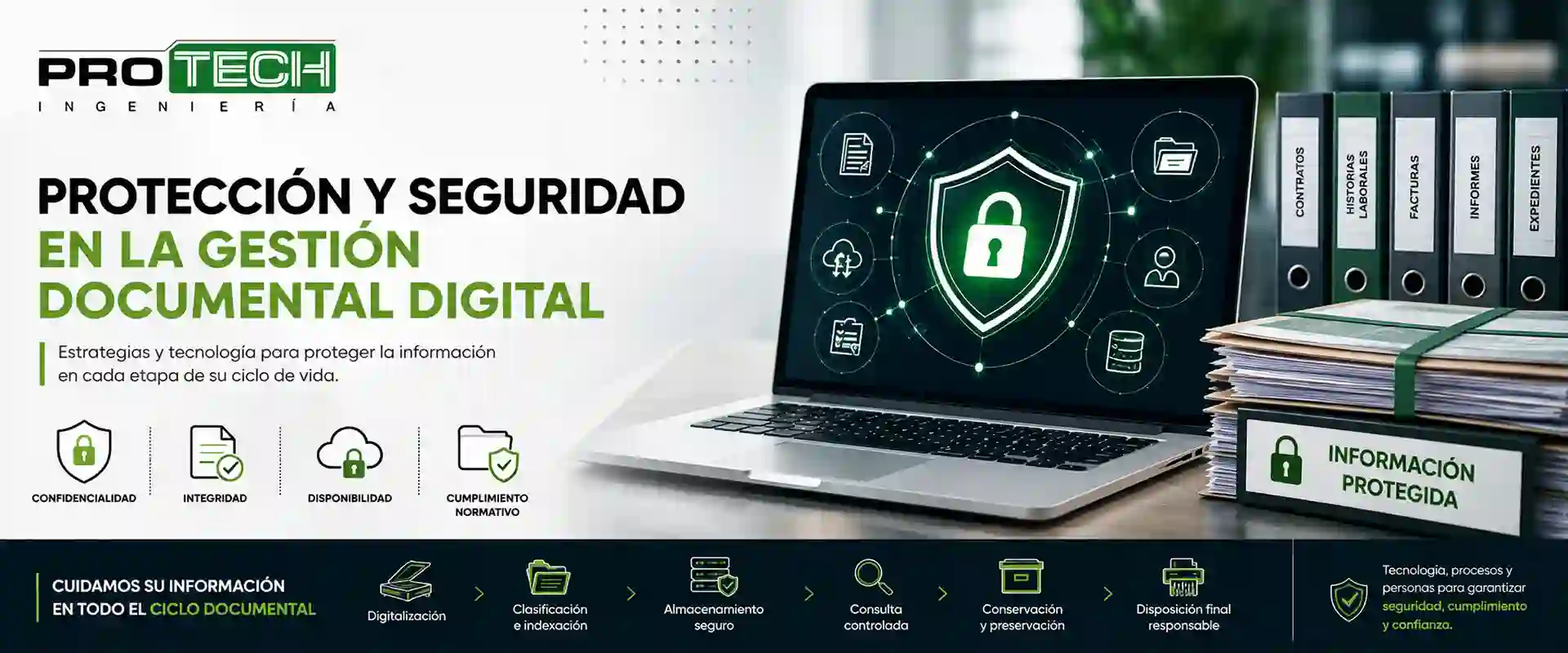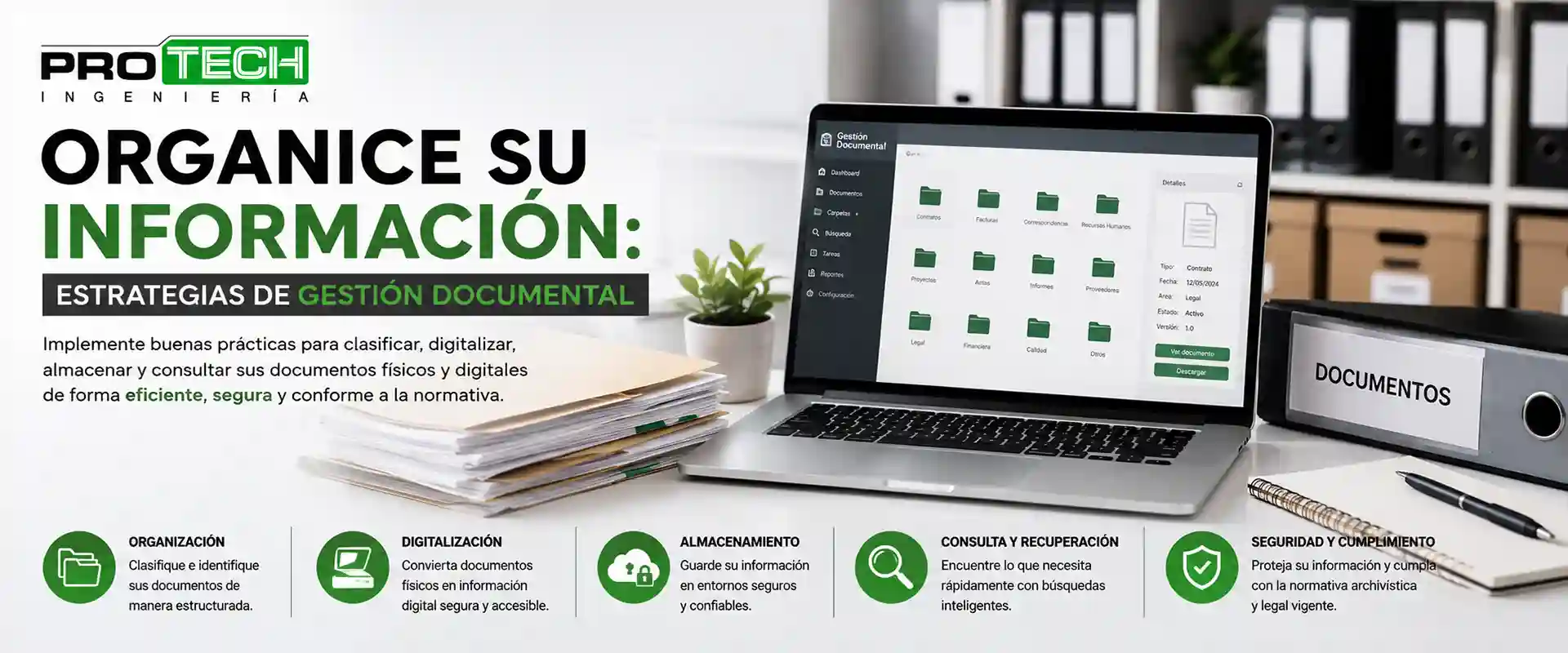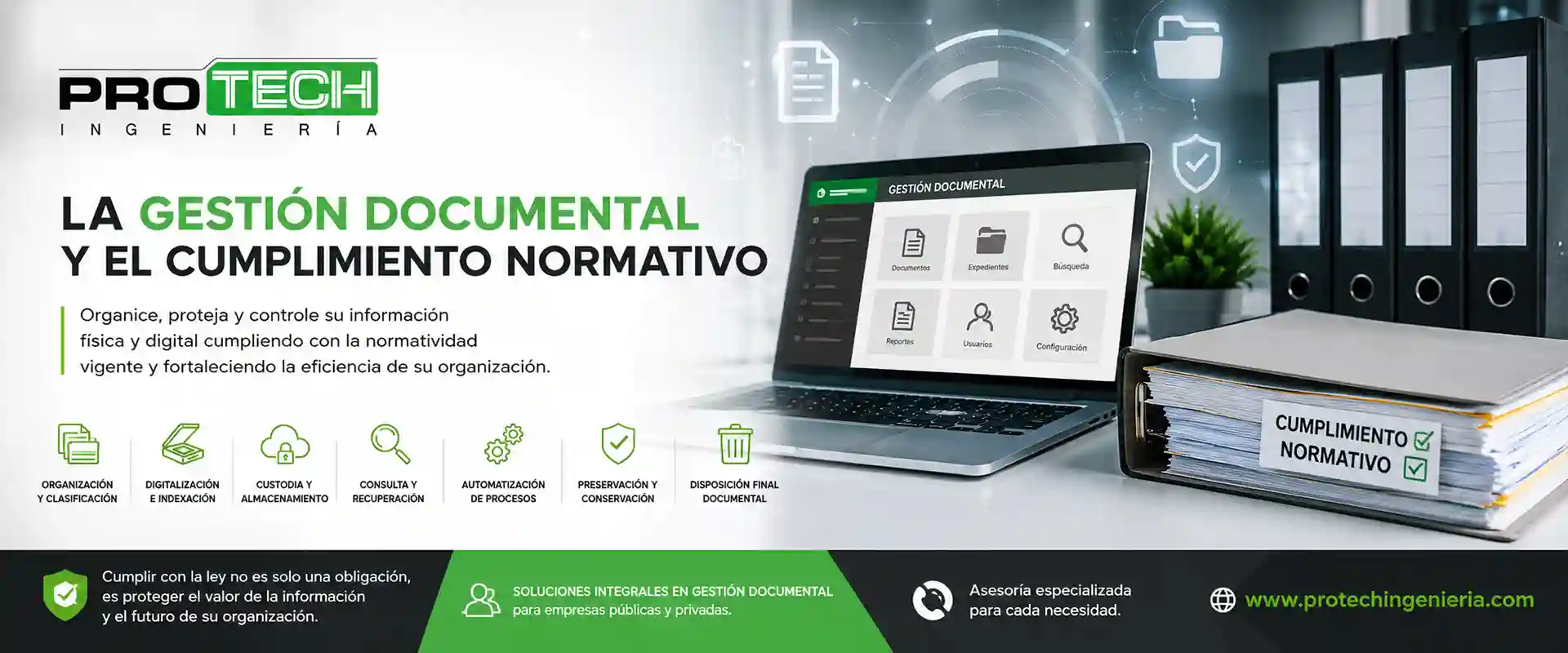


Information has become one of the most valuable assets for businesses and institutions. Due to the continuous growth of data and the increasing number of documents generated every day, maintaining an efficient organizational system has become a strategic necessity. Document disorder can lead to lost time, process delays, difficulties in accessing information, and even risks related to non-compliance with document retention and records management regulations.
For this reason, implementing best practices for managing both physical and digital records helps optimize operations and ensures that information is available whenever it is needed. Effective document management involves much more than simply storing documents. It also includes processes such as document classification, document indexing, document digitization, document storage and custody, and document automation.
The importance of proper document management is promoted by the National Archives of Colombia (Archivo General de la Nación), the institution responsible for leading the country's archival policies and establishing guidelines for the organization, preservation, and management of institutional records.
The Importance of Efficient Document Organization
Maintaining an efficient document organization system allows businesses to maintain full control over the information they produce and receive. When documents lack a proper structure, search times increase, and the risk of information loss or duplication becomes significantly higher.
Document management encompasses both physical and digital records, ensuring that every document is handled appropriately throughout its entire document lifecycle. This includes processes such as document organization, document storage, and document retrieval.
In addition, effective document administration supports regulatory compliance and facilitates audits, informed decision-making, and business continuity. The guidelines issued by the National Archives of Colombia (Archivo General de la Nación) and the Ministry of Information and Communications Technologies (MinTIC) serve as key references for implementing effective information management policies.
Document Identification and Classification
One of the first steps toward achieving efficient document organization is identifying all the records that are part of an organization's information assets.
Every business generates different types of documents that should be organized according to their purpose and function. These typically include:
- Administrative documents
- Financial documents
- Accounting records
- Contracts and legal documents
- Correspondence
- Operational procedures
- Corporate manuals and policies
Document classification enables information to be grouped into categories and subcategories, making retrieval easier and significantly reducing search times.
Within document management services, document classification is an essential stage because it structures records according to the organization's Document Retention Schedules and other archival instruments established by the National Archives of Colombia (Archivo General de la Nación).
Document Indexing and Description
Another key element in preventing document disorder is document indexing. This process involves assigning specific data to each record to make it easier to locate and retrieve.
Indexing may include:
- Creation dates
- Client names
- File or case numbers
- Document type
- Responsible departments
- Processing status
The use of metadata and keywords allows information to be located quickly and efficiently. As a result, organizations can strengthen their document organization strategy and significantly reduce the time spent searching for records.
Document description also improves document traceability, ensuring that records can be easily retrieved at any stage of their lifecycle.
Document Digitization to Reduce Disorder
Digital transformation has accelerated the adoption of document digitization services. Converting paper records into electronic files makes information easier to access while reducing the challenges associated with traditional physical storage.
Document digitization provides several important benefits, including:
- Reduced paper consumption
- Remote access to information
- Faster document retrieval
- Electronic backup of records
- Lower risk of document deterioration
Implementing document scanning and document digitization projects helps strengthen efficient document organization while supporting the digital modernization of businesses and institutions.
Document Storage and Specialized Archival Services
Many organizations generate large volumes of records that require appropriate facilities for long-term preservation.
Document storage and archival services allow physical records to be kept in specialized facilities that provide optimal conditions for security, temperature, and humidity control.
Document storage and custody offer several important advantages, including:
- Protection against fire and natural disasters
- Physical security and controlled access
- Proper preservation of documents
- Optimized office space
- Permanent availability for document retrieval
Combining secure physical storage with electronic document management promotes efficient document organization, particularly for organizations that manage historical records and large volumes of information.
Document Automation and Process Optimization
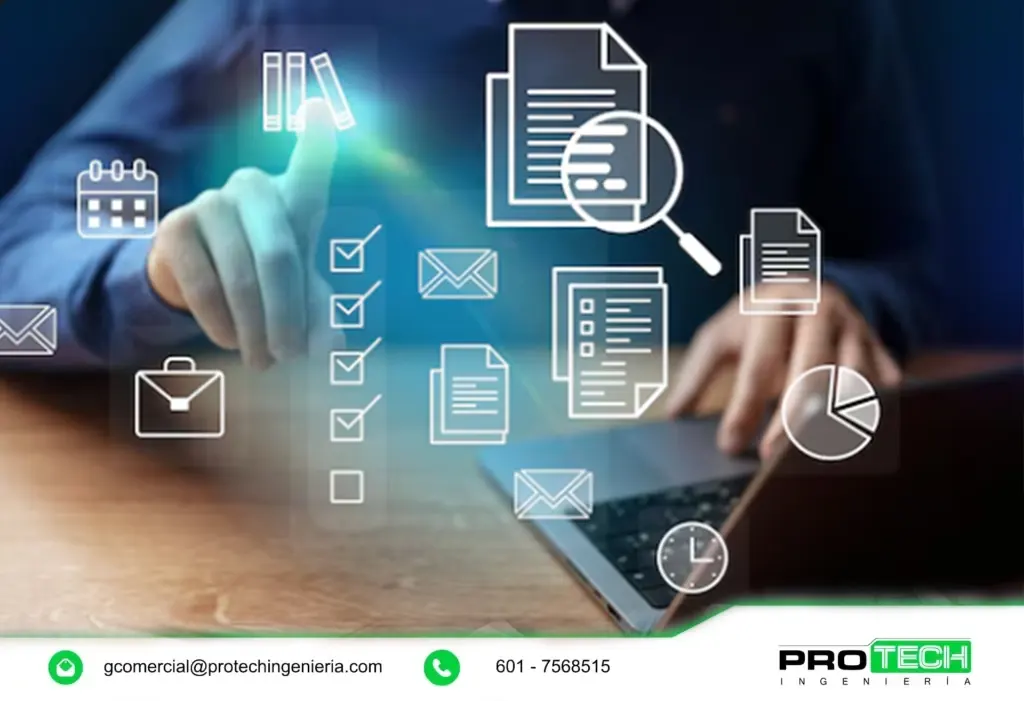
Document automation has become one of the leading trends in modern information management.
By using specialized systems, organizations can reduce manual tasks and streamline the flow of documents across different departments, improving efficiency and operational performance.
Automated document processes make it possible to:
- Approve documents electronically
- Assign responsibilities automatically
- Monitor due dates
- Generate alerts and reminders
- Track files and document workflows
Document automation plays a significant role in maintaining efficient document organization by reducing human error, increasing productivity, and ensuring greater control over document-related processes.
Data Capture and Information Management
Data capture is another essential service within document management.
This process enables organizations to extract valuable information from documents and integrate it into databases and business systems, making information more accessible and actionable.
Data capture can be performed using several methods, including:
- Manual data entry
- Optical Character Recognition (OCR)
- Intelligent form recognition
- Artificial intelligence–based automation
By implementing these technologies, organizations can achieve more efficient document organization while creating structured, reliable information that supports faster and better-informed decision-making.
Document Retrieval and Information Access
Effective document management must ensure that information is available whenever it is needed.
Document retrieval systems enable users to locate files and records within seconds, improving productivity and streamlining access to critical information.
The main benefits of these services include:
- Fast access to information
- Greater control over documents
- Tracking of document requests
- Remote availability
- Complete document traceability
Document retrieval is an essential component of efficient document organization, particularly for organizations that manage large volumes of records and information.
Document Preservation and Conservation
Document preservation aims to protect records from factors that may compromise their integrity.
Humidity, exposure to light, dust, and temperature fluctuations can cause significant deterioration of physical records.
For this reason, organizations implement document preservation programs that include:
- Specialized cleaning
- Document restoration
- Archive disinfection
- Protection of storage media.
- Environmental monitoring.
These activities are part of comprehensive document management services and help extend the lifespan of valuable records.
Document preservation also includes strategies for protecting electronic records and ensuring their long-term accessibility, integrity, and availability.
Final Disposition of Documents
Document management covers the entire document lifecycle, including the final disposition of records.
Documents that have fulfilled their retention periods as established in the Document Retention Schedules may be securely destroyed or transferred in accordance with applicable regulations.
Training and Organizational Culture
Technology alone is not enough to prevent document disorder. It is equally important to foster an organizational culture built on best practices in information and document management.
Ongoing training helps organizations maintain efficient document organization while strengthening employees' responsibility for the proper handling, management, and protection of business records.
Emerging Technologies in Document Management
Artificial intelligence, Optical Character Recognition (OCR), machine learning, and automation platforms enable organizations to process large volumes of information with greater speed and accuracy.
In addition, RFID technology improves the tracking and location of boxes and files stored in document storage facilities.
These technologies help organizations strengthen efficient document organization, reduce human error, and improve document traceability throughout the records management lifecycle.
Optimize Your Processes with Comprehensive
Document Management Solutions
If your organization is looking to transform the way it manages information, now is the ideal time to implement comprehensive document management solutions that cover every stage of the document lifecycle.
Start today!
At Protech Ingeniería, we provide businesses and institutions with specialized document management solutions designed to optimize information management while ensuring fast, secure, and reliable access to documents.