

In a business environment where information is constantly being generated, keeping documents organized has become both an operational and strategic necessity. Invoices, contracts, files, correspondence, employment records, reports, and electronic records require well-defined criteria to prevent duplication, loss, and difficulties during information retrieval. For this reason, implementing document management strategies makes it possible to establish an organized methodology for creating, classifying, storing, retrieving, preserving, and disposing of information.
Document management must address both physical and digital formats. Simply storing documents in folders or converting physical files into PDFs is not enough; it is also necessary to establish responsibilities, classification criteria, metadata, permissions, retention periods, and procedures for each stage of the document lifecycle. The General Archive of the Nation includes processes such as planning, production, management and processing, organization, transfer, disposition, preservation, and appraisal, demonstrating that document management involves much more than simply storing records.
The Importance of Organizing Information
An organization without clear document management criteria may spend a considerable amount of time locating information, verifying versions, or reconstructing files. This situation affects productivity and can delay administrative, operational, and commercial processes. Properly structured document management makes it easier to ensure that documents are available when needed and that access is granted according to each user's responsibilities and permissions.
The main benefits include operational efficiency, since information can be located using previously established criteria; cost reduction, by minimizing printing, duplication, and unnecessary storage space; security, through access controls and protection mechanisms; and compliance with document management and archival requirements.
Archival instruments also play an important role in document management strategies. The General Archive of the Nation provides instruments such as the Document Classification Scheme, Document Retention Schedules, the Document Management Program, the Institutional Archives Plan, the document inventory, and the Access Control Tables.
Strategy 1: Classify and Organize Documents
One of the first steps is to determine how documentation will be grouped. Classification should reflect the organization's structure, functions, and processes, avoiding the creation of folders based solely on personal preferences. To achieve this, document series, subseries, document types, categories, and different access levels can be established.
It is also advisable to define a consistent naming convention for files and records. Including elements such as codes, document types, subjects, or dates can significantly facilitate future retrieval. For physical documents, this approach should be complemented by proper arrangement, folder and box identification, as well as inventories. In digital environments, it can be supported through metadata and classification structures within a document management system.
The document inventory is another highly useful tool, as it makes it possible to identify what information exists, where it is located, its current condition, and what type of treatment it requires. This gives the organization a clearer overview of its records and helps establish priorities for processes such as organization, digitization, document custody, or consultation.
Consistent classification also reduces the risk of information duplication. When employees know where each document should be stored and which naming convention to follow, it becomes easier to maintain a consistent structure and prevent different versions of the same file from remaining scattered across multiple locations.
Strategy 2: Digitize Documents and Facilitate Access
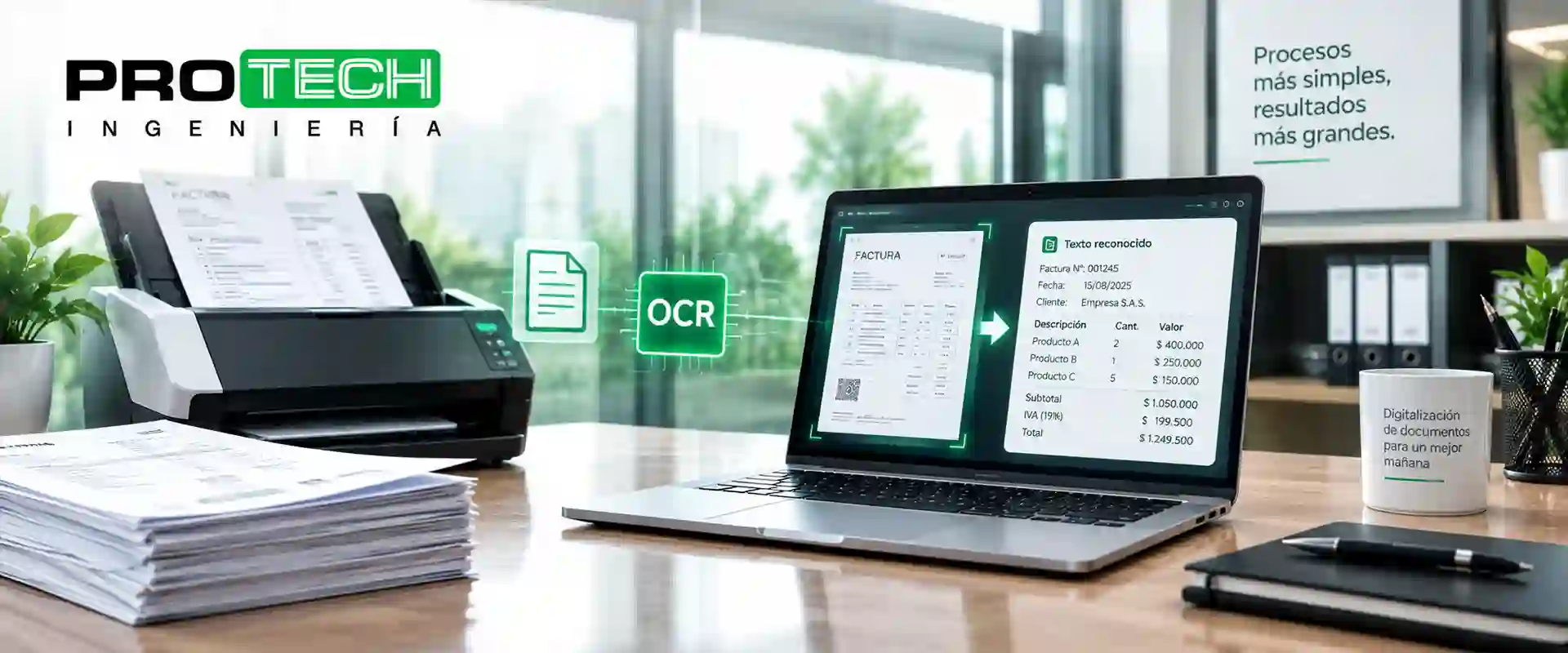
Digitization makes it possible to convert physical documents into electronic files, facilitating their consultation, distribution, and management. However, an efficient digitization project involves much more than scanning documents. Documentation must first be prepared, capture parameters must be established, image quality must be checked, files must be identified, and they must then be incorporated into an organized document structure.
Document digitization can provide significant benefits, such as reducing the physical space required, enabling information to be accessed from different locations, and speeding up document retrieval. However, to achieve these benefits, image capture must be complemented by organization and indexing processes.
Indexing makes it possible to associate descriptive information with each document, such as file number, date, name, identification number, document type, or responsible department. This allows searches to be performed using different fields rather than relying solely on file names.
Technologies such as OCR can also be used to recognize text contained in images and facilitate searches and information extraction. In projects involving large volumes of documents, automated data extraction, intelligent classification, and automation tools can reduce repetitive tasks and streamline certain processes.
Digitization must be accompanied by secure storage, backup copies, access controls, and digital preservation mechanisms. Electronic documents must remain available, intact, and usable throughout their required retention period, taking into account their formats, metadata, and preservation conditions.
Strategy 3: Implement Document Management Software
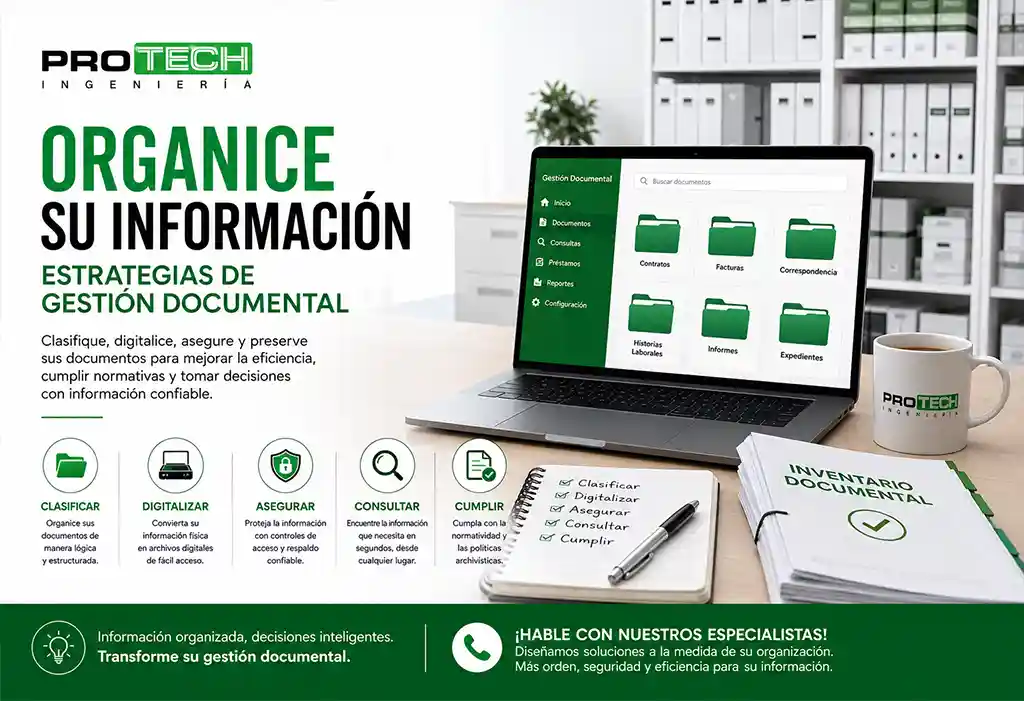
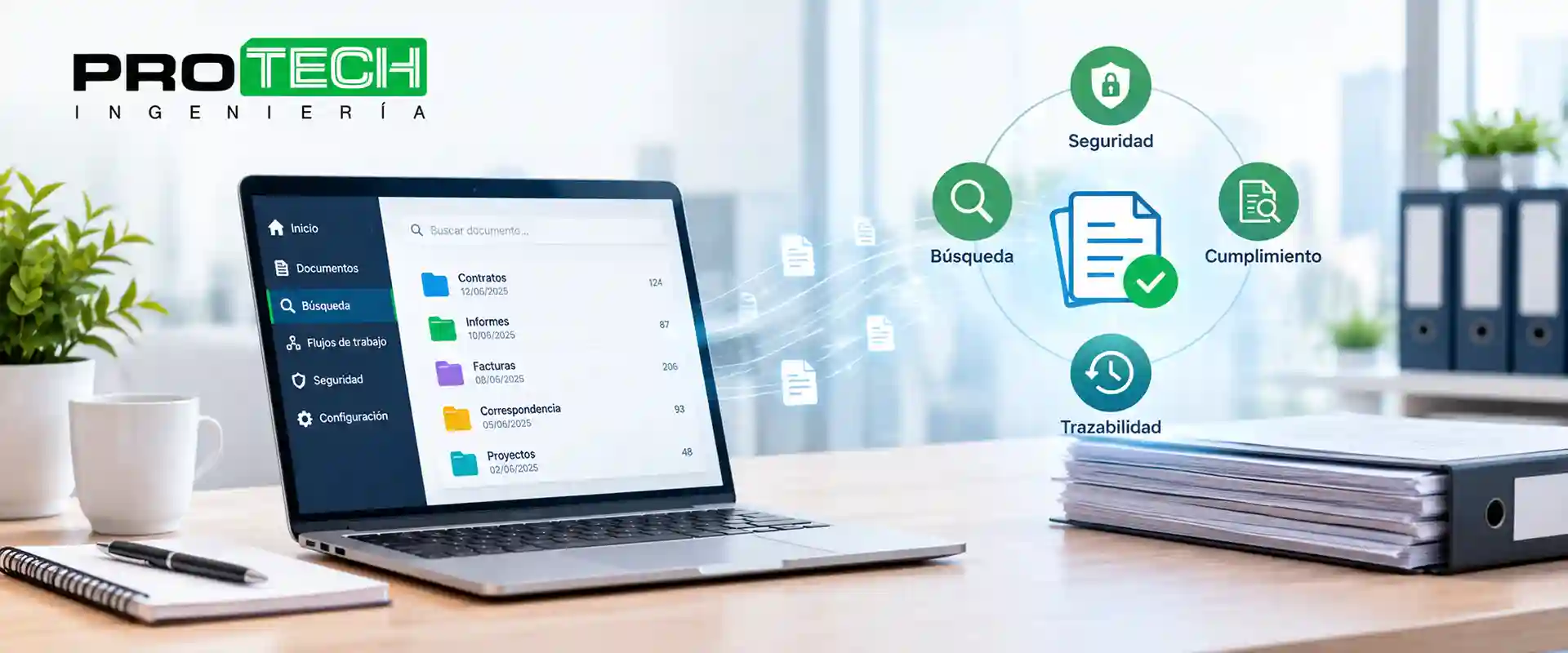
After establishing organizational criteria, a company can rely on document management software according to its needs and requirements. These solutions make it possible to centralize documents, control permissions, record activities, perform searches, and manage files through a structured platform.
When selecting a tool, it is advisable to review features such as advanced search, version control, traceability, metadata management, workflows, user profiles, auditing, and integration with other platforms. Connecting with ERP, CRM, WMS, or other applications helps reduce information silos and makes it easier to incorporate documents into business processes.
In addition, a system can include modules for document consultation and loan management. Automation makes it possible to assign tasks, generate alerts, monitor deadlines, and route documents to the appropriate individuals.
Technology implementation must be accompanied by proper planning. Before selecting a platform, it is advisable to identify the types of documents being managed, the users who will have access, the processes that require automation, and the storage, security, and preservation requirements.
Strategy 4: Establish Policies and Procedures
Technology needs to be supported by clear rules. For this reason, one of the main document management strategies is to establish policies governing the creation, receipt, classification, storage, consultation, modification, transfer, and disposition of documents.
These policies should specify who can create or modify information, which formats are approved, where documents must be stored, and how their different versions will be managed. They should also define access permissions and procedures for handling information that requires specific restrictions.
Staff training is equally important. Users must understand the document structure, naming conventions, their responsibilities, and the proper way to use the available tools. Training should be updated whenever changes occur in processes, technologies, or institutional requirements.
Strategy 5: Safeguard, Preserve, and Control Information
Document organization must include the custody of physical documents when they need to be preserved for specific periods. This involves having suitable facilities, access controls, identification of storage units, appropriate storage conditions, and controlled mechanisms for document consultation and loans.
In digital environments, preservation requires consideration of file formats, metadata, backups, migrations, and technological controls. The General Archive of the Nation (AGN) states that document management also encompasses preservation, transfers, appraisal, and document disposition. (General Archive) For this reason, preserving information does not mean storing it indefinitely without established criteria.
Document appraisal makes it possible to determine the importance of records and establish how they should be handled once their retention periods have expired. Document Retention Schedules are an essential tool for determining how long document groups must be retained and their final disposition according to the applicable archival framework.
Final disposition may involve temporary preservation, permanent preservation, or destruction when appropriate. This process must be carried out in accordance with the applicable instruments and procedures, avoiding the arbitrary destruction of documents.
Strategy 6: Conduct Monitoring, Auditing, and Continuous Improvement
A document management strategy must be reviewed periodically. Audits make it possible to verify whether documents are properly classified, whether permissions match users' roles, whether duplicates exist, whether retention periods are being observed, and whether established procedures are actually being followed.
It is also advisable to analyze consultation patterns. Identifying which documents are requested most frequently can help improve search and retrieval structures. When obsolete or duplicate documents are found, or information requiring special handling is identified, the corresponding procedures must be applied in accordance with established rules.
Continuous improvement also makes it possible to evaluate the performance of different document management services. Processes such as document organization, inventory management, digitization, indexing, data extraction, document custody, storage, consultation, document loans, and automation must work together and address the organization's actual needs.
A Comprehensive Approach to Organizing Information
Document management strategies deliver better results when they are understood as part of a complete lifecycle. A company can begin with a document assessment to identify volumes, document types, locations, conditions, and requirements. It can then organize and inventory its information, define archival instruments, digitize documents that require electronic access, index them, and transfer them to a centralized system.
From this point onward, documents can be managed through workflows, consultations, loans, access controls, and traceability mechanisms. Physical custody can complement the digital environment when certain documents must be preserved in their original format. Similarly, automation and integration with business systems can reduce manual tasks and improve information availability.
The goal should not be limited to reducing the amount of paper or increasing the number of digital files. True document transformation aims to make information easy to locate, reliable, secure, traceable, and useful for the organization's processes.
In Colombia, the General Archive of the Nation provides instruments and guidelines to support the implementation of document management, including tools related to the Document Management Program, Document Retention Schedules, Document Classification Schemes, and other instruments for managing information. (General Archive)
Likewise, ISO 15489-1 establishes concepts and principles related to the creation, capture, and management of records, including policies, responsibilities, training, controls, and processes applicable regardless of format or technological environment. (ISO)
Organized document management also facilitates the handling of internal and external requests. When documents are properly described and indexed, staff can respond more quickly, consult background information, verify records, and ensure the continuity of procedures. This is particularly important for organizations that manage large volumes of files and need to combine storage, custody, digitization, organization, and consultation services.
For this reason, before acquiring a tool or starting a digitization project, it is advisable to analyze existing processes. Technology must address document management needs, not the other way around. An assessment makes it possible to identify which information needs to be organized, which documents require digitization, which records need custody, which data must be indexed, who needs access, and which documents are subject to preservation, transfer, or final disposition.
Proper planning makes it possible to integrate different services into a single strategy and prevent each process from operating independently. In this way, document organization, digitization, indexing, data extraction, custody, storage, consultation, loans, automation, preservation, and final disposition can become components of a structured document management model capable of supporting the organization's growth and information needs.
Transform Your Document Management and Turn Your Information into a Strategic Asset
Does your company waste time searching for documents, deal with scattered files, or struggle to manage large volumes of information? At Protech Ingeniería, we help you build a document management strategy tailored to your organization's actual needs.
Start today!
Request a consultation and explore the available options for organizing your documents, facilitating access, protecting information, and improving your processes.


Comment (1)
Gestión documental empresarial: beneficios y soluciones para las organizaciones
October 13, 2026[…] relacionadas con este proceso, Protech Ingeniería presenta recomendaciones en su artículo Organice su información: estrategias de gestión documental, que explica cómo establecer criterios de organización y clasificación para facilitar el acceso […]