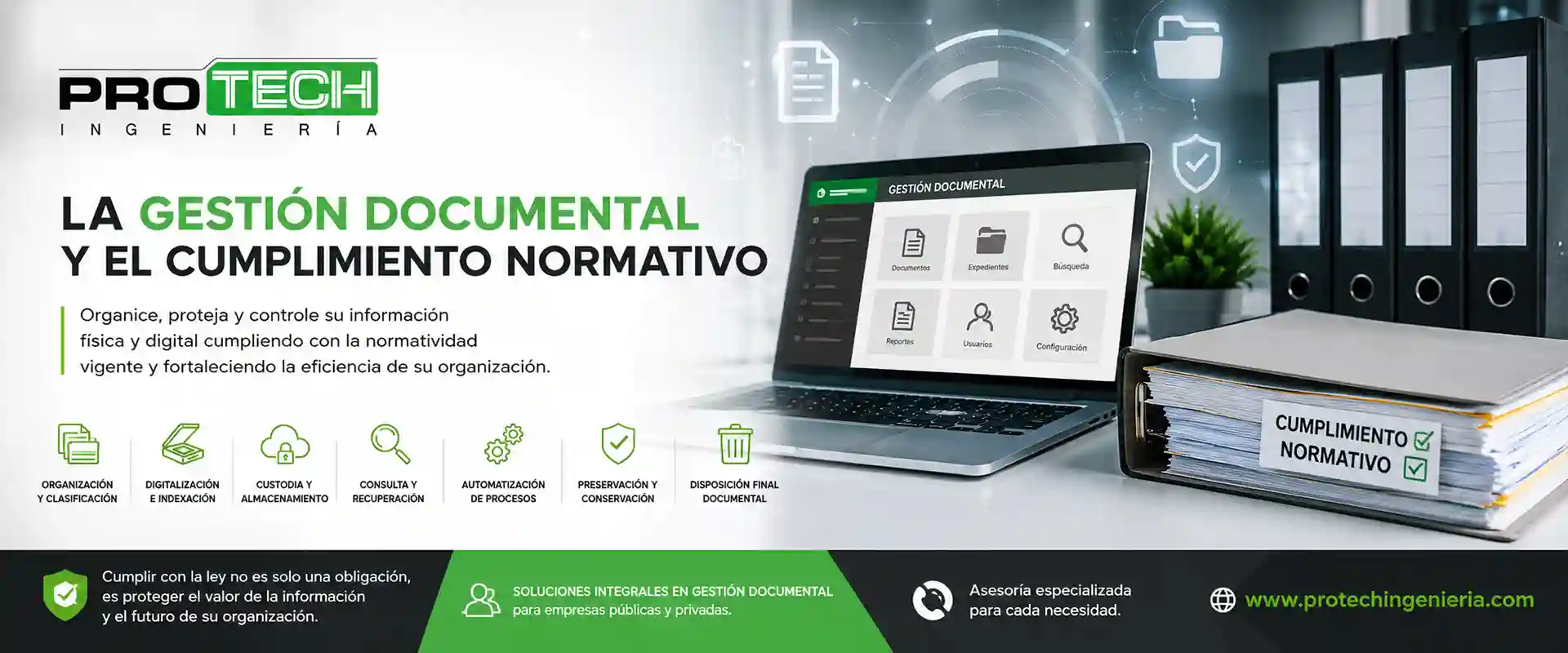



In an environment where organizations strive to become more efficient and environmentally responsible, implementing sustainable strategies has become a priority. In this context, document management in business sustainability is becoming increasingly important, as it enables organizations to optimize information management and reduce the environmental impact associated with traditional paper-based processes.
Document management should not be understood solely as an activity for storing files. It is a comprehensive discipline that encompasses every stage of the document lifecycle, from creation and capture to preservation and final disposition. Thanks to this approach, organizations can improve productivity, strengthen information security, and promote responsible practices that support sustainable development.
According to the National Archives of Colombia, proper document management is essential for preserving institutional memory, ensuring transparency, and guaranteeing the availability of information for the period required by current regulations.
What Is Document Management and Why Is It Important?
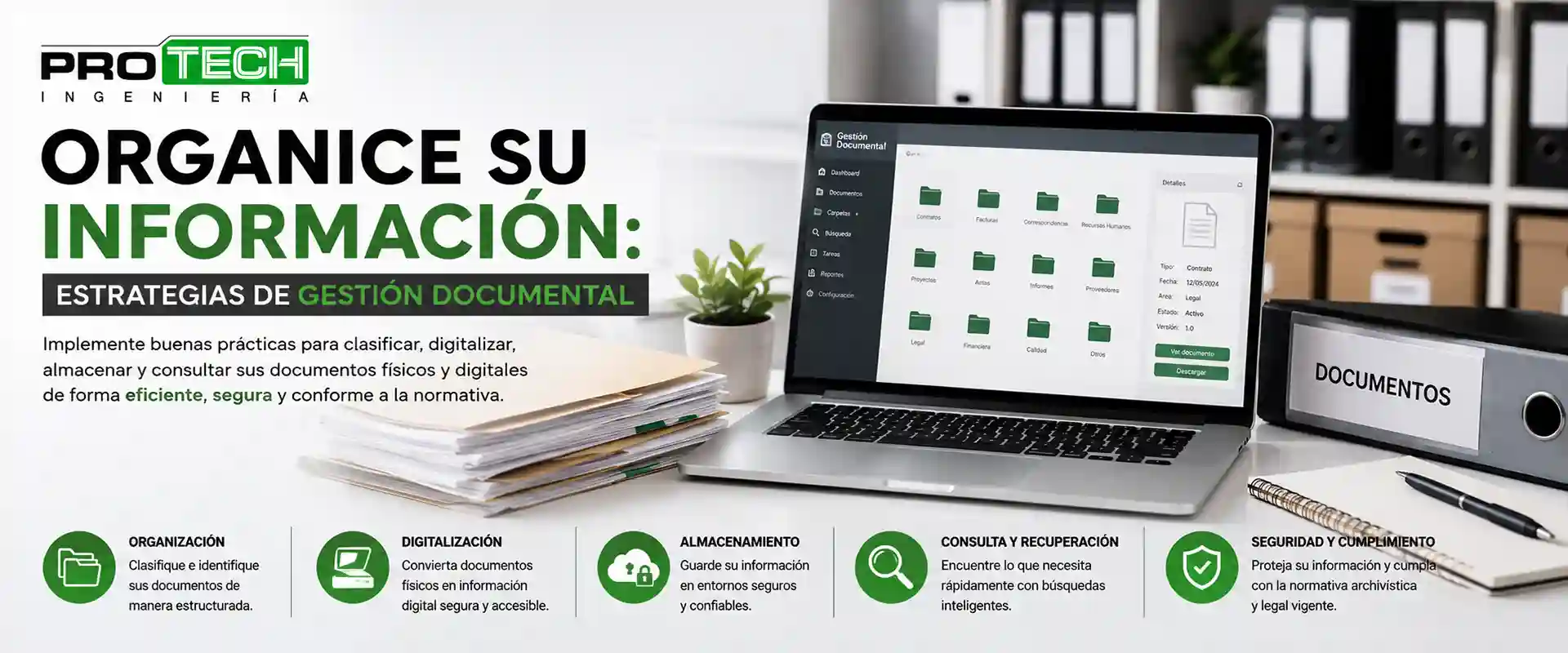
Document management refers to the set of processes and procedures designed to control and manage information throughout its lifecycle. These activities include data capture, organization, classification, indexing, storage, and retrieval.
Its main objective is to ensure that information is available whenever it is needed while maintaining high levels of security, integrity, and traceability. In addition, it helps optimize resources, reduce costs, and facilitate compliance with the legal requirements established for each industry.
Today, document management in business sustainability has become a strategic tool for driving digital transformation and supporting more efficient and environmentally friendly operating models.
Business Sustainability and Its Relationship with Information Management
Business sustainability involves maintaining a balance between economic growth, social responsibility, and environmental protection. Modern organizations seek to implement practices that enable them to achieve their financial goals without compromising the resources of future generations.
Within this framework, efficient document management plays a fundamental role. Reducing paper consumption, automating processes, and implementing digital technologies make it possible to significantly decrease the use of natural resources and optimize organizational operations.
The importance of sustainability is also promoted by the United Nations (UN), an organization that advances the Sustainable Development Goals and encourages the adoption of responsible practices across various economic sectors.
Document Digitization as a Tool to Reduce Environmental Impact
One of the most important services within document management is document digitization. This process converts physical records into electronic formats, making them easier to store and retrieve.
Document digitization significantly helps reduce paper consumption, lower printing costs, and optimize the space required for storing physical records. It also makes information immediately available, improving productivity and streamlining internal processes.
Document management in business sustainability finds one of its greatest allies in document digitization, as reducing paper consumption contributes to the conservation of natural resources and the reduction of the organization's carbon footprint.
In addition, document digitization supports the implementation of remote work models and online collaboration, allowing users to access information from any location while reducing the need for unnecessary travel.
Document Organization, Classification, and Indexing
Proper information organization is another fundamental pillar of document management. Document classification and indexing services make it possible to structure documents logically and establish criteria that facilitate their retrieval.
Document classification enables files to be grouped according to the organization's functions and activities, while document indexing allows keywords, codes, and metadata to be assigned to speed up searches.
Through these activities, organizations can reduce retrieval times, prevent document duplication, and improve the efficiency of their processes. In addition, document management in business sustainability is strengthened by optimizing resource utilization and eliminating unnecessary tasks.

The Importance of Data Capture in Digital Transformation
Data capture is another essential service within document management. This process makes it possible to extract information from physical or digital documents and integrate it into business systems, facilitating analysis and decision-making.
The implementation of specialized technologies helps reduce manual errors and improve data quality, enabling faster and more accurate decision-making.
Automated data capture enhances productivity and is part of the digital transformation initiatives that organizations are currently implementing to strengthen document management in business sustainability.
Document Storage and Specialized Archival Services
Document custody is an essential service for organizations that need to preserve large volumes of physical records. This process involves storing documents in facilities specifically designed to ensure their protection and long-term preservation.
Specialized storage centers are equipped with security systems, environmental controls, and procedures aimed at maintaining the integrity of documents.
Document custody helps free up office space, reduce infrastructure costs, and ensure that information is available whenever it is needed. It also contributes to the proper preservation of documents and supports more efficient resource management.
Additionally, digital document storage provides new opportunities to improve accessibility and strengthen business continuity.
Document Retrieval and Loan Services
Timely access to information is one of the most important aspects for any organization. Document retrieval and document loan services make it possible to locate and provide the required documents in a timely manner, ensuring the continuity of business operations.
The implementation of technological platforms enables remote access to documents and enhances the user experience. This helps increase productivity while reducing the need to reproduce paper documents.
Document management in business sustainability promotes these types of solutions, enabling organizations to optimize resources and streamline the flow of information.
Document Automation to Increase Efficiency
Document automation has become one of the main drivers of digital transformation. By implementing technological tools, organizations can optimize repetitive processes, reduce human error, and improve response times.
Automated workflows make it possible to manage approvals, distribute documents, and control various activities more efficiently.
Automation not only improves productivity but also helps reduce the consumption of physical resources and strengthens organizational sustainability.
Document management in business sustainability greatly benefits from these technologies, enabling organizations to develop more agile, secure, and efficient processes.
Document Preservation and Conservation
Preservation strategies include environmental controls, maintenance programs, technology migration processes, and backup mechanisms designed to minimize the risks associated with information loss.
Document preservation aims to ensure the long-term integrity, authenticity, and availability of information. Both physical and digital documents require specific measures to prevent deterioration and ensure their preservation.
According to UNESCO, the preservation of documentary heritage is an essential component of safeguarding historical memory and ensuring access to knowledge.
Final Disposition and Document Retention Schedules
Document final disposition represents the final stage of the document lifecycle. This process is carried out based on Document Retention Schedules and Document Valuation Schedules, which determine which records must be retained and which can be securely disposed of.
The controlled disposal of information prevents the unnecessary accumulation of records and helps optimize available space and resources.
These activities are an integral part of document management in business sustainability, as they help maintain organized records and support more efficient information management.
New Technologies and the Future of Document Management
Technological advancements will continue transforming the way organizations manage their information. Technologies such as artificial intelligence, Big Data, advanced automation, and cloud computing will strengthen document management systems and improve analysis and decision-making processes.
Likewise, the Ministry of Environment and Sustainable Development of Colombia promotes initiatives aimed at encouraging responsible and sustainable production models.
In this context, document management in business sustainability will continue to establish itself as a fundamental strategy for organizations seeking to combine operational efficiency, digital transformation, and environmental responsibility.
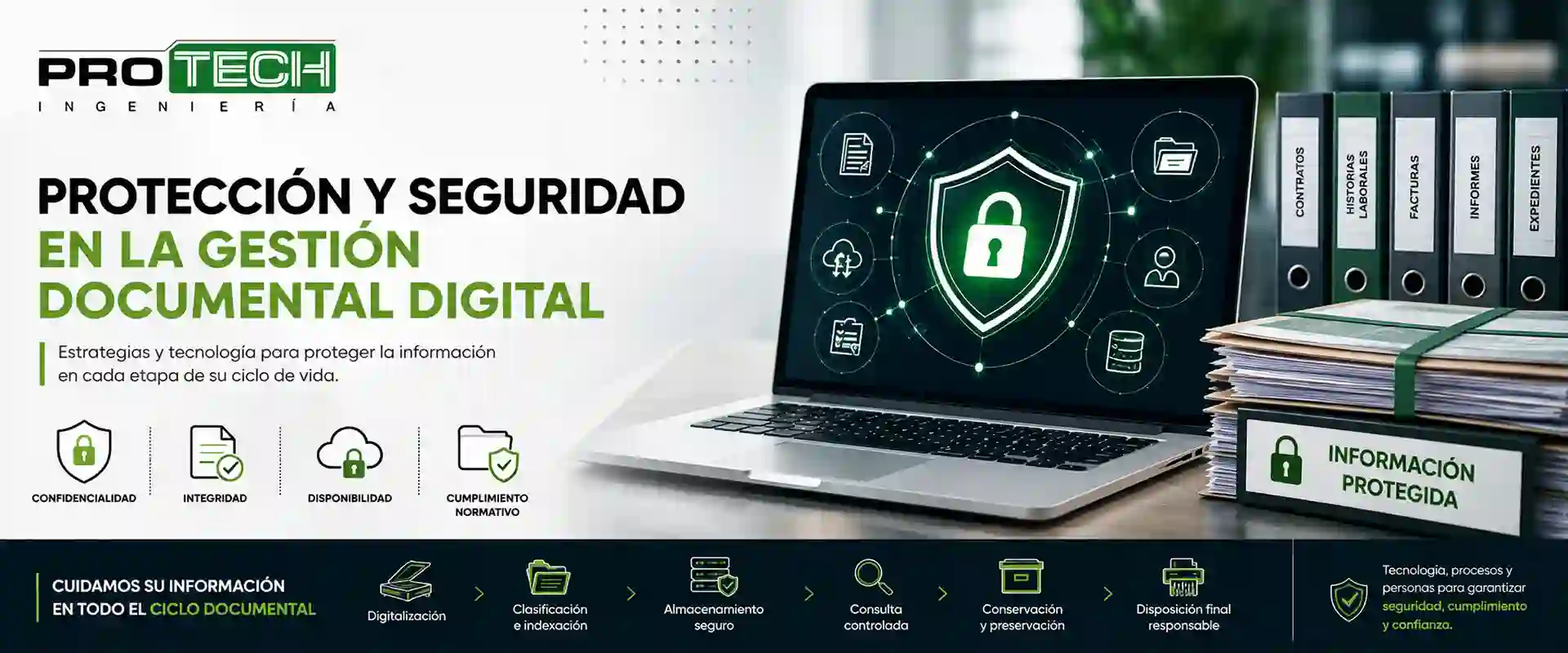
The integration of services such as document digitization, data capture, organization, classification, indexing, document custody, storage, retrieval, automation, preservation, and final disposition demonstrates that document management goes beyond the simple administration of records and becomes a key element in building more competitive, innovative, and sustainability-driven organizations.
Drive Sustainability and Efficiency with Comprehensive Document Management
Implementing specialized document management solutions helps improve productivity, reduce operational costs, and ensure efficient information management throughout the entire document lifecycle.
Start today!
Start today on the path toward smarter, more secure, and more sustainable document management, and transform the way your organization manages, protects, and maximizes the value of one of its most important assets: information.