

Today, organizations generate large volumes of information that must be managed efficiently. Contracts, invoices, administrative records, internal communications, and operational logs are part of the daily document flow of any institution. In this context, the electronic record has become a key tool in modern document management, enabling process optimization and reducing search times for critical information.
The evolution of technology and the growth of document management systems have allowed companies to adopt digital solutions capable of organizing, storing, and retrieving documents more quickly. Thanks to these advances, electronic records not only facilitate access to information but also strengthen processes such as document digitization, indexing, records custody, and workflow automation.
Additionally, the adoption of electronic records is aligned with digital transformation policies promoted by various public institutions. For example, entities such as the General Archive of the Nation of Colombia promote guidelines for the proper management of electronic documents within organizations, as can be consulted on the official portal of the
Properly implementing these solutions allows organizations to significantly reduce search times while also strengthening information security and administrative efficiency.
What is an electronic record?
An electronic record consists of a structured set of related digital documents stored within a specialized information system. This system allows administrative, legal, or technical information to be organized in a digital environment that facilitates its management throughout the document lifecycle.
Unlike traditional physical archives, where documents are stored in folders and filing cabinets, the electronic record centralizes information in technological platforms designed to facilitate document consultation, classification, and retrieval.
Among the main characteristics of the electronic record are:
Optimized storage
Digitized documents are stored in servers or document repositories that significantly reduce the need for physical space. This process is complemented by services such as document digitization, mass scanning, indexing, and document classification, enabling reduced search times by structuring information in an organized manner.
Fast and controlled access
One of the main benefits of electronic records is that they allow information to be accessed from any authorized location. Users can retrieve documents through secure digital platforms, which helps to reduce search times and improve administrative staff productivity.
Information security and backup
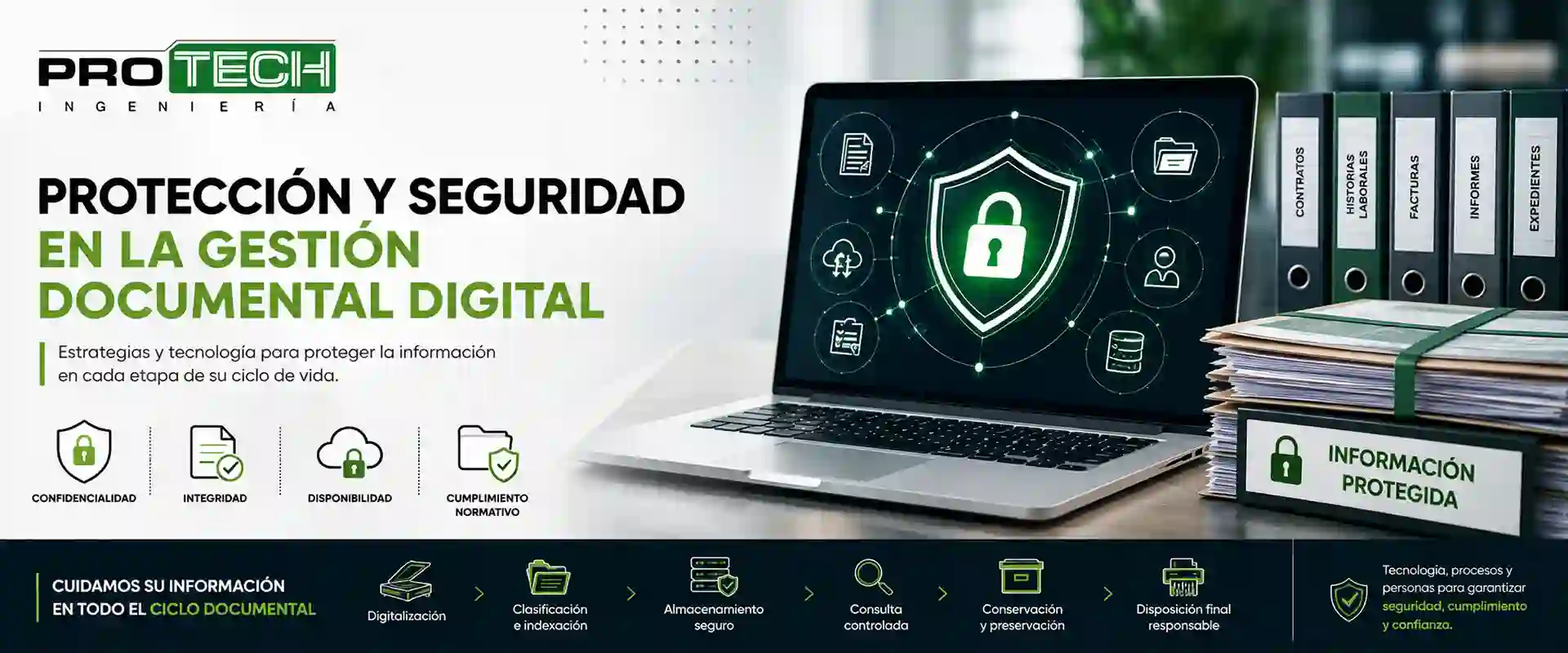
Document management systems integrate security tools such as encryption, access control, user traceability, and automatic backups. These features protect information from loss, unauthorized access, or technological incidents.
Electronic document management is a fundamental component for modernizing both public and private institutions.
Team collaboration
Electronic records facilitate collaboration between different areas of an organization. Multiple users can review documents simultaneously, track changes, or approve processes within the same system, which contributes to reducing search times and accelerating decision-making.
Advantages of electronic records in document management
The implementation of electronic records within a comprehensive document management system provides multiple operational and strategic benefits for organizations.
Greater operational efficiency
One of the main challenges in managing physical documents is the difficulty of locating information quickly. When files are not properly organized or are distributed across different areas, the search process can become slow and costly.
Implementing electronic records makes it possible to reduce search times through advanced search tools. Document systems integrate search engines that allow documents to be located by keywords, dates, metadata, or categories.
This process is complemented by document management services such as:
- Certified document digitization
- Indexing and data capture
- Document classification
- Workflow automation
- Secure digital storage
By combining these services, organizations can reduce search times and significantly improve the efficiency of their administrative processes.
Structured organization of information
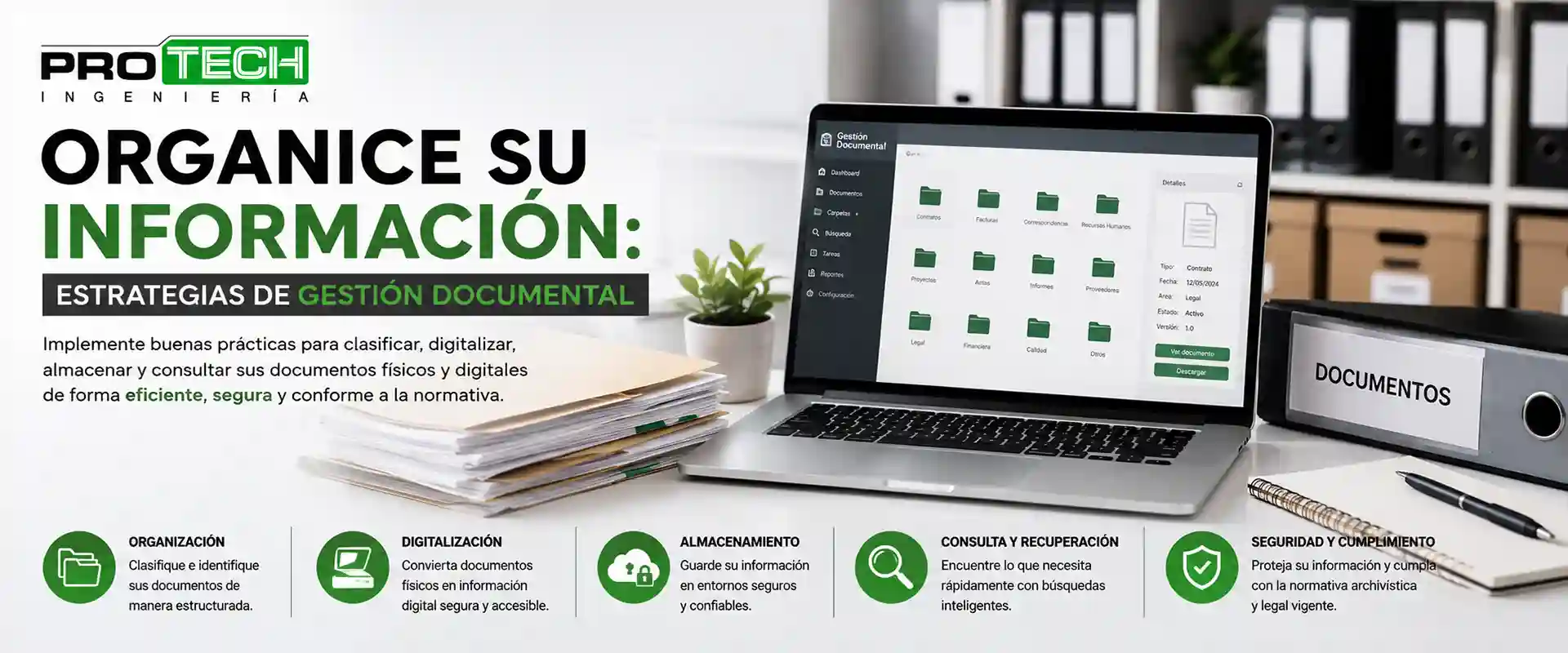
Document management systems allow information to be organized through hierarchical structures, digital folders, metadata, and intelligent tags. This facilitates the classification of documents by departments, processes, projects, or document types.
Proper organization of electronic records directly contributes to reducing search times, as users can locate specific information within seconds.
In addition, document classification is supported by archival instruments such as records retention schedules, classification schemes, and archival policies—guidelines recommended by institutions such as the General Archive of the Nation of Colombia.
Document protection and preservation
Another key aspect of document management is the long-term preservation of information. Electronic records make it possible to implement digital preservation strategies that ensure the integrity and availability of documents throughout their lifecycle.
Services such as document custody, secure storage, and automated backups help prevent information loss.
By keeping documents properly stored and backed up, organizations can reduce search times, as information remains consistently available within the document management system.

Best practices to reduce search times in electronic records
For an electronic record system to function efficiently, it is necessary to apply methodologies and best practices related to document management.
Design a clear document structure
One of the first strategies to reduce search times is to design an organized and coherent document structure. This involves creating hierarchies of digital folders that reflect the organization’s operational structure.
Documents can be organized by:
- Departments or areas
- Projects
- Administrative processes
- Dates or periods
- Document types
Applying archival criteria facilitates the quick identification of documents and helps reduce search times within the electronic record system.
Implement document indexing processes
Indexing consists of assigning metadata or tags to each digitized document. These metadata may include information such as:
- Document name
- Record number
- Creation date
- Responsible person
- Document category
Through this process, document management systems can locate information with greater accuracy. Proper indexing makes it possible to reduce search times and improve document retrieval within the digital repository.
Automate document management workflows
Automation is another key component for optimizing access to information. Modern systems allow the creation of automated workflows for correspondence registration, document approval, contract management, and record control.
Document automation reduces manual tasks and enables faster access to required documentation, directly contributing to reduced search times.
Integration of electronic records with other enterprise systems
Electronic records reach their full potential when integrated with other corporate systems, such as enterprise management platforms, financial systems, or customer service tools.
Connection with enterprise platforms
Interoperability between systems allows digital documents to be linked with administrative, financial, or commercial processes. This enables users to access relevant information from a single platform.
By centralizing information within an integrated digital ecosystem, organizations can reduce search times and improve operational efficiency.
Use of document analytics
Document management systems also allow the collection of metrics on document usage. These tools analyze search patterns, consultation frequency, and user behavior within the system.
With this information, organizations can identify opportunities to reorganize files or improve document structures, which once again contributes to reducing search times.
Emerging technologies in electronic records
The development of new technologies is transforming the way digital documents are managed.
Tools such as artificial intelligence, machine learning, and automated document recognition make it possible to identify relevant information within large volumes of data.
These technologies enable automatic document classification, text recognition through OCR, and the suggestion of related documents during a search.
Thanks to these advances, organizations can reduce search times even more efficiently, as systems are capable of anticipating user needs and facilitating information retrieval.
In addition, the integration of technologies such as document automation, intelligent data capture, and predictive analytics strengthens all services associated with document management, including:
- Document digitization
- Electronic records management
- Physical archive custody
- Secure digital storage
- Document consultation
- Digital preservation
- Final document disposition
When these solutions are implemented in an integrated manner, organizations can reduce search times, improve administrative efficiency, and optimize information management.
The progressive adoption of these tools will continue transforming document management in the coming years, enabling institutions to handle their information in a more structured, secure, and accessible way within increasingly advanced digital environments.
Optimize your organization’s document management
If your organization still spends too much time searching for documents in physical filing cabinets, reviewing scattered folders, or trying to locate information across different systems, it is time to move toward a modern and structured document management approach.
Start today!
At Protech Ingeniería, comprehensive solutions are developed to modernize document administration through tools that combine digitization, automation, electronic records management, and secure information storage.