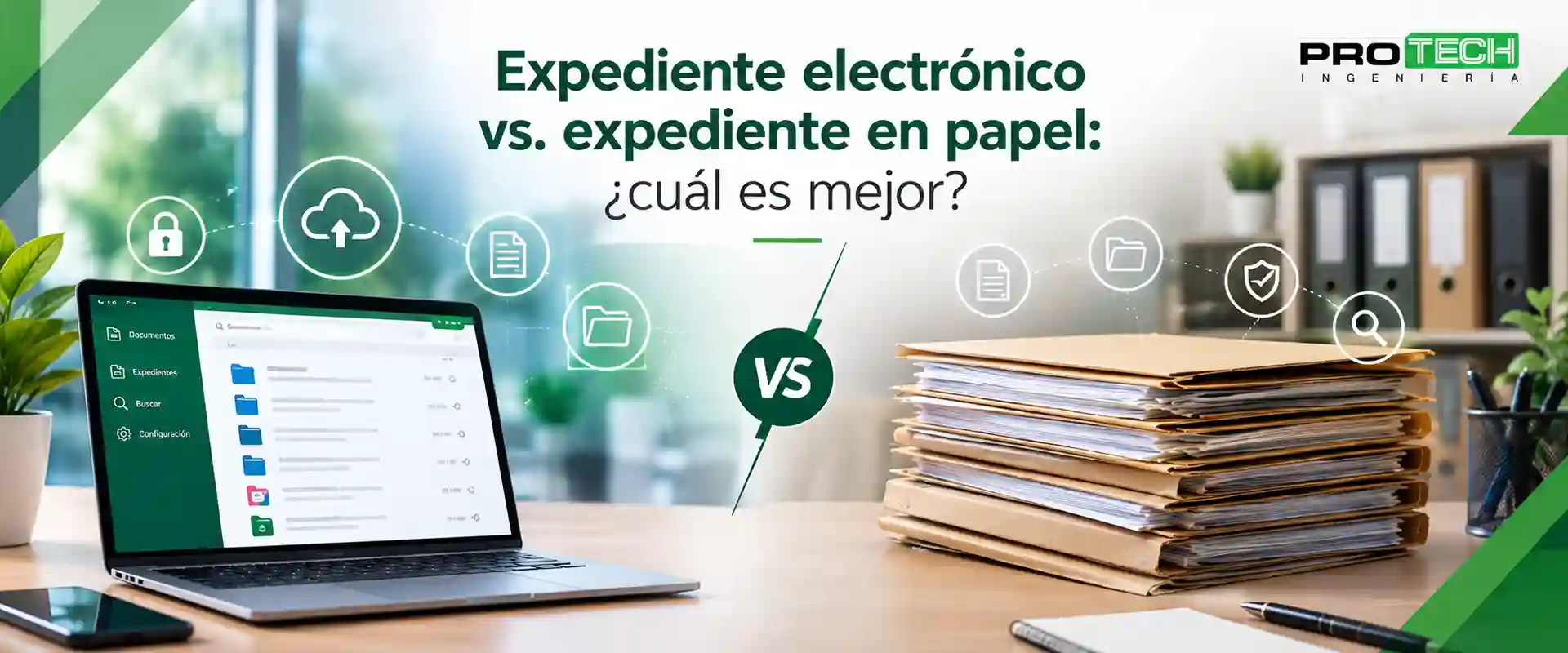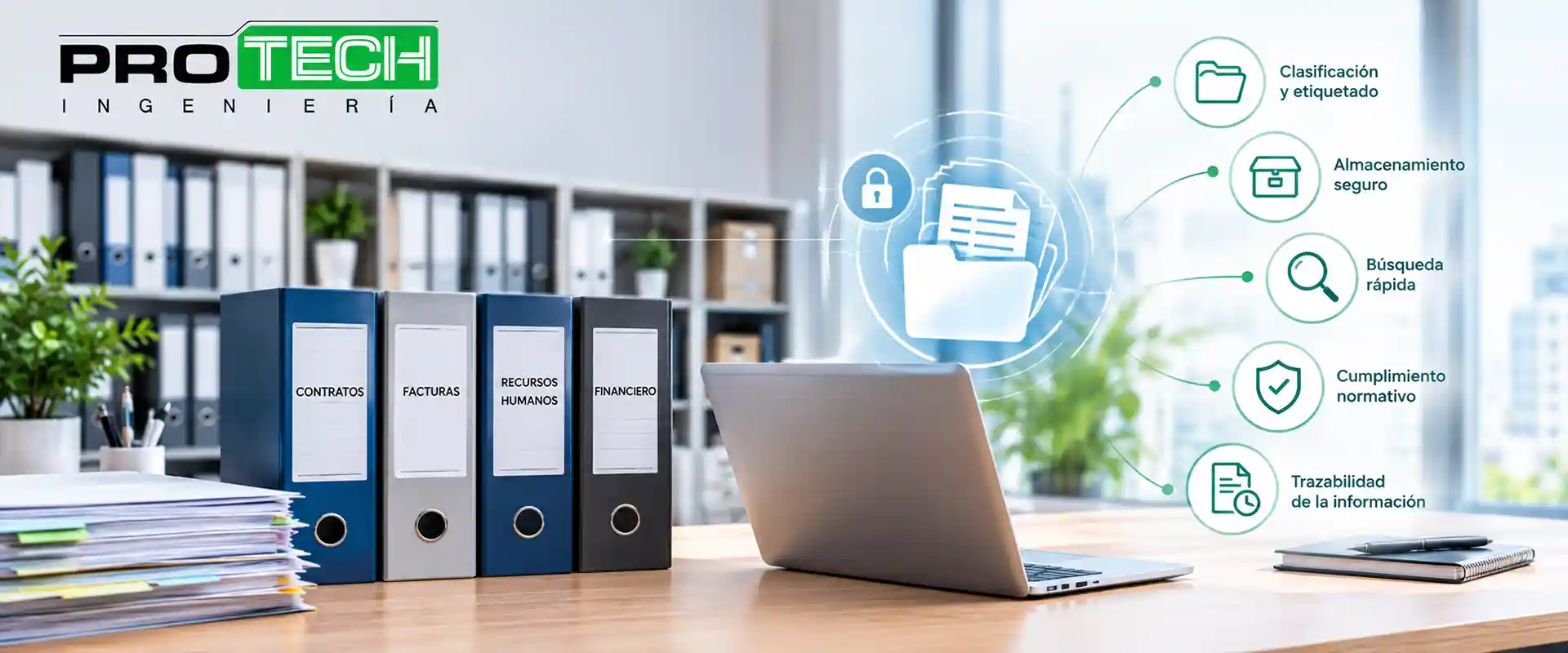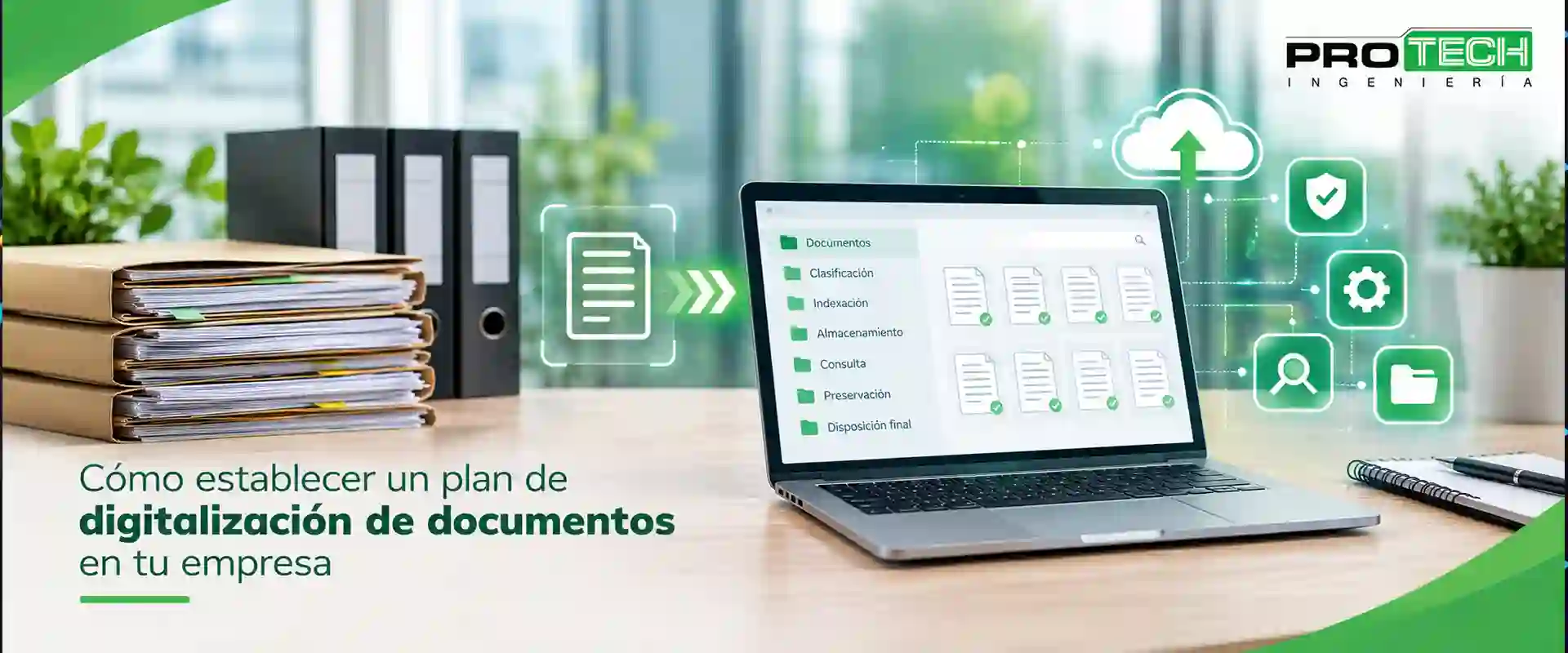



Digital transformation has profoundly changed the way organizations manage their information. In an environment where speed, data availability, and security are key factors for competitiveness, cloud-based electronic records have become a strategic alternative for modernizing document management. Today, public and private organizations are looking for solutions that allow them to manage large volumes of documents without relying exclusively on physical files, reducing operational times and improving access to information.
The adoption of cloud-based electronic records represents not only a technological change but also an evolution in the way the entire document lifecycle is managed. From information capture to digital preservation and final disposition, this model facilitates the integration of multiple document management services, ensuring that information remains organized, protected, and available whenever it is needed.
In this context, processes such as document digitization, file organization, document indexing, classification, workflow automation, physical and digital document custody, secure storage, and electronic document retrieval play a fundamental role in ensuring efficient document management in compliance with current regulations.
Immediate access to information from anywhere
One of the main benefits of cloud-based electronic records is the ability to access information from any location with an internet connection. This feature is particularly valuable for organizations with offices in different cities, employees working in hybrid environments, or teams that need to access records continuously to carry out their activities.
Unlike traditional archives, where locating a document can take several minutes or even hours, electronic records allow information to be retrieved within seconds thanks to document indexing processes and specialized search engines. This significantly improves productivity and reduces the time spent on administrative tasks.
The permanent availability of documents also strengthens business continuity. In unexpected situations, such as mobility restrictions or emergencies that prevent access to physical offices, cloud-based electronic records ensure that information remains available to authorized users without disrupting the organization's operations.
Efficient collaboration between work teams
Another important benefit is the facilitation of collaborative work. When documents are stored within a cloud-based electronic record, different users can access the same information simultaneously, avoiding duplicate files, outdated versions, or information loss caused by exchanging documents via email.
This capability improves coordination between departments such as human resources, legal, finance, procurement, accounts receivable, customer service, and administrative management, where timely access to documentation is essential for decision-making.
In addition, document automation enables organizations to establish workflows for the approval, registration, review, and tracking of records, significantly reducing manual activities and minimizing the possibility of human error. These tools optimize internal processes and contribute to much more organized document management.
The implementation of technological solutions also supports other specialized services such as intelligent data capture, optical character recognition (OCR), automatic document classification, and integration with enterprise systems, enabling organizations to build a fully digital document management ecosystem.
Greater security for institutional information
Document protection is a priority for any organization. For this reason, cloud-based electronic records incorporate advanced mechanisms that strengthen information security against data loss, unauthorized access, and technological incidents.
Specialized providers implement controls such as data encryption, multifactor authentication, audit logs, permission management, continuous monitoring, and automated backups. These measures significantly reduce the risks associated with traditional document management.
Unlike physical archives, which can deteriorate due to humidity, fires, floods, or improper handling, electronic documents remain protected through redundant storage systems that facilitate their recovery in the event of any unforeseen circumstance.
This level of security also complements other document management services such as document custody, digital preservation, specialized storage, and archive management, ensuring that information maintains its authenticity, integrity, and availability throughout its lifecycle.
Likewise, implementing cloud-based electronic records facilitates compliance with document preservation policies and regulations related to records management. In Colombia, entities such as the General Archive of the Nation establish guidelines to strengthen document management and promote best practices for handling institutional information.
Time savings, resource pptimization, and process automation
Another major benefit of cloud-based electronic records is their positive impact on organizational productivity. For many years, document management was based on physical archives that required organizations to invest time in classifying, transferring, searching for, and storing documents. Although these activities were necessary, they consumed human and financial resources that could otherwise be allocated to strategic processes focused on business growth.
With the implementation of cloud-based electronic records, many of these tasks can be automated. Documents can be incorporated into the system through mass digitization processes, intelligent data capture, or integration with enterprise platforms, eliminating the need to continuously handle paper documents. As a result, administrative departments can significantly reduce response times and improve service for both internal and external customers.
Document automation also allows organizations to configure rules for the receipt, classification, indexing, and distribution of information. In this way, each document can be automatically routed to the appropriate person responsible, preventing delays caused by manual processes and reducing the risk of errors during records management.
Likewise, document indexing facilitates advanced searches using keywords, codes, dates, identification numbers, or any other criteria defined by the organization. This makes it possible to locate information within seconds, even when the document volume reaches millions of records.
Another relevant aspect is the optimization of physical space. By migrating to cloud-based electronic records, organizations significantly reduce the need to maintain large areas dedicated to storing paper documents. However, this does not mean that physical archives will disappear completely. In many sectors, it is still necessary to preserve original documents due to legal or administrative requirements. For this reason, services such as document custody continue to be essential within a comprehensive document management strategy.
The combination of specialized physical custody and digital custody offers a hybrid model that ensures the proper preservation of all institutional information throughout the periods established by the Document Retention Schedules (TRD) and the Document Appraisal Tables (TVD). At the same time, electronic storage allows users to access digital versions without constantly handling original documents, thereby extending their useful life.
Cloud-based electronic records also support long-term digital preservation. Through backup policies, version control, and continuous monitoring, organizations can ensure the integrity, authenticity, and availability of information even years after it was originally created.
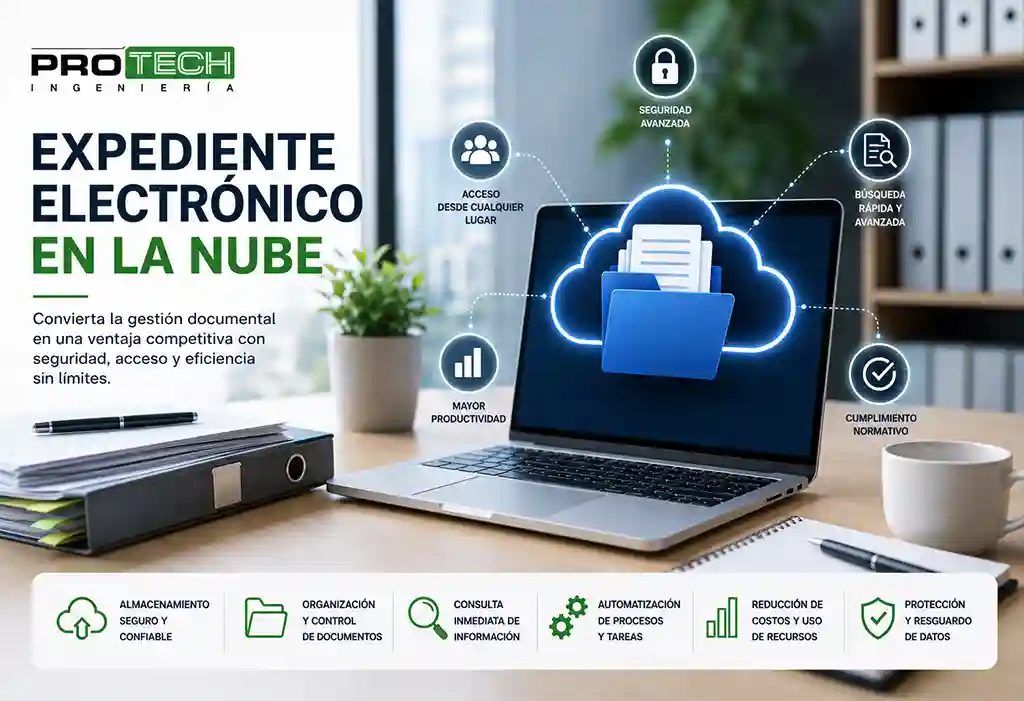
These advantages are further strengthened when the organization implements an integrated model that includes services such as file organization, certified digitization, document capture, classification, indexing, process automation, electronic retrieval, and secure storage. Integrating all these components makes it possible to build efficient document management that is prepared to address today's technological challenges.
Challenges associated with cloud-based electronic records
Although cloud-based electronic records offer significant benefits for document management, their implementation also involves addressing various challenges that require proper planning.
One of the main challenges is dependence on technological infrastructure. Continuous access to information depends on a stable internet connection and the availability of the cloud service provider. Any disruption, even temporary, can affect critical processes if the organization does not have adequate contingency plans in place.
For this reason, before selecting a technological platform, it is essential to evaluate aspects such as service availability, Service Level Agreements (SLAs), disaster recovery capabilities, data center redundancy, and specialized technical support.
Another important challenge involves organizational change management. Implementing cloud-based electronic records transforms the way employees manage information. Many people are accustomed to traditional paper-based processes, so transitioning to fully digital environments requires ongoing training programs and support strategies that facilitate the adoption of new tools.
Continuous staff training is an essential component for ensuring the success of the project. Installing a technological platform is not enough; it is also necessary to teach best practices related to document classification, the proper use of metadata, records retrieval, and information security.
In terms of cybersecurity, there are also challenges that must be carefully managed. Although providers implement high protection standards, organizations must establish internal policies to control access, strengthen user authentication, monitor suspicious activities, and protect information against threats such as ransomware, phishing, and data breaches.
In Colombia, organizations must also consider compliance with regulations related to personal data protection and document management. To this end, it is advisable to consult the guidelines published by the Ministry of Information and Communication Technologies (MinTIC) and the Superintendence of Industry and Commerce, organizations that provide guidance on digital security, digital transformation, and the proper handling of information.
Standardization: Key factors for efficient document management
As more organizations implement cloud-based electronic records, there is also a growing need to ensure that different technological platforms can exchange information efficiently. Interoperability has become one of the main challenges in digital transformation projects, as many companies use multiple applications to manage their administrative, financial, commercial, legal, and operational processes.
Cuando un sistema documental no puede comunicarse correctamente con un software ERP, un CRM, plataformas de recursos humanos o sistemas de facturación electrónica, pueden generarse duplicidades de información, reprocesos y dificultades para mantener actualizados los expedientes. Por ello, antes de implementar un expediente electrónico en la nube, resulta conveniente analizar la capacidad de integración con las herramientas tecnológicas que ya hacen parte de la infraestructura organizacional.
La estandarización también desempeña un papel fundamental. Definir políticas claras para nombrar documentos, establecer metadatos, utilizar formatos compatibles y mantener estructuras homogéneas facilita la organización documental y mejora la experiencia de los usuarios durante las consultas de información.
En este contexto, servicios especializados como la organización de archivos, clasificación documental, indexación y la automatización de flujos de trabajo permiten que toda la documentación siga criterios uniformes durante cada etapa de su ciclo de vida. Esto favorece la trazabilidad de los documentos y reduce considerablemente el riesgo de pérdida de información.
Las organizaciones que adoptan estándares internacionales para la gestión de documentos también fortalecen sus procesos internos. La aplicación de normas como la ISO 15489, orientada a la gestión documental, contribuye a mejorar el control de la información, la conservación de evidencias y la eficiencia administrativa. Para conocer más sobre estos estándares puede consultarse la información publicada por la Organización Internacional de Normalización (ISO).
Costos de implementación y evaluación del retorno de la inversión
Otro aspecto que merece especial atención corresponde a la inversión necesaria para implementar un expediente electrónico en la nube. Aunque muchas organizaciones experimentan importantes reducciones de costos operativos a mediano y largo plazo, la etapa inicial requiere una adecuada planificación financiera.
Entre los principales componentes de inversión se encuentran la adquisición o contratación del software, la migración de documentos, la digitalización de archivos físicos, la parametrización de la plataforma, la capacitación del personal y la implementación de políticas de seguridad informática.
Sin embargo, limitar el análisis únicamente al costo inicial puede conducir a decisiones poco acertadas. El verdadero valor del expediente electrónico en la nube se refleja en beneficios como la disminución de tiempos de búsqueda documental, la reducción del consumo de papel, menores costos de impresión, optimización del espacio físico, incremento de la productividad y mejora en la calidad del servicio ofrecido a clientes y ciudadanos.
Para medir adecuadamente el retorno de la inversión (ROI), las organizaciones pueden establecer indicadores relacionados con la velocidad de consulta documental, la disminución de reprocesos, el porcentaje de expedientes digitalizados, la reducción de costos administrativos y el cumplimiento de los tiempos establecidos para la atención de solicitudes internas y externas.
Asimismo, resulta recomendable desarrollar auditorías periódicas que permitan identificar oportunidades de mejora y verificar que el sistema continúe respondiendo a las necesidades de la organización conforme evolucionan sus procesos documentales.
Tendencias que impulsan el futuro del expediente electrónico en la nube
La evolución tecnológica continuará fortaleciendo el papel del expediente electrónico en la nube dentro de las estrategias de transformación digital. Cada vez más organizaciones incorporan herramientas basadas en inteligencia artificial, aprendizaje automático (Machine Learning) y analítica de datos para optimizar la administración documental y reducir las tareas repetitivas.
Estas tecnologías permiten automatizar la clasificación documental, identificar automáticamente el tipo de documento recibido, extraer información mediante reconocimiento óptico de caracteres (OCR), validar datos, detectar inconsistencias y sugerir rutas de aprobación según reglas previamente configuradas.
La inteligencia artificial también facilita la consulta documental mediante buscadores inteligentes capaces de comprender el contexto de las solicitudes realizadas por los usuarios, ofreciendo resultados más precisos y reduciendo considerablemente los tiempos de localización de la información.
Otro avance importante corresponde a la automatización de expedientes electrónicos mediante flujos documentales inteligentes. Gracias a esta funcionalidad, los documentos pueden avanzar automáticamente entre diferentes responsables, generar alertas de vencimiento, controlar versiones, administrar firmas electrónicas y registrar cada actividad realizada sobre el expediente, fortaleciendo la trazabilidad documental.
De igual manera, la preservación digital continuará cobrando mayor relevancia. Las organizaciones necesitarán garantizar que sus documentos permanezcan íntegros, accesibles y auténticos durante largos períodos, independientemente de la evolución tecnológica. Para ello será indispensable implementar políticas permanentes de respaldo, migración de formatos, almacenamiento redundante y monitoreo continuo de la información.
En Colombia, la transformación digital también continúa siendo impulsada mediante iniciativas orientadas al fortalecimiento del Estado Digital y la modernización administrativa. Las recomendaciones publicadas por el Ministerio TIC de Colombia y los lineamientos emitidos por el Archivo General de la Nación constituyen referentes importantes para las organizaciones que buscan implementar modelos sólidos de gestión documental electrónica.
Paralelamente, la integración del expediente electrónico en la nube con servicios como digitalización certificada, captura inteligente de información, custodia documental, administración de archivos físicos, almacenamiento digital, automatización de procesos, consulta electrónica, organización archivística, preservación digital y disposición final permitirá construir ecosistemas documentales cada vez más seguros, eficientes y escalables. Este enfoque integral responde a las necesidades actuales de empresas e instituciones que buscan fortalecer el control de la información, garantizar el cumplimiento normativo y mejorar continuamente la eficiencia de su gestión documental.
Lleve la gestión documental de su organización al siguiente nivel con un expediente electrónico en la nube
Si su empresa todavía depende de archivos físicos o enfrenta dificultades para localizar documentos, controlar versiones, compartir información entre áreas o cumplir con los tiempos de respuesta, es el momento de modernizar su gestión documental mediante soluciones tecnológicas diseñadas para mejorar la productividad y la toma de decisiones.
Start today!
En In Protech Ingeniería contamos con la experiencia, el conocimiento y la tecnología necesaria para acompañar a organizaciones públicas y privadas en la implementación de proyectos integrales de gestión documental.