


Technological transformation has profoundly changed the way organizations manage their information. Today, digital documentation has become an essential resource for companies seeking to increase productivity, strengthen data security, and optimize the execution of their internal processes. More than just a trend, document digitization represents a strategic necessity for organizations seeking to adapt to the demands of an increasingly competitive and dynamic business environment.
The shift toward digital environments has enabled information to move beyond exclusive reliance on physical files and be managed through specialized technological platforms. This transition not only supports the organization and retrieval of documents but also promotes task automation, improves collaboration between departments, and facilitates access to information from any location.
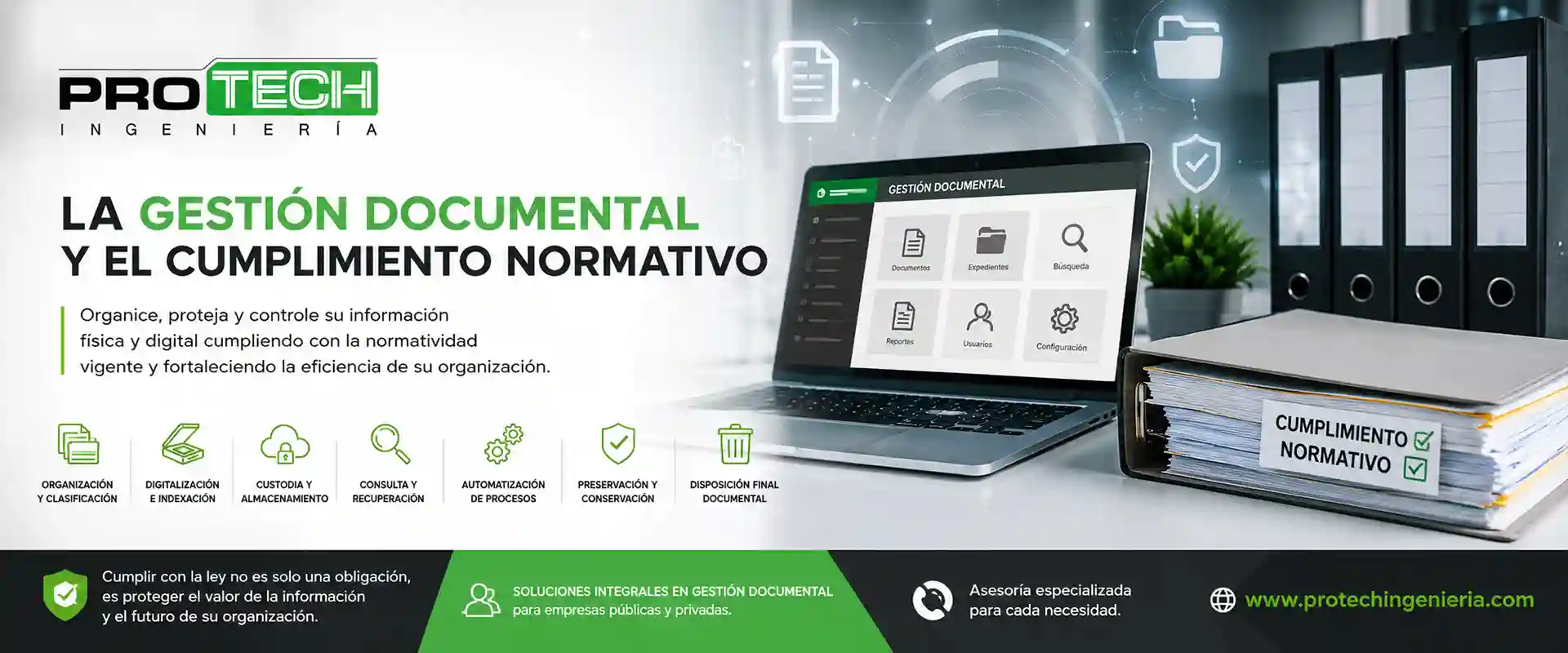
According to the recommendations of the General Archive of the Nation of Colombia, proper records management is an essential component for ensuring the preservation, availability, and traceability of institutional information. Likewise, international standards such as ISO 15489 on records management, published by the International Organization for Standardization (ISO), emphasize the importance of implementing efficient systems to manage both physical and electronic documents.
Evolution from traditional documentation to digital documentation
For many years, organizations relied exclusively on physical records to store information. This situation required allocating large spaces for archives, investing resources in paper supplies, and dealing with difficulties in locating specific documents. Manually searching for information could consume a considerable amount of time and, in some cases, cause delays in the execution of critical activities.
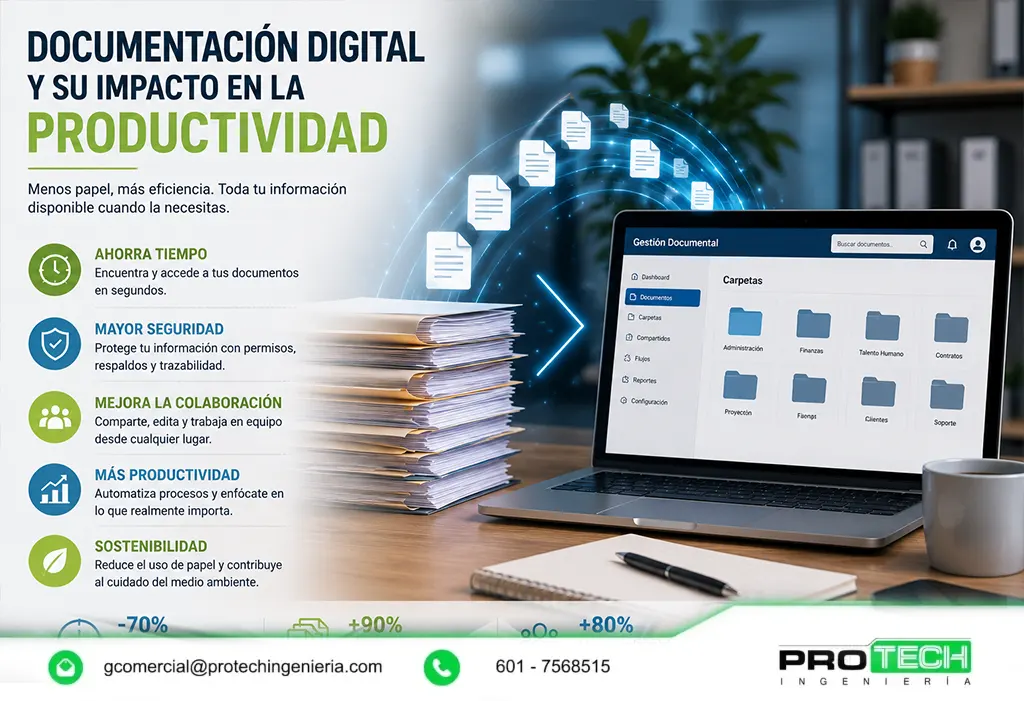
The arrival of digital documentation significantly changed this reality. With the implementation of document management systems and electronic document management (EDM) platforms, companies began to have tools that allow them to store, classify, index, and retrieve information quickly and securely.
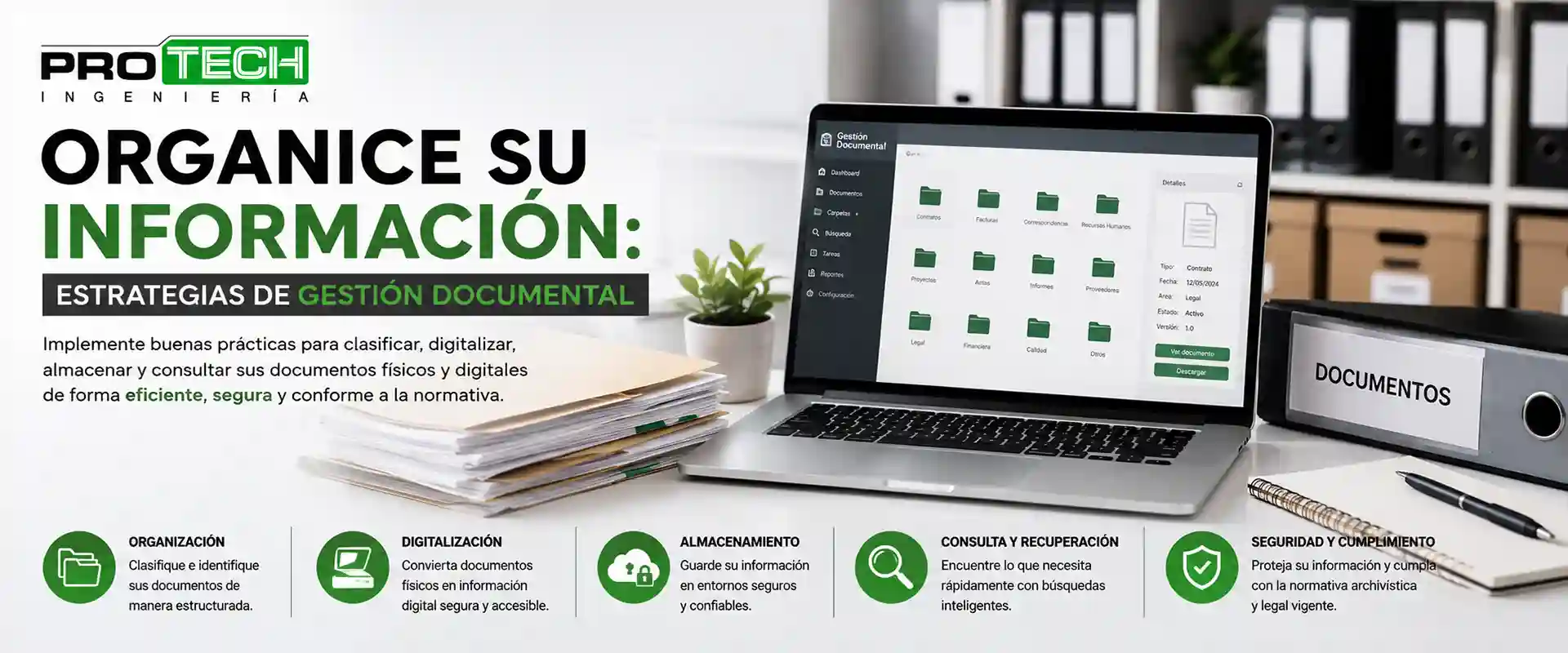
Document digitization is one of the most important services within document management. This process involves converting physical documents into electronic files through scanning technologies and data capture. Subsequently, the information can be organized, indexed, and stored in digital repositories that facilitate its retrieval and access.
Additionally, modern document management encompasses other complementary services such as:
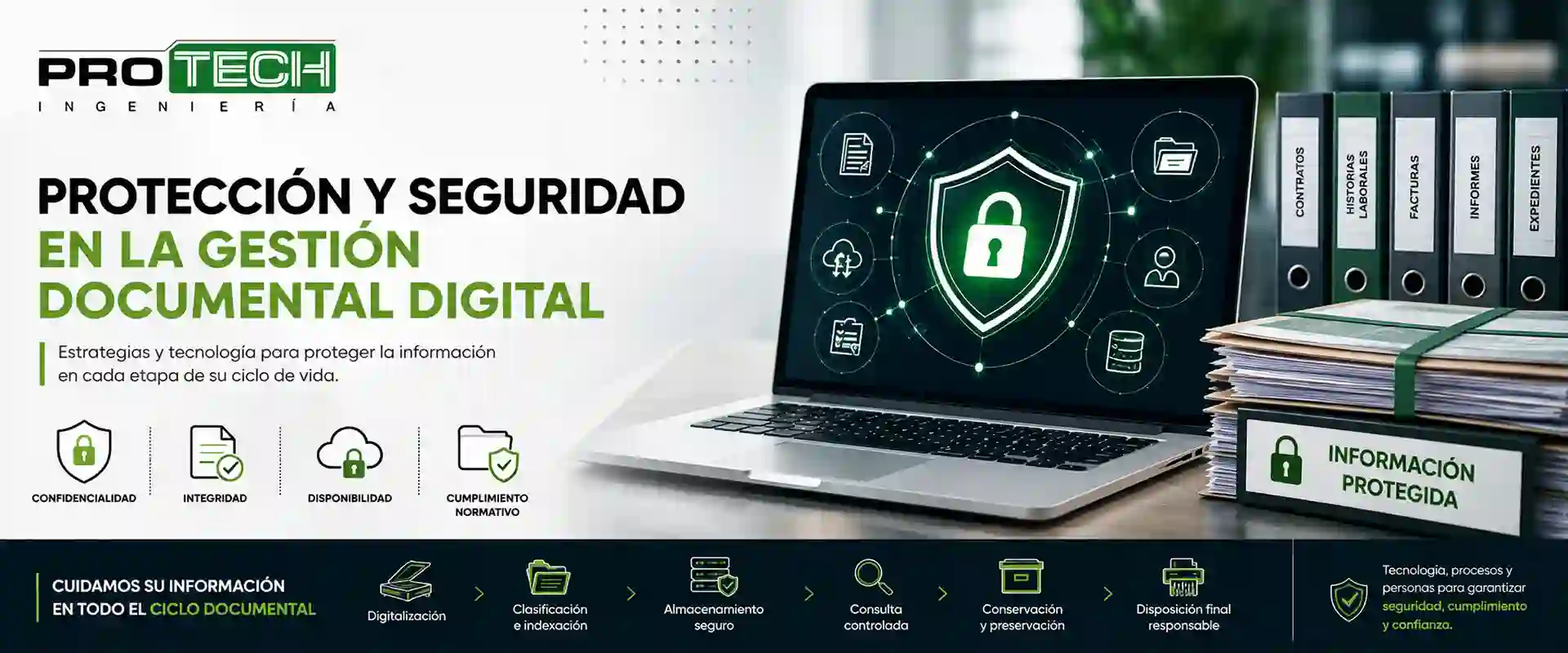
- Digitization of physical documents for integration into digital environments.
- Document classification based on record series, subseries, and document types.
- Document indexing to facilitate information search and retrieval.
- Automation of document workflows.
- Secure storage in physical or digital repositories.
- Document storage and custody with advanced security and access control measures.
- Controlled access to files and records.
- Long-term information preservation.
- Final disposition of records in compliance with applicable regulations.
This comprehensive approach enables the proper management of the entire information lifecycle, from its creation to its preservation or controlled disposal.
Technologies driving digital documentation
The adoption of new technological tools has accelerated the transition toward digital environments. Today, organizations implement high-production scanners, cloud storage solutions, and automation platforms that help optimize document management processes.
Digital documentation is also closely related to Business Process Management (BPM) systems, which enable organizations to automate business processes and reduce manual tasks. Thanks to these solutions, organizations can minimize operational errors and improve efficiency in information management.
The Ministry of Information and Communication Technologies of Colombia (MinTIC) has promoted multiple initiatives aimed at fostering digital transformation in public and private organizations, highlighting the importance of implementing technologies that contribute to improving productivity and competitiveness.
Benefits of digital documentation for business productivity
Implementing digital documentation strategies provides multiple benefits for organizations. One of the most significant advantages is the speed at which users can access information. While traditional systems required reviewing physical filing cabinets and spending time locating records, in a digital environment, information can be retrieved within seconds.
Modern systems incorporate advanced search engines that allow users to locate documents using keywords, codes, or specific indexes. This significantly reduces response times and facilitates decision-making.
The immediate availability of information is especially valuable in sectors where speed is critical, such as healthcare, education, industry, financial services, and public administration.
Likewise, digital documentation supports business continuity in remote or hybrid work environments, allowing employees to access information from different devices and locations.
Strengthening collaborative work
Another factor that directly influences productivity is collaboration among teams. Document management platforms allow multiple users to work simultaneously on the same document, adding comments, modifications, and revisions in real time.
This capability contributes to:
- Improve communication between departments.
- Reduce waiting times.
- Keep document versions up to date.
- Prevent duplication and information loss.
- Facilitate activity tracking.
Digital documentation strengthens coordination between departments and creates more dynamic work environments, encouraging greater team participation and better management of institutional knowledge.
UNESCO, through various initiatives related to digital transformation and information preservation, highlights the importance of efficient access to documentary resources as a fundamental element for organizational development and innovation.
Reduced Operational Costs
Cost reduction is another of the most evident benefits derived from digital documentation. The gradual reduction in intensive paper use makes it possible to decrease expenses associated with:
- Printing
- Photocopying
- Purchase of filing cabinets
- Document transportation
- Physical storage space
- Maintenance of traditional archives
The resources previously allocated to these activities can be invested in strategic projects aimed at organizational growth.
Specialized document custody also contributes to resource optimization. Many companies choose to store their physical documents in facilities specifically designed to ensure proper conditions for preservation, security, and traceability.
At the same time, electronic repositories make it possible to maintain backed-up digital copies, strengthening document preservation processes and ensuring the permanent availability of information.
Implementation of electronic document management systems
To fully leverage the benefits of digital documentation, it is essential to implement Electronic Document Management (EDM) systems. These platforms enable organizations to manage large volumes of information in an organized and secure manner.
Before selecting a technological solution, it is advisable to conduct an analysis of the organization's needs. Each company has unique characteristics and requires specific functionalities to optimize its processes.
Among the key aspects that should be evaluated are:
Ease of Use
The platforms should feature intuitive interfaces that facilitate user adoption and reduce the learning curve.
Integration with Other Systems
Interoperability with solutions such as ERP, CRM, and collaborative platforms promotes more efficient information management and prevents process duplication.
Information security
Data protection is one of the most important factors in document management. The best solutions incorporate encryption mechanisms, authentication, access controls, and activity tracking for actions performed on documents.
Support and Updates
The availability of technical support and maintenance services ensures the proper operation of the platforms and facilitates the timely resolution of incidents.
Training and Change Management
The implementation of digital documentation tools should be accompanied by training programs aimed at users. Training helps maximize the use of available functionalities and facilitates adaptation to new processes.
Effective change management helps reduce initial resistance and promotes a culture focused on innovation and digital transformation.
Challenges Associated with Digital Documentation
Although the benefits are numerous, the transition to digital environments also involves certain challenges. One of the main challenges is resistance to change among some users who are accustomed to working exclusively with physical documents.
Another relevant aspect is cybersecurity. The increase in electronic storage makes it necessary to implement robust data protection policies, including strong passwords, multifactor authentication, and strategies to prevent cybersecurity threats.
Likewise, organizations must have contingency plans, regular backups, and disaster recovery mechanisms to ensure business continuity in the event of technological failures or unforeseen circumstances.
Digital preservation and the final disposition of documents are also essential services within modern document management, ensuring that information maintains its integrity and complies with applicable legal requirements.
Take Your Organization's Productivity to the Next Level with Digital Documentation Solutions
The adoption of specialized technologies helps optimize information management, reduce operating costs, and provide fast and secure access to documents that support daily activities and strategic decision-making.
Start today!
At Protech Ingeniería, we have the experience, expertise, and technological tools needed to support organizations throughout their digital transformation processes.