

Today, organizations face a constant growth in the volume of information they produce and receive daily. This situation has made document management a strategic component for ensuring business continuity and improving internal process efficiency. As a result, implementing storage and document management solutions has become essential for companies and institutions seeking to optimize access to information, strengthen data security, and comply with current regulatory and technological requirements.
Digital transformation and the increasing volume of documents have driven the adoption of specialized tools for managing both physical and electronic records. Thanks to these technologies, organizations can manage information in an organized, secure, and efficient way, facilitating its retrieval and preservation throughout the entire document lifecycle.
According to the National Archives of Colombia, proper document management is a key element in preserving institutional memory and ensuring transparency in both public and private organizations. Likewise, international organizations such as UNESCO emphasize the importance of properly managing and protecting information to strengthen development processes and access to knowledge.
What is document management?
Document management refers to the set of procedures aimed at capturing, organizing, storing, and retrieving information in a way that maximizes operational efficiency and reduces the risks associated with data loss or improper use.
This process covers all stages a document goes through, from its creation or receipt to its permanent preservation or final disposal, depending on the policies established by each organization. Therefore, document management is not limited solely to document production, but involves the comprehensive administration of information throughout its entire document lifecycle.
With the increase in regulatory requirements and the need to protect sensitive information, storage and document management strategies have become an essential component for the sustainability and competitiveness of organizations.
Fundamental Elements of Document Management
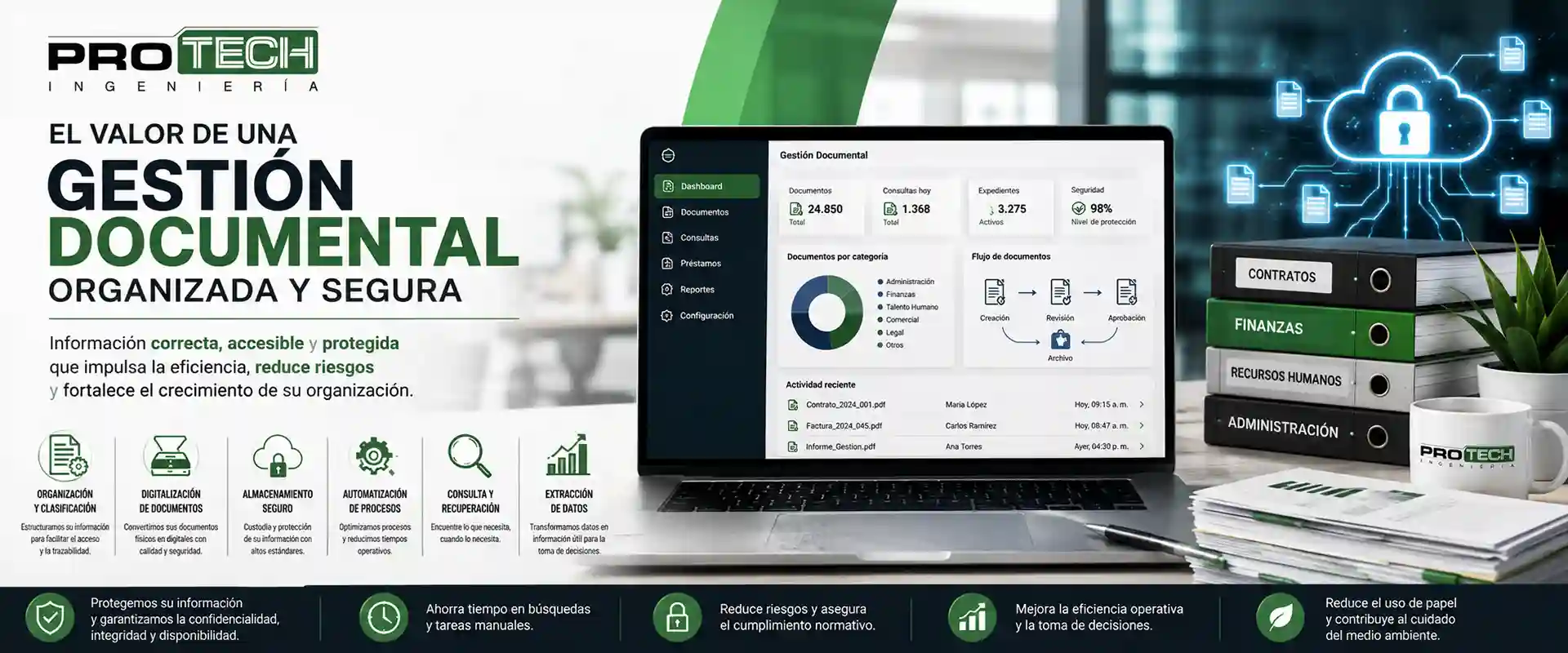
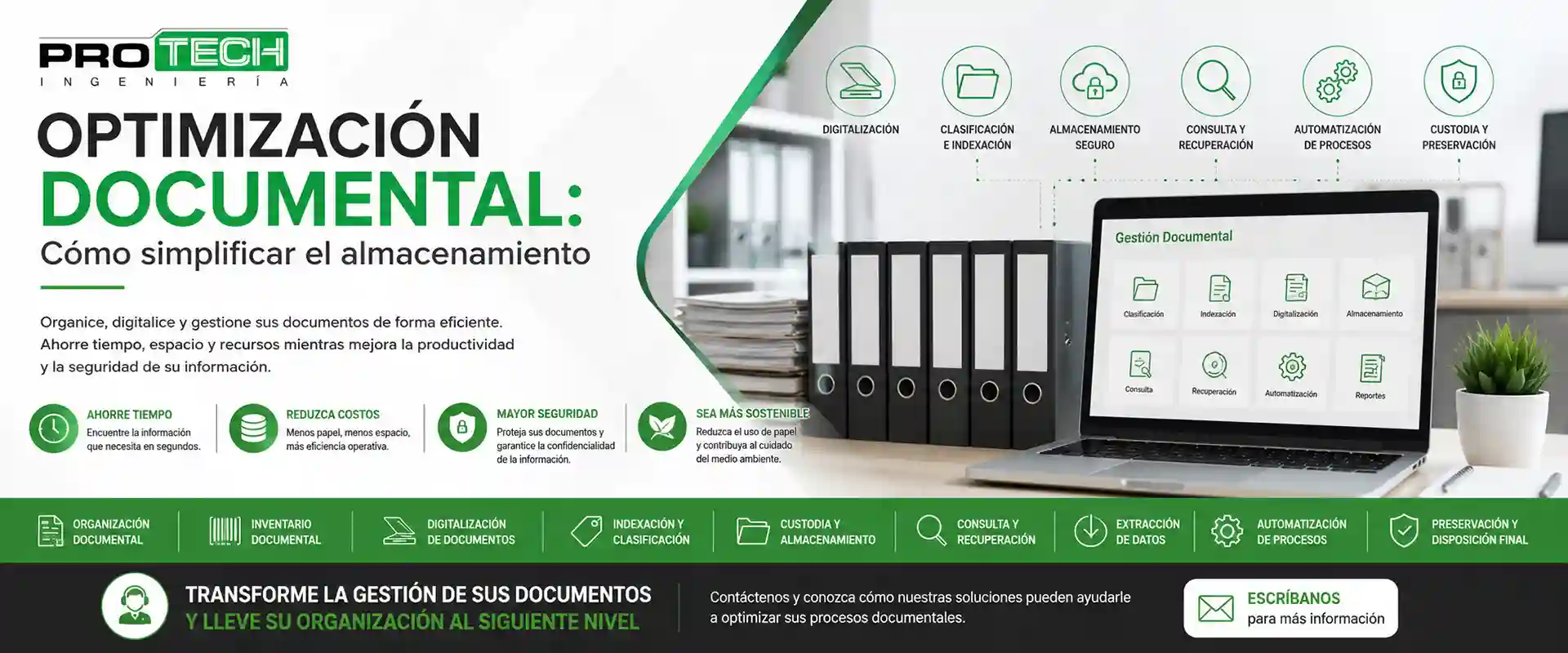
The implementation of an efficient document system requires the integration of various processes that enable proper information management. These include:
- Document and data capture.
- Digitization of physical records.
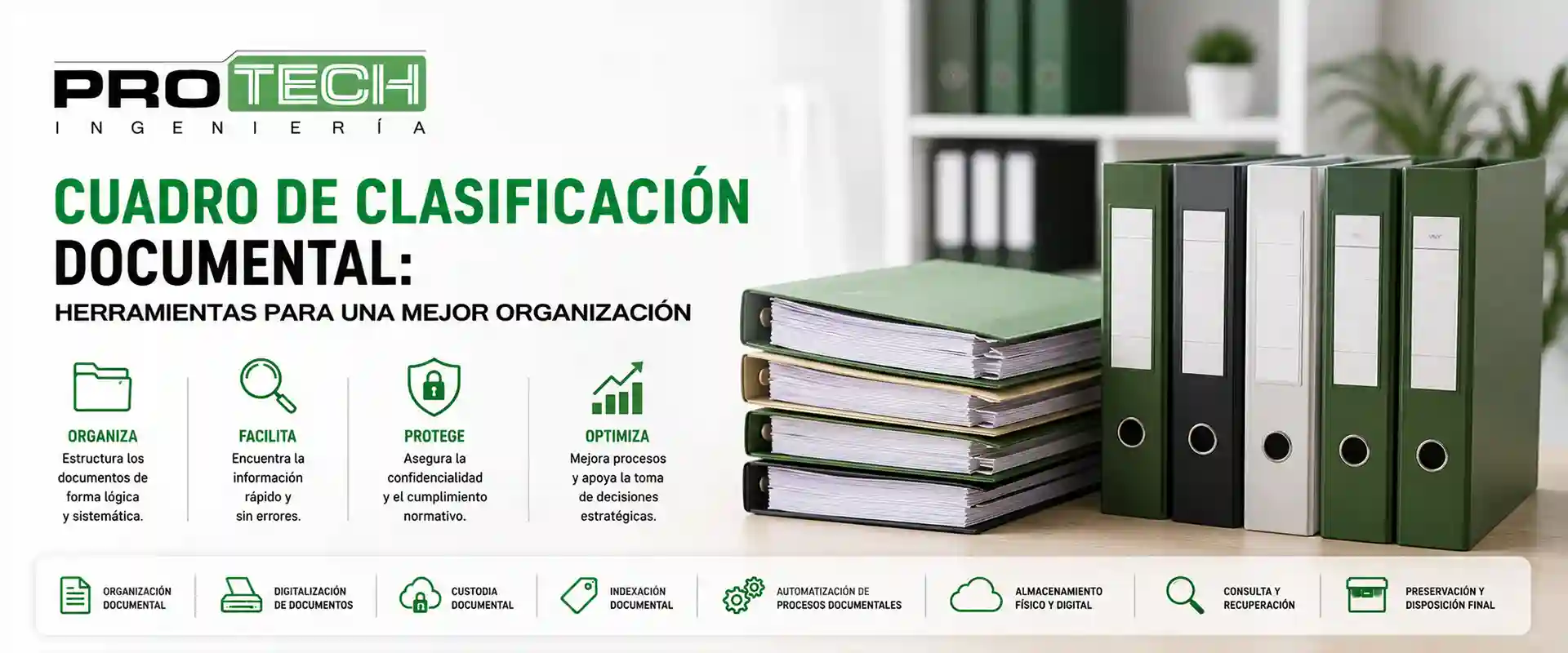
- Document classification.
- File organization.
- Document indexing and description.
- Physical and digital storage.
- Document custody.
- Information retrieval and lending.
- Process automation.
- Document preservation and conservation.
- Final disposition of documents.
- Monitoring and control of the document lifecycle.
Each of these services is part of a comprehensive storage and document management strategy, allowing organizations to maintain organized and accessible information at any time.
Through these processes, organizations reduce the time spent searching for documents, increase employee productivity, and significantly improve administrative efficiency.

Benefits of Implementing Storage and Document Management Solutions
The adoption of specialized platforms and services for document management offers significant advantages for organizations, enabling resource optimization and strengthening information administration.
Increased Operational Efficiency
One of the main benefits of storage and document management solutions is the optimization of administrative processes. Digital systems allow documents to be located instantly through keyword, code, or metadata searches, eliminating the need to manually review large volumes of physical files.
This agility translates into a considerable reduction in the time spent on operational tasks, allowing work teams to focus their efforts on higher-value strategic activities.
Automation also plays an important role in this context. Through specialized tools, it is possible to streamline routine tasks such as report generation, document approval, and workflow management.
In addition, integration with enterprise platforms such as ERP and CRM systems promotes continuous communication between different departments, improving productivity and organizational coordination.
Enhanced Information Security
Data protection has become a priority for modern organizations. Storage and document management platforms incorporate various mechanisms to ensure the confidentiality, integrity, and availability of information.
The main security measures include:
- User role-based access control
- Audit logs.
- Tracking of all activities performed on documents.
- Data encryption.
- Automatic data backup.
- Version management.
These tools help prevent unauthorized access and ensure complete document traceability.
In addition, organizations can comply with regulations related to data protection and information management, including international standards promoted by the International Organization for Standardization (ISO).
Essential Components of a Comprehensive Document Storage and Management Solution
An effective Document Storage and Management strategy requires the integration of multiple services that work together to ensure the proper organization, protection, and administration of information.
Document Digitization
The document digitization process represents one of the first steps toward document transformation. This process involves converting physical documents into electronic files using specialized scanners and OCR (Optical Character Recognition) technologies.
Document digitization makes it easier to access information from any location and helps preserve original documents by protecting them from deterioration over time.
In addition, bulk document digitization streamlines administrative processes and improves the availability of information for all authorized users.
Cloud Storage
Cloud-based solutions have become one of the most widely used options for managing electronic documents.
Cloud storage on remote servers enables users to access information from anywhere with an internet connection while supporting seamless collaboration among different teams.
These platforms also include automatic backup systems that protect information against technical failures, cyberattacks, and accidental data loss.
Workflow automation
Document automation is one of the core pillars of modern information management strategies.
Today’s platforms allow organizations to configure customized workflows for document review, approval, and distribution, eliminating repetitive tasks and reducing human error.
This automation increases productivity, shortens response times, and enhances the traceability of business operations.
Document classification and indexing
Document classification organizes files according to predefined criteria, while document indexing enables the quick retrieval of information through codes, tags, and keywords.
These processes support more efficient document management and help keep information well-structured, organized, and readily available whenever it is needed.
Document Custody
Document storage and custody is one of the most important services within a comprehensive Document Storage and Management strategy.
This service involves storing physical documents in specialized facilities equipped with security systems, continuous monitoring, and controlled environmental conditions to ensure the long-term preservation of information.
Off-site document storage helps organizations free up valuable office space while reducing risks associated with fire, humidity, deterioration, and document loss.
Document Retrieval and Loan Services
Document retrieval and loan services facilitate the access and delivery of files and documents whenever they are required by different departments within the organization.
Through advanced tracking and control systems, organizations can accurately identify the location of each document and ensure its availability whenever it is needed.
Document Preservation and Conservation
Document preservation focuses on protecting information over the long term through procedures designed to prevent the physical or digital deterioration of records.
These activities include document cleaning, restoration, specialized storage, and the implementation of preventive measures that ensure the long-term preservation of documents with administrative, legal, or historical value.
Take Your Information Management to the Next Level
Implementing Document Storage and Management solutions not only helps organize physical and digital documents but also strengthens information security, optimizes response times, and improves control over every stage of the document lifecycle.
Start today!
Taking the step toward efficient document management is a strategic decision that boosts productivity, enhances decision-making, and supports the sustainable growth of your organization in an increasingly digital and competitive business environment.