



Digital transformation has led organizations to produce and manage an enormous amount of information every day. Invoices, contracts, reports, records, and internal correspondence accumulate at a pace that traditional physical filing systems can no longer sustain. For this reason, implementing an efficient digital document archive has become a fundamental element to ensure proper organization, quick access to information, and data security.
As companies move forward with digitization and administrative modernization processes, having proper strategies for managing digital archives is no longer a competitive advantage but an operational necessity. Organizations that fail to adopt a structured document management system face time loss, legal risks, and unnecessary costs that directly impact their productivity and profitability.
What is a digital document archive and why does it go beyond digitization?
Many organizations make the mistake of believing that having a digital document archive simply means scanning papers and saving them in a computer folder. In reality, this process is part of a comprehensive document management system that includes services such as digitization, classification, indexing, custody, document automation, secure storage, and structured retrieval.
Each of these services fulfills a specific role within the document lifecycle. Without them, a digital archive becomes a disorganized repository that, instead of facilitating work, creates new difficulties in locating and using information. A well-structured archive, on the other hand, ensures that documents retain their administrative, legal, and historical value over time, as recommended by international organizations such as UNESCO and government entities specialized in archival management.
The real importance of implementing a digital document archive
Time and productivity
When information is properly structured within a digital document archive, employees can locate any document in a matter of seconds. This eliminates endless searches through physical folders or emails and significantly reduces delays in administrative processes, internal approvals, and strategic decision-making.
According to studies on business productivity, knowledge workers spend up to 20% of their workday searching for information. A well-structured document system can recover a large portion of that lost time and redirect it toward higher-value activities.
The real problem with physical archives
Many companies still maintain a large volume of documentation in physical format. This reality leads to concrete and costly consequences: difficulty in locating specific information, constant risk of document loss or deterioration, high storage costs in document warehouses, and limitations for remote or collaborative work.
Implementing a digital document archive makes it possible to transform this reality. It is not just about modernizing technological infrastructure, but about changing the way an organization understands and manages its information.
Business sustainability
Document digitization also directly contributes to business sustainability. By reducing paper usage, organizations lower their environmental impact and strengthen their commitment to responsible practices. Digital transformation in administrative processes has been promoted as a key strategy to optimize institutional resources and improve operational efficiency in a sustainable way.
Concrete benefits of an efficient digital document archive
Implementing a digital document archive not only solves immediate operational issues; it also creates strategic advantages that impact the entire organization.
Full accessibility
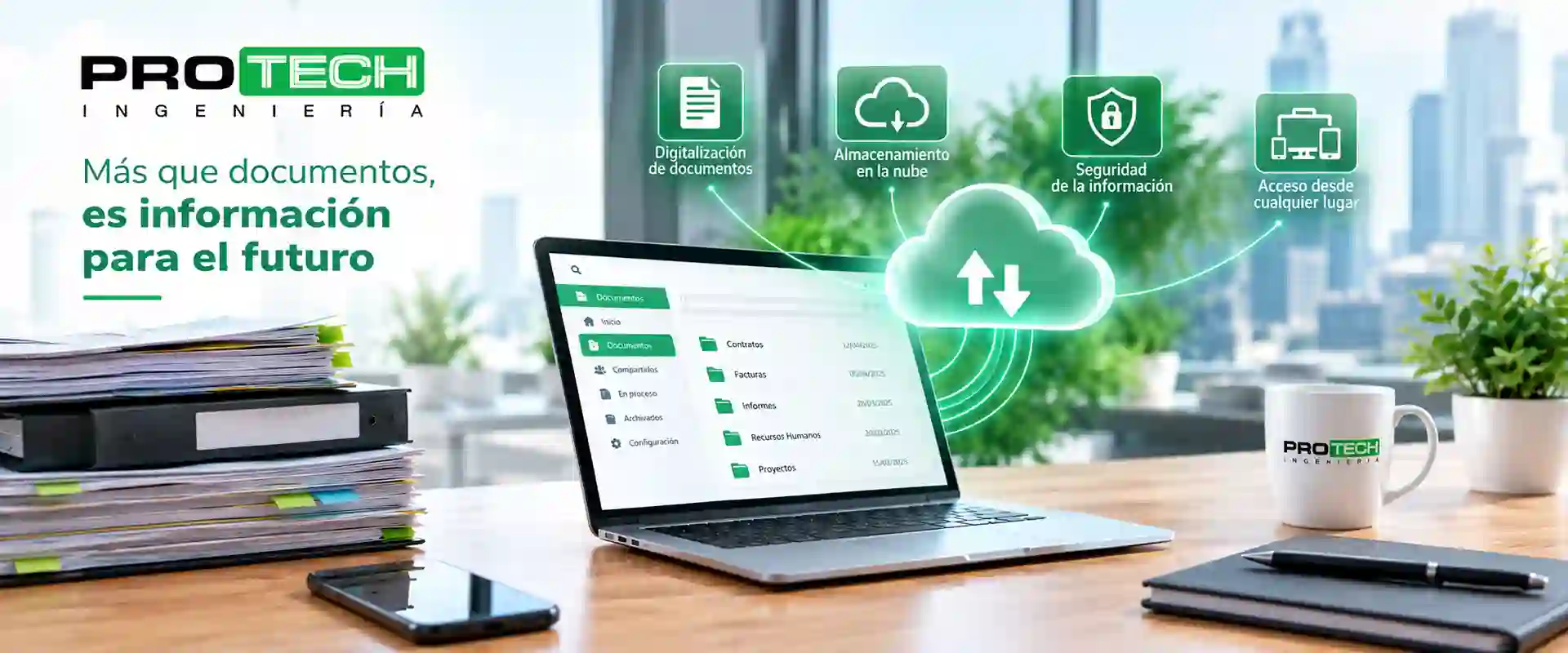
Documents can be accessed from any location and at any time through secure platforms. This is especially relevant in hybrid or remote work environments, where quick access to information determines the responsiveness of teams.
Information security
Document management systems enable the implementation of role-based access controls, data encryption, and robust authentication mechanisms. In this way, a digital document archive ensures that only authorized individuals can view, edit, or share specific documents, reducing the risk of data breaches or unauthorized access.
True document organization
Through technical processes such as classification and indexing, documents are structured using clear archival criteria. This allows any file to be retrieved through keywords, dates, document types, or administrative areas, without relying on individual memory or personal habits.
Optimization of physical space
By transferring information to digital platforms, the need for document storage rooms, filing cabinets, and paper-based storage is progressively eliminated, freeing up resources that can be redirected toward strategic activities.

Steps to implement an efficient digital document archive
Building a solid digital document archive requires methodical planning and the execution of well-defined stages. Improvising in this process leads to duplication, information loss, and disorganized systems that are eventually abandoned.
1. Initial document assessment
Before digitizing any document, it is essential to carry out a diagnosis of the existing archive. This evaluation helps identify which documents should be digitized as a priority, which must be preserved in physical format due to legal requirements, and which can be eliminated according to current document retention policies.
At this stage, aspects such as the age of the documents, their administrative, legal, or historical value, the physical condition of the material, and how frequently they are consulted are analyzed. This review is crucial to avoid digitizing unnecessary information, optimize process resources, and ensure that the digital document archive contains only relevant and well-organized information.
2. Document digitization with quality standards
Once the documents have been selected, the digitization process begins using professional scanners that ensure image quality, text clarity, and content accuracy. This step is the foundation upon which the entire digital document archive is built, so the technical quality of this process directly determines the system’s usefulness.
To guarantee long-term preservation and compatibility, it is recommended to use standardized formats such as PDF/A or TIFF, which provide technical stability and compatibility across multiple technological platforms, even with future software updates.
3. Document classification and indexing
Digitizing without classification is equivalent to filing without order. After converting documents into digital format, it is necessary to assign precise metadata that facilitates their retrieval within the system. Indexing involves tagging each file with key information such as document type, date, responsible department, reference number, and related keywords.
Technological tools to manage a digital document archive
Technology is the foundation on which any modern digital document archive is built. Choosing the right tools determines the system’s efficiency, security, and long-term scalability.
Document management software
Document management platforms (DMS) allow organizations to control the entire document lifecycle from a centralized interface. These tools provide secure digital storage, advanced metadata search, document version control, granular access permission management, and automated document workflows that eliminate repetitive manual tasks.
Integrating these platforms transforms a digital document archive into a strategic asset rather than a simple repository. Organizations can manage large volumes of information in a structured, traceable, and auditable way.
Specialized digitization equipment
The quality of a digital document archive largely depends on the equipment used during digitization. Professional and industrial scanners enable high-speed capture and resolutions that ensure content readability, even for deteriorated or non-standard format documents.
Information security and backup
Protecting a digital document archive from loss, unauthorized access, or cyberattacks is a responsibility that cannot be underestimated. The most effective measures include encryption of data in transit and at rest, multi-factor authentication for users, role- and department-based access control, and automatic, periodic backups across multiple locations.
The use of cloud storage adds an extra layer of availability and resilience, ensuring that documents remain accessible even in the event of local technical failures.
Best practices to maintain a digital document archive organized in the long term
Implementing a digital document archive is only the starting point. Keeping it efficient, secure, and up to date requires consistent organizational habits over time.
-
Periodic archive review
Regularly evaluating stored documents makes it possible to identify files that have lost their administrative value or have already fulfilled their legal retention period. This practice prevents unnecessary information buildup and keeps the system agile and relevant.
-
Continuous technological updates
Technology evolves at a pace that requires periodic reviews of the tools being used. Migrating to new solutions when current ones become obsolete ensures that the digital document archive maintains its performance and compatibility with the organization’s systems.
-
Ongoing staff training
Human error is one of the main causes of disorganization in document systems. Continuously training employees in the proper use of tools, classification criteria, and security protocols is just as important as the technology itself. Organizations that build a strong document management culture are able to reduce errors, improve internal collaboration, and fully leverage their digital document archive.
Technological innovations transforming digital document archives
The development of emerging technologies is redefining what is possible in document management. Artificial intelligence, for example, already enables the automatic classification of documents, extraction of data from forms through optical character recognition (OCR), detection of duplicates, and the suggestion of indexing tags without manual intervention.
Document automation eliminates repetitive tasks that once consumed hours of work, allowing teams to focus on strategic activities. Meanwhile, cloud storage facilitates real-time collaboration among geographically distributed teams and ensures that digital document archives are accessible from anywhere with an internet connection.
Specialized institutions in archival management continue to develop standards and guidelines to guarantee the proper long-term preservation of digital documents, ensuring that information remains accessible, intact, and protected within enterprise document management systems.
Turn your information into a strategic asset
for your organization
Today more than ever, information is one of the most valuable resources for any organization. Moving from disorganized physical archives or scattered digital folders to an efficient document management system means gaining control, security, and speed in every administrative process.
Start today!
At Protech Ingeniería, we understand that each organization has different document management needs. For this reason, we offer comprehensive solutions that cover the entire document lifecycle




Comment (1)
Cómo establecer un plan de digitalización de documentos en su empresa
October 19, 2026[…] ampliar este tema, puede consultarse el artículo de Protech Ingeniería Cómo realizar un archivo de documentos digitales eficientemente, que aborda la importancia de mantener los archivos electrónicos organizados y […]