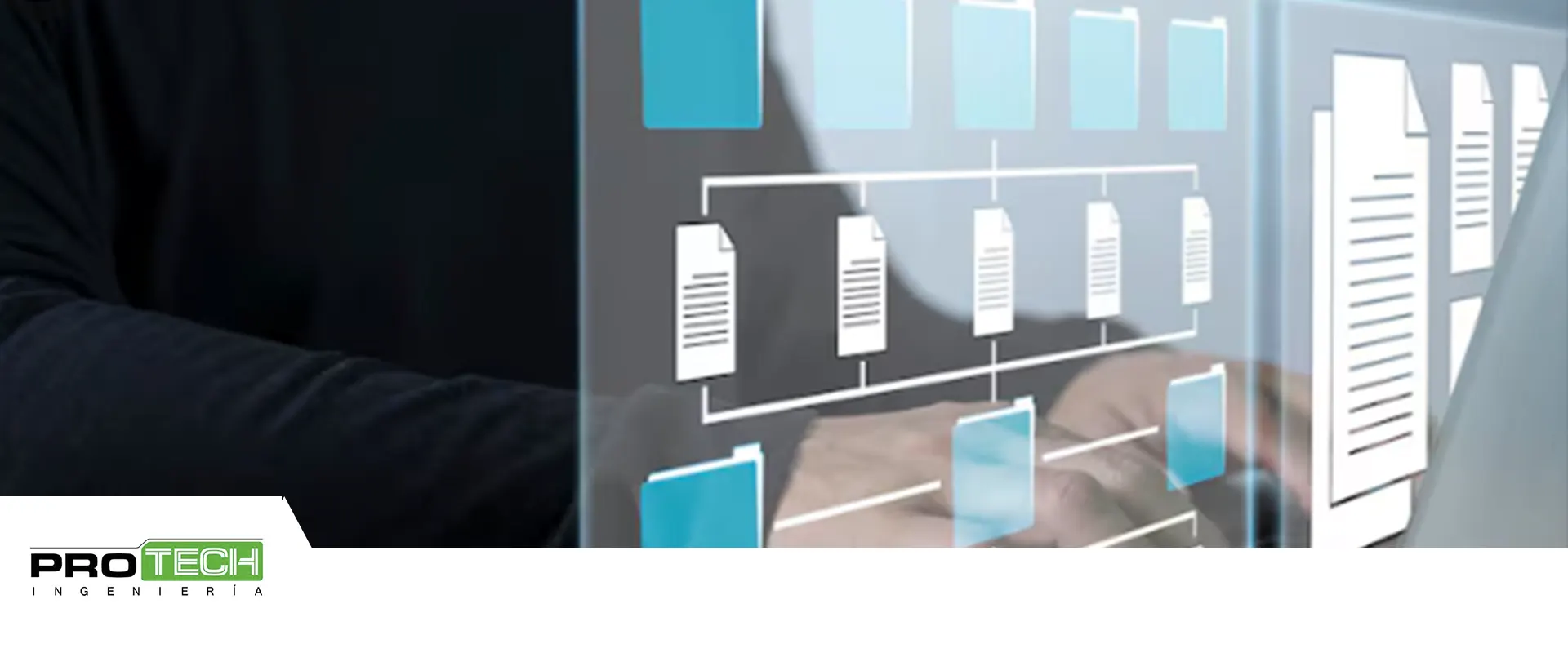



Today, organizations face an increasingly dynamic and competitive business environment, where information has become one of the most valuable assets. In this context, document management as support for decision-making emerges as a fundamental strategy to ensure that the right information reaches the right people at the right time. Regardless of the size or sector of the company, having a solid document management system makes it possible to optimize internal processes, improve operational efficiency, reduce costs, and, above all, facilitate faster and more accurate decision-making.
Implementing a comprehensive approach to document management not only organizes files in a systematic manner, but also strengthens analytical capabilities and business intelligence. Proper document management covers everything from information capture and storage to its distribution, control, and eventual archiving or disposal, ensuring that each document fulfills a strategic purpose within the organization. For this reason, more and more companies recognize that document management as support for decision-making is a critical component for achieving sustainable competitive advantages.
The relevance of document management in decision-making
Making informed decisions is a central process in any organization. The quality and effectiveness of these decisions depend directly on the availability, integrity, and accessibility of information. Without a robust document management system, companies face risks such as the loss of important documents, duplication of information, or errors caused by outdated data. Therefore, document management as support for decision-making ensures that the right data is available at the right time, reducing the likelihood of errors that could affect corporate strategy.
Among the main benefits of integrating document management into decision-making processes are:
-
Organización eficiente de la información:
Al estructurar los documentos de manera lógica y sistemática, la recuperación de información se vuelve más rápida y confiable, lo cual es crucial en sesiones de análisis y toma de decisiones estratégicas.
-
Comunicación clara y oportuna:
Un sistema de gestión documental garantiza que todos los colaboradores tengan acceso a la información más reciente y relevante, promoviendo la colaboración efectiva y evitando malentendidos.
-
Transparencia y control:
La posibilidad de acceder a documentos de manera organizada fomenta la transparencia y permite auditar la información utilizada en la toma de decisiones, fortaleciendo la confianza interna y externa.
In a digital transformation context, companies that adopt robust document management tools and processes gain a clear competitive advantage, as they can respond more quickly to market changes and customer needs.
Understanding the document lifecycle
To fully leverage document management as support for decision-making, it is essential to understand the document lifecycle, which spans from its creation to its final disposition. Each stage of the lifecycle has direct implications for the efficiency and quality of decision-making:
1. Creation
Documents arise from the need to record relevant information, including reports, contracts, invoices, and internal communications. The quality of the initial information is decisive for future decisions.
2. Review and validation
Documents must be evaluated and approved to ensure their accuracy and relevance. Proper control at this stage prevents errors and ensures that decisions are based on reliable information.
3. Secure storage
Proper organization within physical or digital filing systems enables rapid document retrieval, a key element for timely decision-making.
4. Distribution
Controlled accessibility ensures that documents reach the responsible parties in each area efficiently, facilitating interdepartmental collaboration.
5. Archiving and preservation
Documents that require retention for future reference must be managed in an orderly manner, ensuring availability for audits and strategic consultations.
6. Secure disposal
Documents that no longer have operational value must be securely destroyed, in compliance with legal regulations and with due protection of sensitive information.
Integrating this lifecycle into the organizational culture allows document management as support for decision-making to become a continuous process, preventing delays and errors that could impact business strategy.

Technologies that drive document management
Digitalization and technological solutions have transformed the way organizations manage information. Document Management Systems (DMS) offer functionalities that make it possible to automate, control, and optimize each stage of the document lifecycle, reinforcing the role of document management as support for decision-making. Among the most relevant tools are:
-
Inteligencia Artificial y analítica avanzada: Permitirán una clasificación más inteligente, análisis predictivos y toma de decisiones en tiempo real.
-
Automation of document processes: La reducción de tareas manuales permitirá que los equipos se enfoquen en actividades estratégicas y de valor agregado.
-
Integración con la gestión del conocimiento: La información se convertirá en un activo estratégico, facilitando decisiones más rápidas y fundamentadas en datos confiables.
Adopting these trends ensures that document management as support for decision-making not only meets current needs, but also prepares organizations to face future challenges in a dynamic business environment.
Key features of an efficient document management system
A robust document management system must meet certain characteristics that ensure its effectiveness and its ability to support critical business decisions:
- Ease of use: Intuitive interfaces that enable rapid adoption and reduce the need for extensive training.
- Indexing and advanced search: The ability to locate documents by date, type, author, or content, optimizing retrieval times.
- Security and access control: Ensuring who can access, edit, share, or delete sensitive information.
- Integration with other business systems: CRM, ERP, and collaboration platforms to enable efficient workflows.
- Process automation: Automatic document capture, classification, and routing to reduce errors and increase consistency.
- Support and scalability: Adaptability to organizational growth and reliable technical support.
By ensuring these features, document management as support for decision-making is consolidated as a strategic pillar that strengthens the operations of any organization.
Do not wait until disorganization, document loss, or lack of access to critical information affects your competitiveness.
Take the step toward your organization’s digital transformation today: assess your needs, define a clear strategy, and select reliable technological tools that integrate with your current systems. Investing in document management as support for decision-making not only improves operational efficiency, but also ensures that every strategic decision is backed by accurate and up-to-date information.
Start today!
No deje que su empresa se quede atrás: implemente prácticas de gestión documental que impulsen la innovación, garanticen la seguridad de tus datos y fortalezcan la competitividad en un mercado cada vez más exigente.