

Why Custody Is Fundamental in Archival Regulations
In the field of document management, document custody represents one of the most relevant processes to ensure the integrity, protection, and availability of information within organizations. Proper file management, whether physical or digital, requires reliable mechanisms that guarantee not only secure storage but also agile information retrieval when needed. In this context, custody within archival regulations emerges as the regulatory framework that establishes clear guidelines on how documents must be protected to comply with both legal requirements and operational needs.
Companies specialized in document custody have become strategic allies for public and private entities, as they offer solutions ranging from the secure storage of records to the confidential destruction of files that no longer hold administrative, legal, or historical value. These companies provide added value by operating under strict protocols aligned with the principles of custody in archival regulations, ensuring responsible management of institutional memory.
These companies operate under advanced security measures, implementing video surveillance systems, restricted access controls, 24/7 monitoring, fire detection, and optimal preservation conditions. All of this ensures that documents—both physical and digital—are protected against risks such as loss, deterioration, improper handling, or unauthorized access.
Strategic Benefits of Hiring Document Custody Services
Delegating document custody to a specialized provider allows organizations to free up space within their facilities, reduce operational costs, and, above all, ensure efficient control over their information. One of the major benefits is the optimization of document retrieval, as custody companies design search and classification systems that enable the quick location of any file.
In addition, the implementation of these services guarantees information traceability. This means that every movement or access to a document is recorded, strengthening security and trust within the organization. At this point, custody within archival regulations becomes especially relevant, as it requires that the entire management process be documented and kept under control, preventing potential sanctions or information loss.
Another strategic benefit is the ability to integrate document custody with digitization processes. Many of these companies complement their services with mass scanning, indexing, and digital storage, which facilitates remote access, speeds up record consultation, and aligns with legal requirements related to information management. In this sense, document custody is not limited to storing files, but becomes a key component in ensuring organizational efficiency and institutional transparency, always under the guidelines of custody in archival regulations.
What Do We Mean by Document Custody?
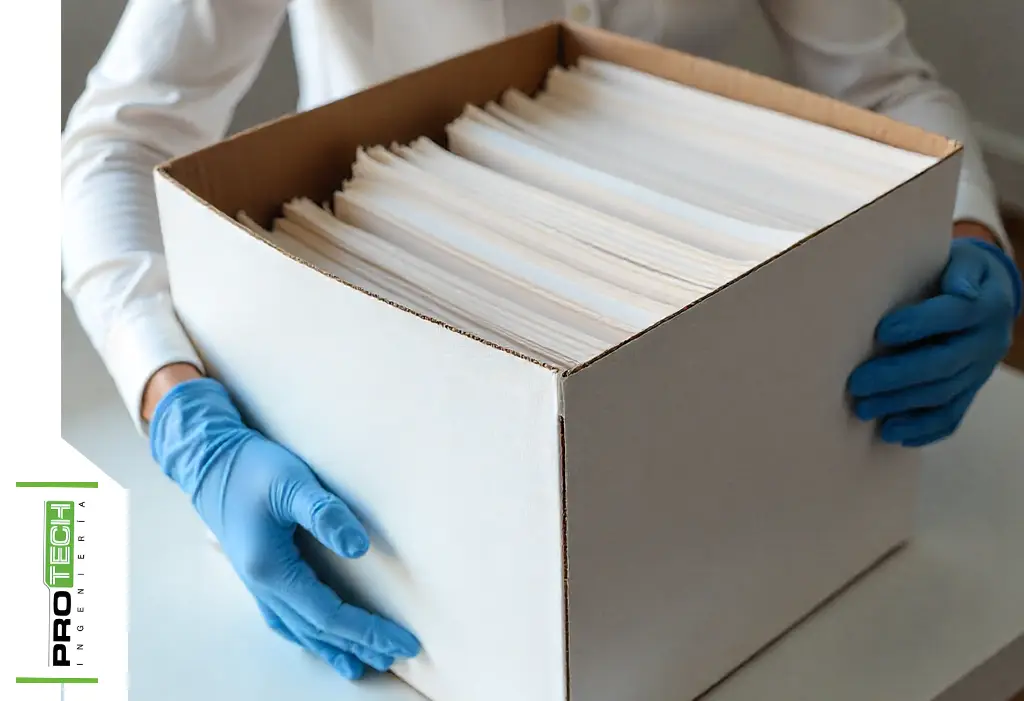
Document custody goes beyond simply storing boxes of documents in a physical space or on digital servers. It is a comprehensive process of management, safeguarding, and preservation aimed at securely protecting information while ensuring its availability when required.
This process involves defining clear access policies, retention periods, preservation protocols, and final disposition methods, all aligned with current archival regulations. In this way, document custody not only ensures internal organization but also protects the legal and operational interests of the entity that produces and manages these documents. Within this framework, custody in archival regulations provides the foundation for establishing uniform technical criteria that ensure proper document management.
An important aspect is that document custody protects both the organization and external users who require access to information. In the case of public entities, compliance with archival regulations ensures transparency and public trust, while in the private sector it safeguards intellectual property, customer data, and financial records.
Proper Management of Document Custody in Companies
All organizations, regardless of their size, generate a constant flow of documents: contracts, invoices, client files, management reports, meeting minutes, among many others. Effectively managing this information is essential both for compliance with archival regulations and for administrative efficiency.
The challenge lies in establishing systems that allow documents to be classified, preserved, and disposed of according to their administrative, legal, fiscal, or historical value. This is where custody within archival regulations comes into play, as it sets clear parameters to determine which information must be retained, for how long, and under what conditions.
Document Preservation Procedure
Document digitization has become an essential resource within file custody. Through the scanning of physical documents and their conversion into digital formats, companies can manage information more efficiently, reducing search times and minimizing the risk of deterioration or loss.
This process is not limited solely to scanning; it also requires proper classification, indexing, and storage on secure servers or cloud platforms. In this way, online access is facilitated, productivity is improved, and compliance is achieved with the standards of archival regulations that promote the transition toward electronic document management systems. All of this is supported by custody within archival regulations, ensuring the reliability of digital processes.
Implementation of Document Management Systems
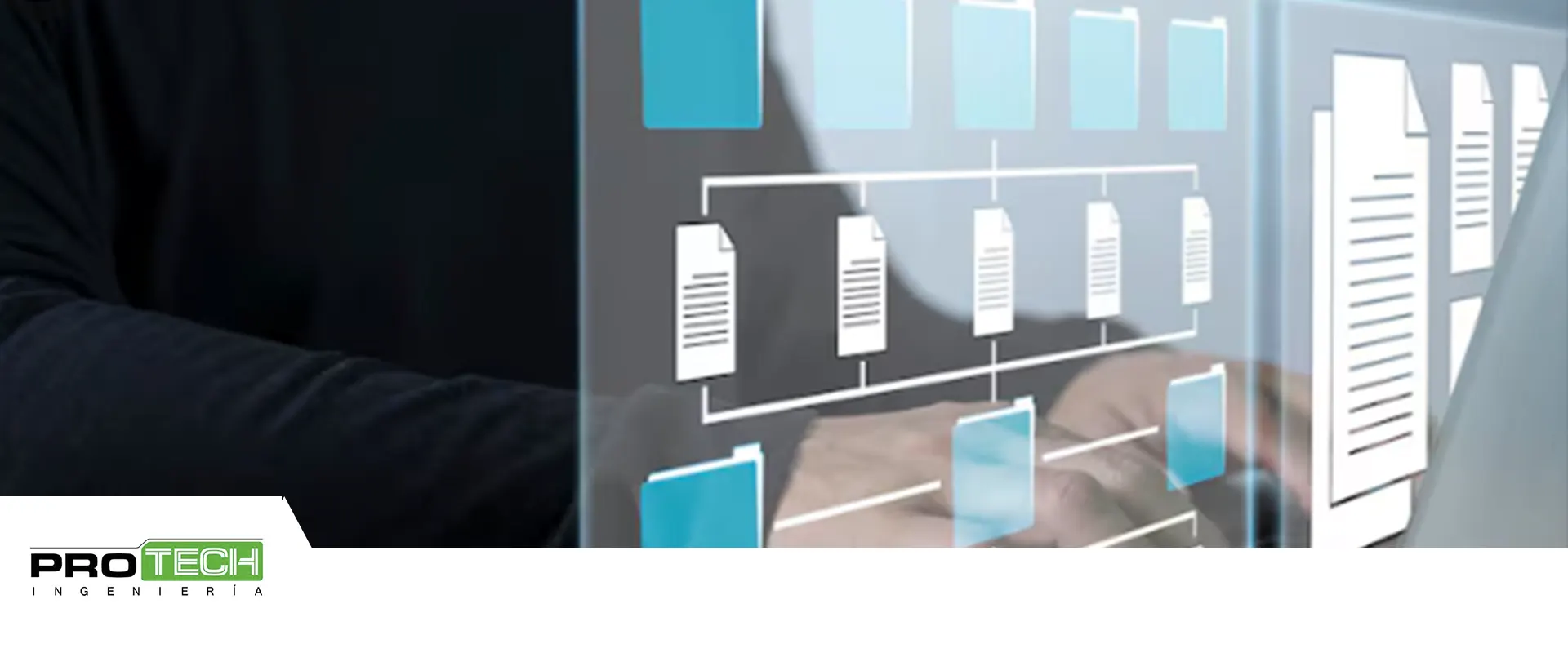
A fundamental aspect of modern document custody is the use of specialized information systems for records management. These platforms make it possible to centrally manage both physical and digital files, incorporating advanced search functions, version control, audits, and access traceability.
In addition, they ensure that only authorized personnel can view, modify, or delete documents, reducing the risk of data leaks or improper handling. These systems have become an indispensable technological pillar for complying with regulatory provisions that govern the organization, preservation, and availability of documents.
In this way, technology becomes a direct ally of custody within archival regulations by providing tools that strengthen security, transparency, and process continuity.
Data Protection as an Essential Part of Document Custody
In the digital era, document custody is closely linked to data protection. Organizations manage sensitive information that includes personal, financial, health, or strategic data. Ensuring data security is both a legal and ethical obligation that directly impacts reputation and customer trust.
Risks arising from threats such as cyberattacks, ransomware, data leaks, or security breaches make it essential for companies to adopt robust data protection policies. Likewise, international regulations such as the GDPR in Europe or national laws in Latin America establish strict parameters on how data must be collected, stored, processed, and disposed of.
Failure to comply with these regulations can result in significant financial penalties and irreparable damage to an organization’s credibility. For this reason, document custody must include strong security protocols, continuous audits, and the implementation of technologies such as data encryption, access controls, and real-time monitoring of information systems. Here once again, custody within archival regulations appears as a mandatory reference to ensure that these practices are supported by a clear regulatory framework.
Best Practices to Strengthen Document Custody and Data Protection
-
Information Classification:
Not all information has the same level of sensitivity. Establishing categories such as public, internal, sensitive, or critical data allows for the implementation of differentiated security measures.
-
Access Policies and Internal Controls:
Applying the “least privilege” principle, where each employee can only access the information necessary to perform their duties, is essential.
-
Continuous Staff Training:
The human factor is one of the main security links in document custody. Training personnel in archival regulations and IT security is indispensable.
-
Use of Supporting Technologies:
Data encryption, document management systems with high security levels, automated backups, and real-time monitoring tools strengthen document custody.
All these practices are framed within custody in archival regulations, which require uniform standards to ensure that information is protected at every stage of its lifecycle.
Archival Regulations in Colombia and Their Relationship with Document Custody
In Colombia, document custody is framed within a robust regulatory system led by the National Archives of Colombia (AGN). This entity establishes policies, guidelines, and regulations that ensure the proper preservation, organization, and access to the country’s documentary heritage.
Among the most relevant regulations are the Law 594 of 2000 (General Archives Law), which regulates archival functions nationwide, as well as decrees and agreements that require entities to implement document management systems, develop Document Retention Schedules (TRD) and Document Appraisal Tables (TVD), and transition to secure digital environments.
Colombian regulations aim to ensure that public and private information is managed in an orderly, transparent, and secure manner, recognizing that document custody is not only an administrative practice but also a legal obligation and an essential component for preserving institutional memory and strengthening public trust. In this context, custody within archival regulations serves as the main guide for institutions to fulfill their responsibilities.
The Time Has Come to Take a Step Forward
Evaluate your processes, identify risks, and adopt tools that ensure the traceability, accessibility, and protection of your documentary heritage. Don’t let improvisation jeopardize your organization’s institutional memory.
Take action today
Integrate document management solutions that comply with current regulations, strengthen the security of your information, and demonstrate a real commitment to the responsible custody of your files.