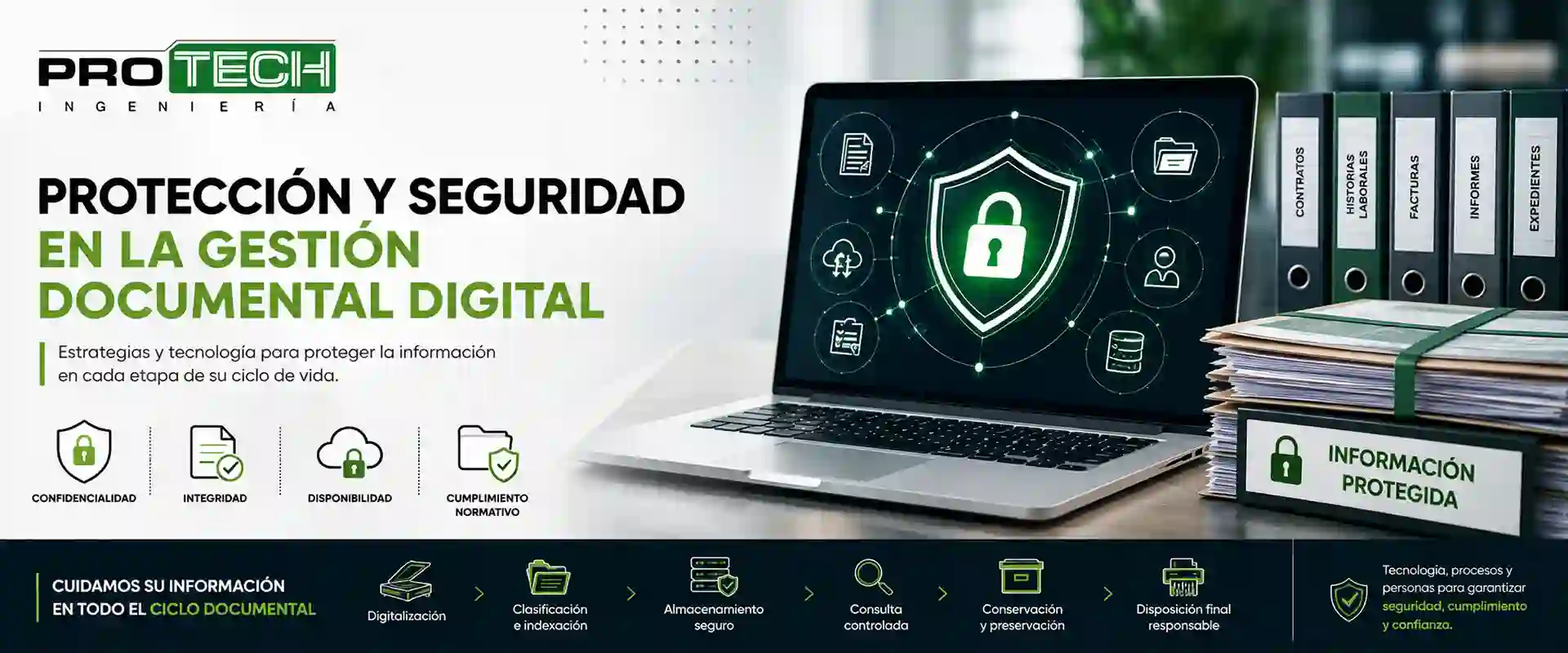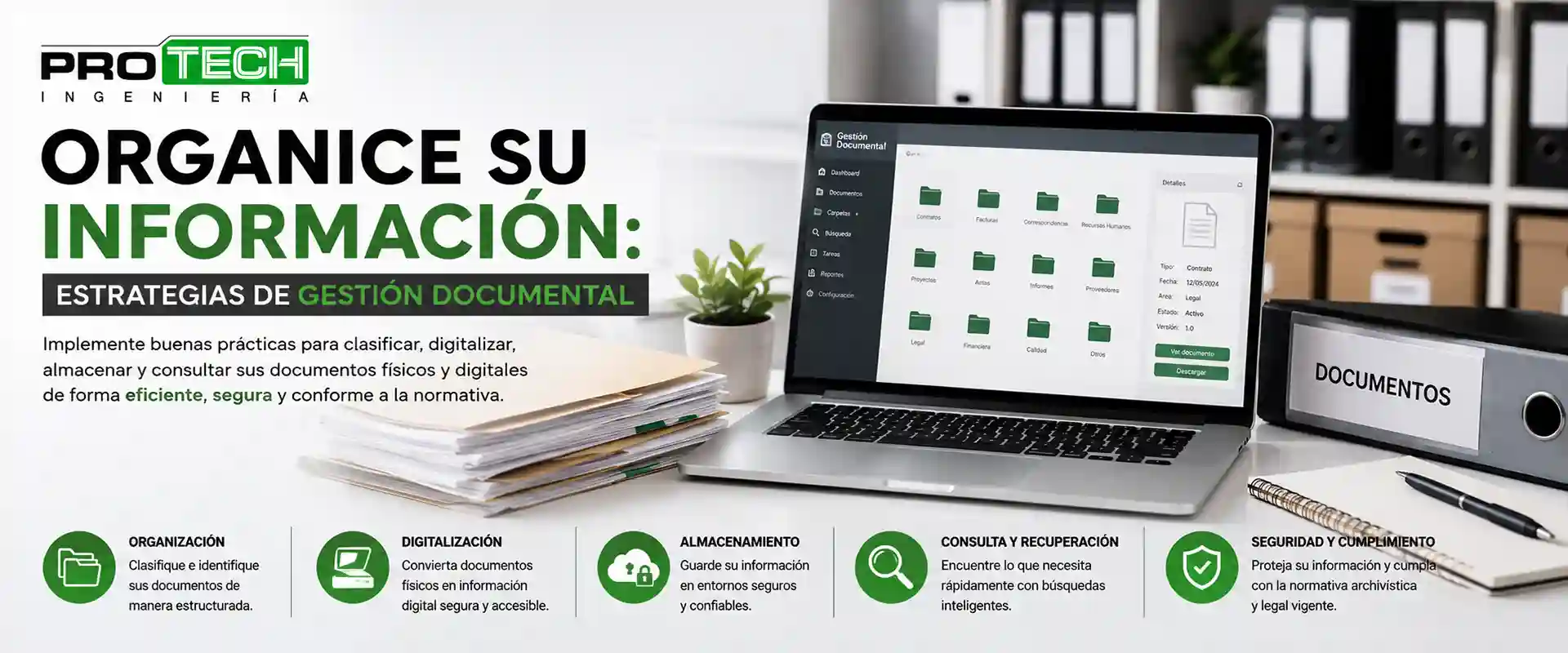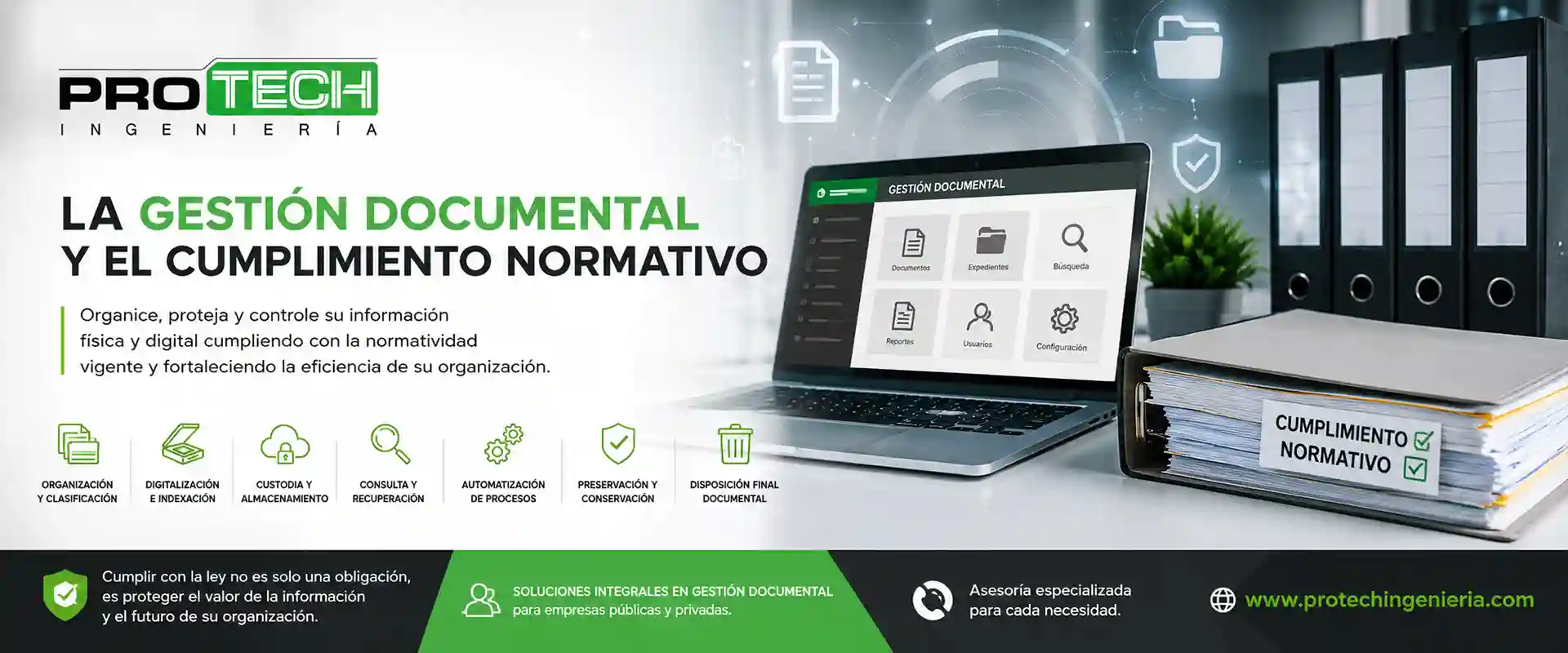


Today, information is considered one of the most important assets for any organization. Each document, whether physical or digital, represents a strategic resource that directly influences operations, decision-making, and a company’s competitiveness. For this reason, specialized document storage has become an essential element to ensure efficiency and security as well as regulatory compliance. The way documents are managed, organized, and protected can make the difference between an efficient operational environment and one marked by disorder, information loss, and legal risks.
Document management services encompass multiple complementary processes, including digitization, archival organization, physical custody, process automation, classification, preservation, correspondence management, internal policy design, traceability, digital preservation, and final disposition. All these services must be strategically integrated for a specialized document storage system to operate with quality standards, security, and efficiency.
The strategic importance of specialized document storage
Specialized document storage is not limited to simply keeping files; it involves capturing, classifying, storing, preserving, accessing, and disposing of documents according to established criteria. In Colombia, organizations must align with the guidelines of the General Archive of the Nation to ensure the validity and protection of their records.
An organized storage system reduces duplication, prevents information loss, optimizes retrieval, improves traceability, and facilitates both internal and external audits. In addition, it has a positive impact on operational efficiency and on costs associated with records management, as it helps reduce physical space, optimize time, and minimize errors. Specialized document storage also strengthens information security, ensuring that sensitive, legal, or strategic documents are protected against unauthorized access and environmental risks such as fire or humidity.
An organized storage system reduces duplication, prevents information loss, optimizes retrieval, improves traceability, and facilitates both internal and external audits. In addition, it has a positive impact on operational efficiency and on costs associated with records management, as it helps reduce physical space, optimize time, and minimize errors. Specialized document storage also strengthens information security, ensuring that sensitive, legal, or strategic documents are protected against unauthorized access and environmental risks such as fire or humidity.
Implementing a comprehensive specialized document storage system not only improves a company’s internal operations, but also ensures compliance with legal and regulatory requirements. Companies that have adopted comprehensive document management models have reported significant increases in productivity, reduced errors, and greater control over their information assets.
Key strategies to improve document storage
1. Digitization as a pillar of specialized document storage
Digitization is a fundamental step in establishing a modern and efficient specialized document storage system. This process transforms physical documents into digital files through the use of high-resolution scanners and OCR (Optical Character Recognition) technology, enabling images to be converted into editable and searchable text. Digitization helps save physical space, improve accessibility, and ensure faster access to critical information.
To ensure effective digitization, it is necessary to establish strict naming conventions, define clear metadata, and use stable formats such as PDF/A. In addition, Document Management Systems (DMS) enable centralized document storage, version control, access permission management, and workflow automation, further strengthening specialized document storage.
Digitization also enables the integration of other document management services, such as correspondence management, document inventories, digital preservation, physical custody, and compliance audits, creating a comprehensive and efficient system.
2. Intelligent classification and labeling
Proper classification and labeling of documents is a key element within specialized document storage. Classifying documents by type, date, author, project, or relevance allows organizations to create an organized system that significantly reduces search time and prevents information loss.
Intelligent labeling adds an additional layer of description that facilitates the retrieval of specific files. For example, a contract may include tags such as client name, signing date, document type, and validity status. The creation of indexes, search catalogs, and optimized metadata are essential tools for streamlining document access, especially in organizations that manage large volumes of information.
These practices also enable the integration of additional document management services, such as automated approval workflows, internal audits, and monitoring the traceability of each document, ensuring full control over information.
3. Use of advanced technology
Technology plays a crucial role in strengthening specialized document storage. Cloud storage provides secure remote access, automatic backups, and protection against physical risks.
Process automation makes it possible to regulate document review, approval, and distribution within the organization. Artificial intelligence can be used to automatically classify documents, identify relevant information, and enhance content search. Likewise, online collaboration solutions allow teams to work in a coordinated manner without compromising information security.
Physical custody remains essential for legal, historical, or confidential documents that require protection against fire, humidity, light, and deterioration. Combining secure physical storage with digital solutions ensures a comprehensive and reliable specialized document storage system.

Best practices for maintaining an effective document system
Training and Organizational Culture
The success of specialized document storage largely depends on employees’ knowledge and discipline. Training staff in the use of digital tools, classification procedures, security protocols, and data protection regulations ensures an efficient and reliable system. Continuous training strengthens organizational culture and raises awareness of the importance of traceability and document security.
Clear document management policies
Every specialized document storage system requires internal policies that define how documents are created, stored, accessed, preserved, and disposed of. These policies should include the document lifecycle, access permissions, backup procedures, preventive preservation measures, and secure disposal. Keeping these policies up to date ensures compliance with current regulations and facilitates both internal and external audits.
Evaluation and continuous improvement
Regular system evaluation makes it possible to detect errors, identify bottlenecks, and adjust procedures. Feedback from staff who use the system on a daily basis is crucial for implementing ongoing improvements. Likewise, staying up to date with technological innovations and being willing to adopt them ensures that specialized document storage continues to evolve and remain efficient.
Integration of all document management services
For specialized document storage to function properly, it must be integrated with all document management services:
- Digitization and information capture: enables physical documents to be converted into digital formats and improves accessibility.
- Archival organization and classification: ensures that each document has a defined location and is easy to retrieve.
- Physical and digital custody: protects documents against physical and technological risks.
- Preventive and environmental preservation: keeps historical and legal documents in optimal conditions.
- Document inventories and retention schedules: make it possible to identify the status and relevance of each record.
- Physical and digital correspondence management: controls the flow of incoming and outgoing information.
- Workflow automation: streamlines internal processes and reduces human error.
- Regulatory and compliance consulting: ensures alignment with applicable laws and regulations.
- Digital preservation and format migration: guarantees long-term document accessibility.
- Secure final disposition: ensures responsible and legally compliant document disposal.
The integration of all these services strengthens the specialized document storage system, ensuring efficiency, security, and compliance from document creation through final disposition.
Is your organization ready to strengthen the way it manages, protects, and leverages its information?
We have the experience, tools, and methodologies required to transform document management into an agile, secure process aligned with industry best practices.
Start today!
Gain a deeper understanding of your organization’s needs and discover how our solutions can help improve operational efficiency, enhance information protection, and consolidate an organized and reliable document environment.