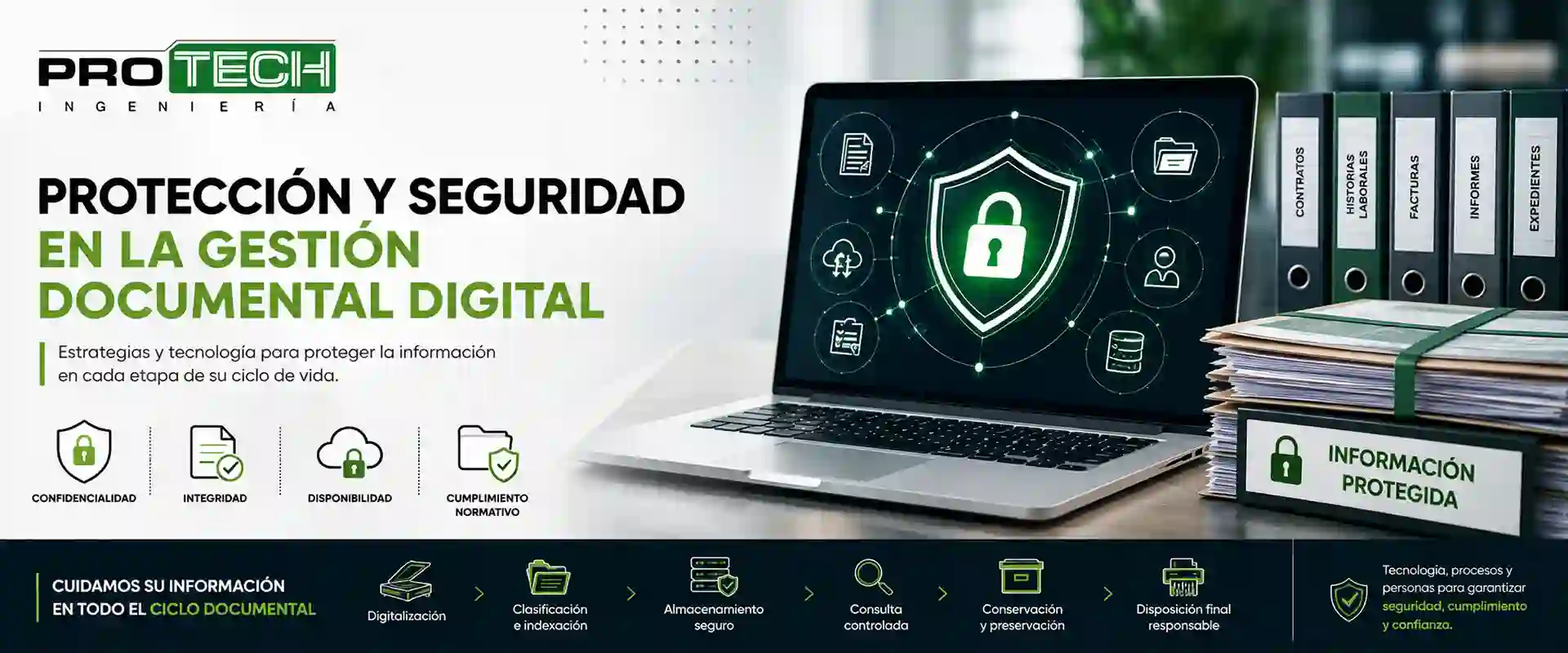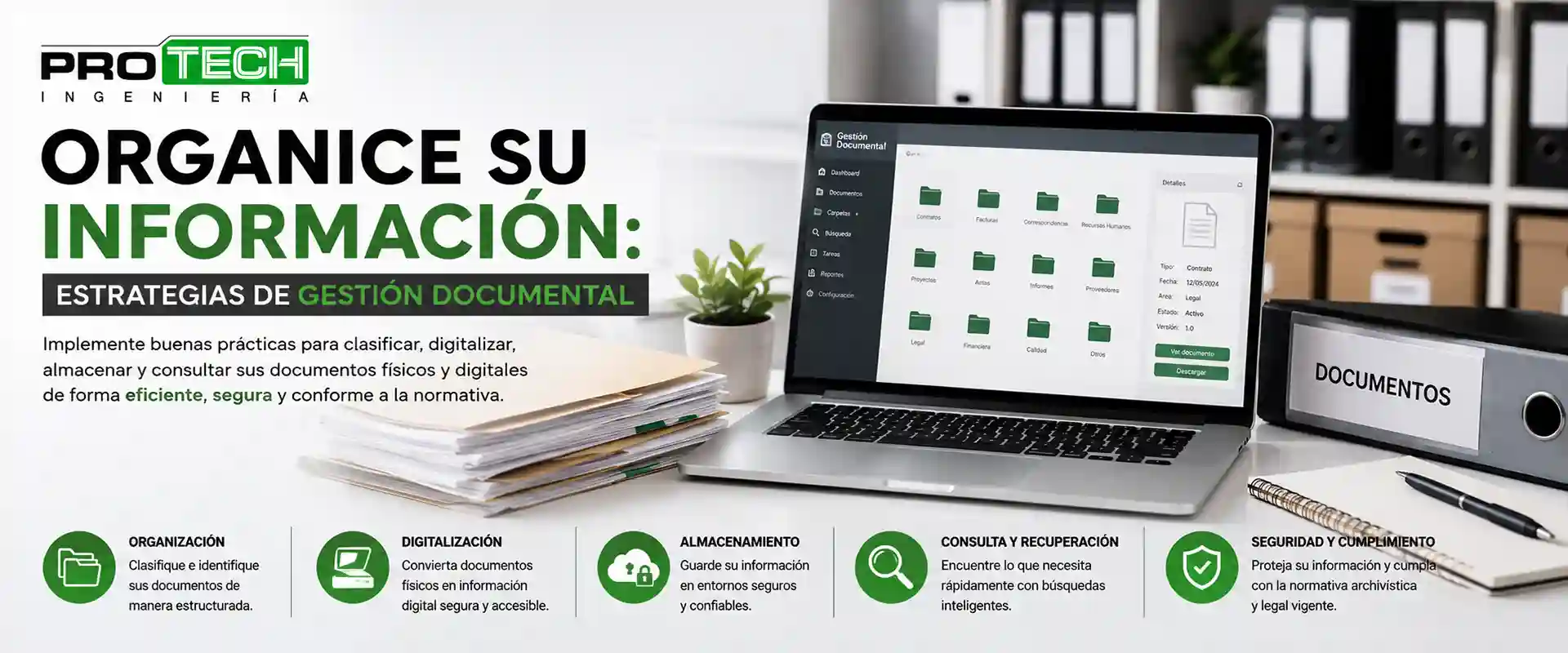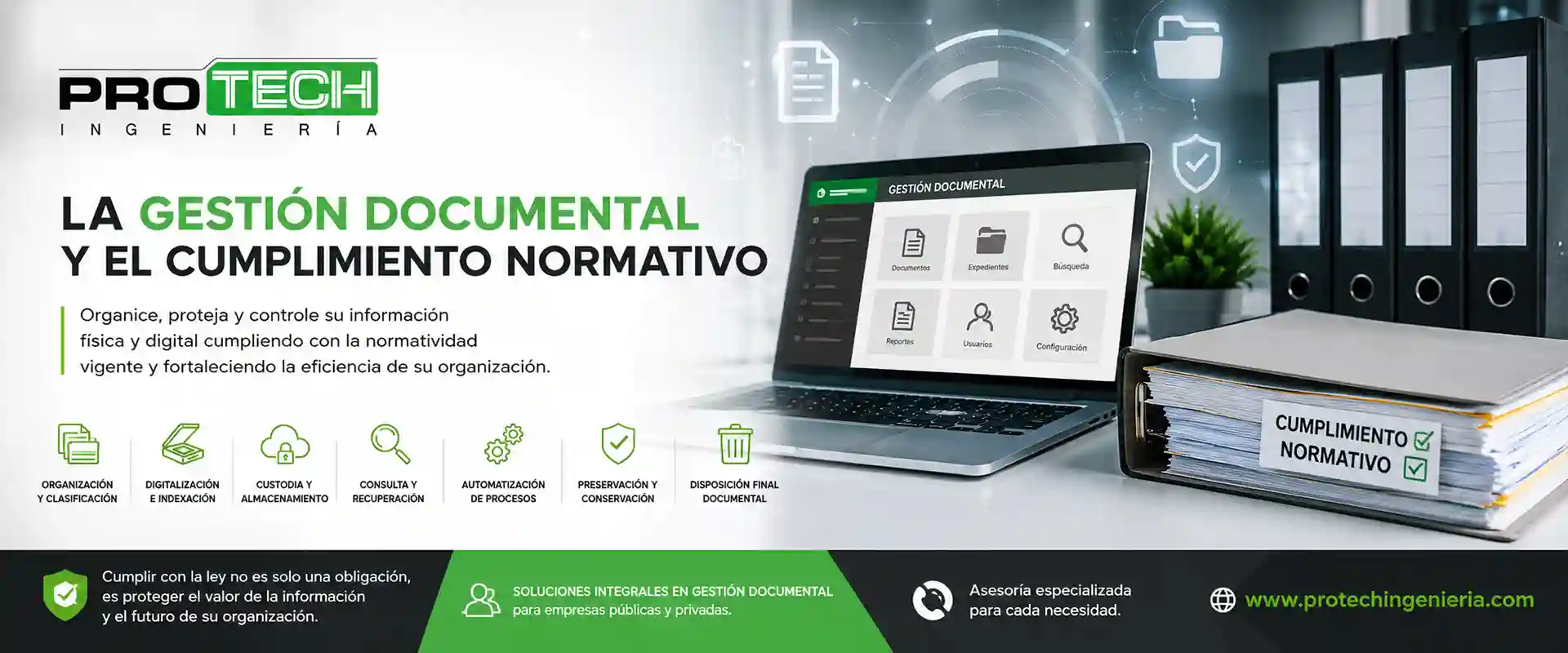



Companies generate and receive a massive amount of information in different formats: contracts, invoices, internal communications, management reports, and client and supplier records, among many others. Managing this documentary volume efficiently has become a real challenge. Document management is not limited to storing files; it involves ensuring their accessibility, security, traceability, and organization throughout their entire life cycle.
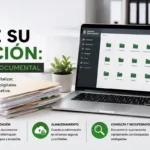
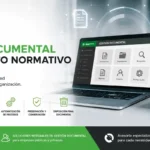
Given this need, document query modules have emerged as technological tools designed to transform the way organizations manage their information. These systems allow users to access digital records through metadata, view files directly in PDF format, create organized folder structures, and establish strict access and permission controls.
In this article, we will take an in-depth look at what a document query module is, its main features, and, above all, the five key advantages it brings to document management.
What is a document query module and what is it used for?
A document query module is a digital platform that centralizes and organizes an organization’s files so they can be searched, viewed, and managed quickly and securely.
Its main function is to facilitate access to the information stored in the system through advanced searches based on metadata (name, date, document series, subseries, producing office, year, among others). This means that instead of going through physical folders or disorganized digital directories, the user can retrieve the document they need in a matter of seconds.
Additionally, it integrates key functionalities such as:
- Combined search filters with multiple criteria.
- Direct PDF viewing from the platform, avoiding unnecessary downloads.
- Customizable folder hierarchies to maintain a coherent document classification.
- User, role, and permission management, ensuring that each person accesses only the records assigned to them.
- Dashboards and dynamic indicators that display real-time repository statistics.
In this way, the module not only organizes documents but also turns them into a strategic resource available to the entire organization.
5 Main Benefits of Using a Document Query Module
1. Fast and Accurate Searches
One of the most common problems in companies is losing valuable time searching for documents. According to productivity studies, employees can spend up to 30% of their workday locating information.
The document query module solves this issue thanks to its ability to perform fast and accurate searches. By indexing records with detailed metadata (such as dates, series, or file names), the system allows a document to be located in a matter of seconds.
For example, an accounting department that needs to verify an invoice from three years ago can find it simply by filtering by date and supplier. This not only speeds up internal processes but also prevents delays in audits, legal procedures, or client requirements.
In terms of document management, this advantage means shifting from a reactive system—where searching is an obstacle—to a proactive one, in which information becomes a strategic resource available immediately.
2. Optimized Document Organization
Maintaining a coherent order in digital files is another major challenge. Without a clear structure, documents end up duplicated, misplaced, or stored in the wrong folders, leading to confusion and loss of time.
The document query module offers a customizable folder architecture, designed based on each organization’s documentary criteria. For example, a law firm can classify records by case type, year, and client, while a healthcare company can organize them by medical record, patient, and date.
This approach provides clarity and uniformity, ensuring that all users work under the same documentary logic. In practice, it results in an organized, intuitive, and easy-to-use environment, which boosts team productivity.
From a document management perspective, this document organization ensures that files follow a standardized classification pattern, which in turn facilitates processes of purging, transfer, and archival preservation.
3. Access Control and Security
Information security is a critical issue in any company. Not all employees should have access to the same records, especially when dealing with confidential documents such as contracts, payrolls, or financial reports.
The document query module incorporates a user, role, and permission management system. This means that each user logs in with unique credentials and has a specific authorization level: reading, editing, creating, downloading, or administering.
For example, the human resources department may consult and manage employee records, but not necessarily access financial reports reserved for management. This control reinforces document security, prevents improper handling, and makes it possible to comply with data protection regulations.
Additionally, every action is recorded in the system, providing full traceability of all operations performed. In terms of auditing and regulatory compliance, this aspect is invaluable.
4. Remote Access and Constant Availability
In a world where remote work and mobility have become part of business dynamics, organizations need solutions that guarantee access to information at any time and from any location.
The document query module addresses this need by allowing documents to be accessible online, without requiring additional downloads. Users simply need to log into the platform to view a record in PDF format.
This represents a great advantage in contexts such as:
- A manager who needs to review a contract from their mobile device while traveling.
- An external auditor who, with limited permissions, accesses the necessary information without physically traveling to the company.
- A work team distributed across several locations that can consult the same record without duplicating information.
Constant availability ensures operational continuity and reduces dependence on physical files or local servers.
5. Traceability and Total Control
One of the major contributions of the document query module to document management is traceability. Every action performed within the system is recorded: who accessed it, when they did so, and what actions they carried out.
This complete traceability not only strengthens security but also makes it possible to generate useful reports for audit processes, internal control, and regulatory compliance.
Additionally, the system includes dashboards and real-time statistics, where key indicators can be viewed, such as the number of records and their distribution by year, documentary series, or department. This information facilitates strategic decision-making related to document management.
In summary, traceability turns the module into a comprehensive control tool, aligned with the principles of transparency and efficient information management.
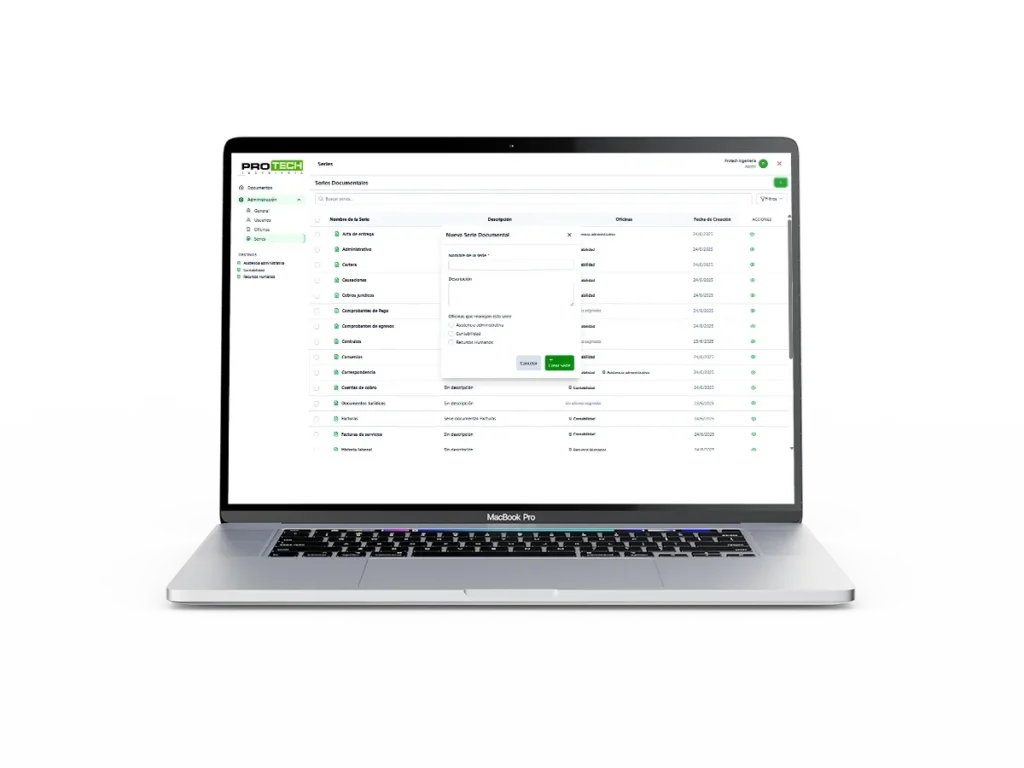
Document Query Module Implementation Process
Implementing a document query module is not a complex process, but it does require a methodological approach to ensure its effectiveness. The process generally includes:
- Receipt and analysis of information: validation of the document inventory and review of digitized files.
- Data processing and structuring: creation of an organized and standardized database to facilitate integration.
- System configuration: definition of users, roles, credentials, and folder structure.
- Record migration: integration of metadata and PDF files into the system with optimized loading times.
With this approach, the company can start using the module in a short time, with an immediate impact on its productivity.
Today, organizations generate and receive a massive amount of information in various formats: contracts, invoices, internal communications, management reports, and client and supplier records, among many others. Managing this documentary volume efficiently has become a real challenge. Document management is not limited to storing files; it involves ensuring their accessibility, security, traceability, and organization throughout their entire life cycle.
In response to this need, a document query module has emerged as a technological solution designed to transform the way companies manage their information. These systems allow access to digital records through metadata, view files directly in PDF format, create organized folder structures, and establish strict access and permission controls.
In this article, we will explore in depth what a query module is, its main features, and, above all, the five key advantages it brings to modern document management.